
Artificial Turf Drainage
How water moves through an artificial turf system — and what actually determines drainage performance.
DEFINITION
Turf Drainage
Turf drainage refers to the ability of an artificial turf system to move water through the surface and into the underlying base. Effective drainage prevents pooling, supports usability after rain, and helps maintain a cleaner, more hygienic surface.
Key Functions:
- Moves water through turf fibers and infill
- Prevents surface pooling and saturation
- Supports faster drying and usability
System Role: A system-level performance feature controlled by the interaction between backing type, infill, and sub-base design.
Related Components: Infill Material • Turf Backing • Sub-Base
Used With: Infill • Sub-Base • Fully-Permeable Backing • Hole-Punched Backing
Commonly Used In: Pet Areas • High-Rainfall Regions • Sports Fields
View in: Artificial Turf Glossary →
Foundation
What is a Artificial Turf Drainage?
Artificial turf drainage is not controlled by a single component. It is the result of how water moves through multiple layers of the turf system.
When water reaches the surface, it must:
Each layer influences how quickly and effectively this process happens.
👉 This is why drainage performance is a system outcome, not a product feature.
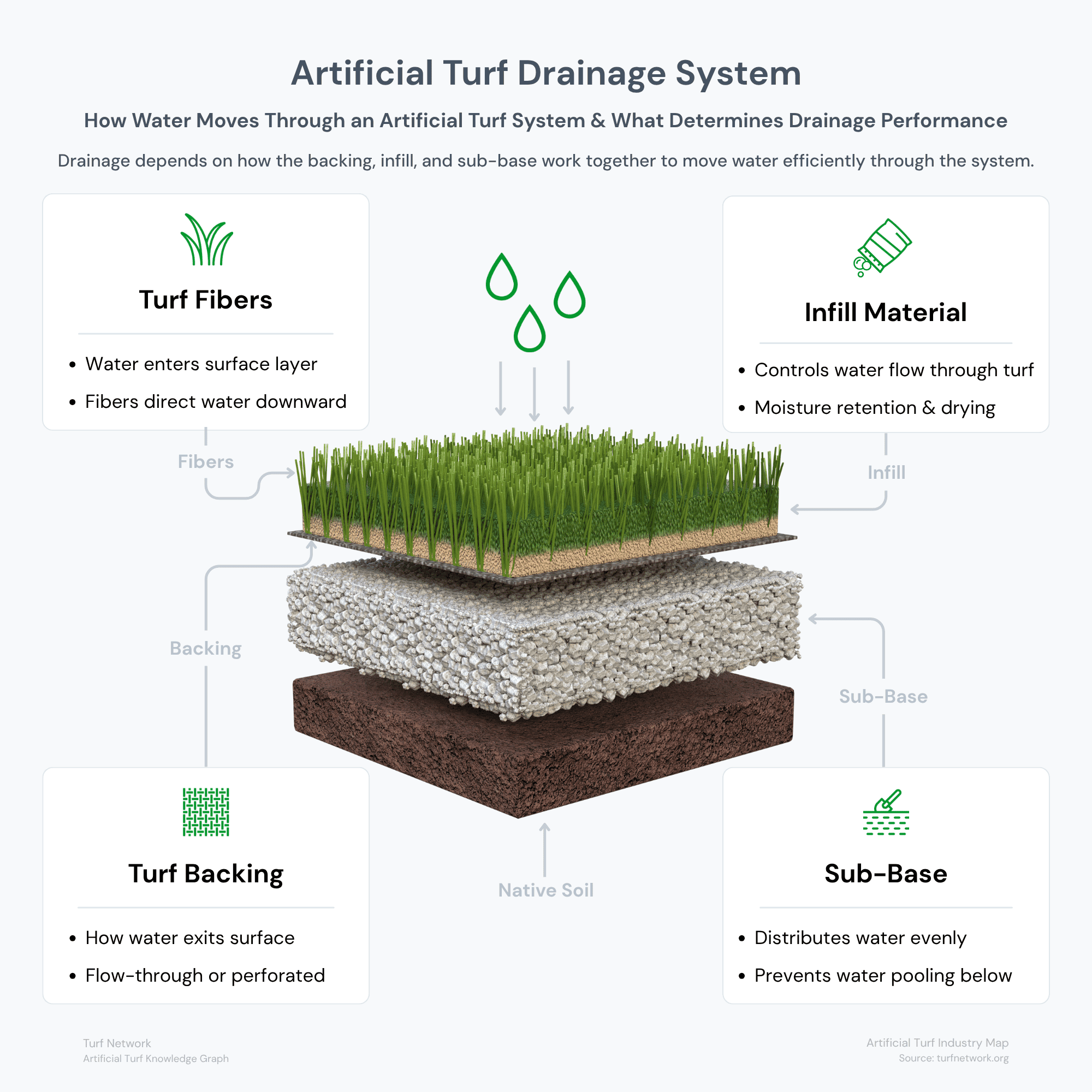
How water moves through an artificial turf system — from surface entry through infill, backing, and into the sub-base where it is dispersed and absorbed.
Turf Network — Artificial Turf System Features
Source: Turf Network – turfnetwork.org/artificial-grass/features/drainage/
Process
How Turf Drainage Works
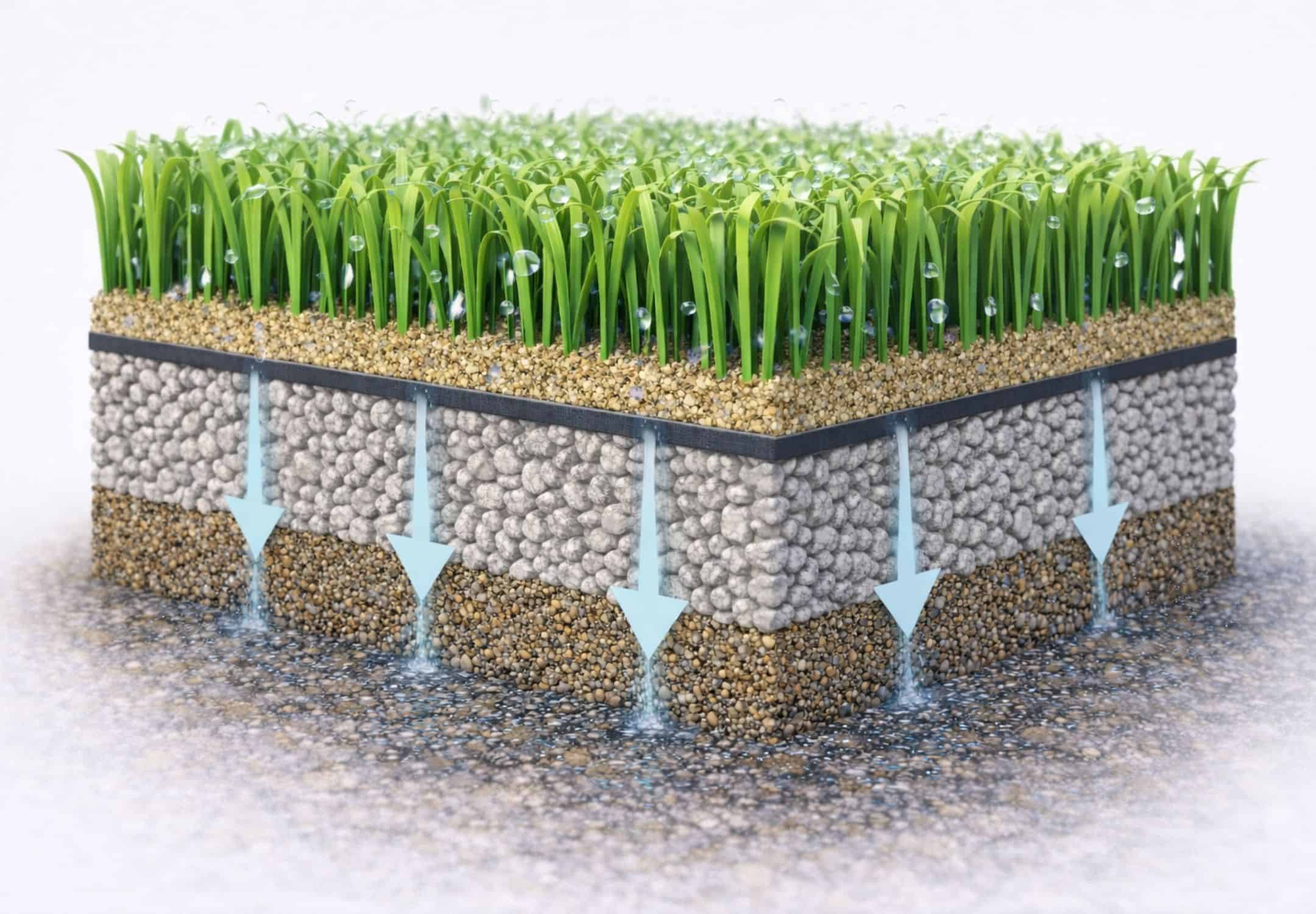
Water moves through an artificial turf system in the following stages:
1. Surface Entry
Water enters through the turf fibers and flows into the infill layer.
2. Vertical Movement
Water moves downward through the infill toward the backing.
3. Backing Exit
Water exits through either Hole-punched perforations or Fully permeable backing.
4. Sub-Base Dispersion
Water spreads through the aggregate base and into the native soil.
👉 Any restriction in this flow path reduces drainage performance.
System Types
Types of Artificial Turf Drainage Systems
Hole-Punched Backing
- Perforated holes in the turf backing allow water through
- Relies heavily on sub-base for drainage
- Typical drainage: ~30 inches per hour
- Most common and cost-effective option
Best for standard residential and general landscape applications
Fully-Permeable Backing
- Allows water to pass through the entire backing surface
- Drains evenly across the entire turf system
- Typical drainage: 400+ inches per hour
- Higher performance and consistency
Best for pet turf, heavy-use areas, and high-moisture environments
👉 The backing determines how water exits, but not how it performs overall.
System Factors
What Affects Turf Drainage Performance?
Drainage performance depends on multiple variables:
Backing Type
Controls how water or urine exits the turf system
Infill Material
Affects how easily water or urine moves between fibers
Sub-Base Construction
Determines how water or urine is distributed and absorbed
Installation Quality
Impacts grading, compaction, & flow efficiency
👉 Weakness in any layer reduces overall performance.
System Failure
What Happens Without Proper Drainage?
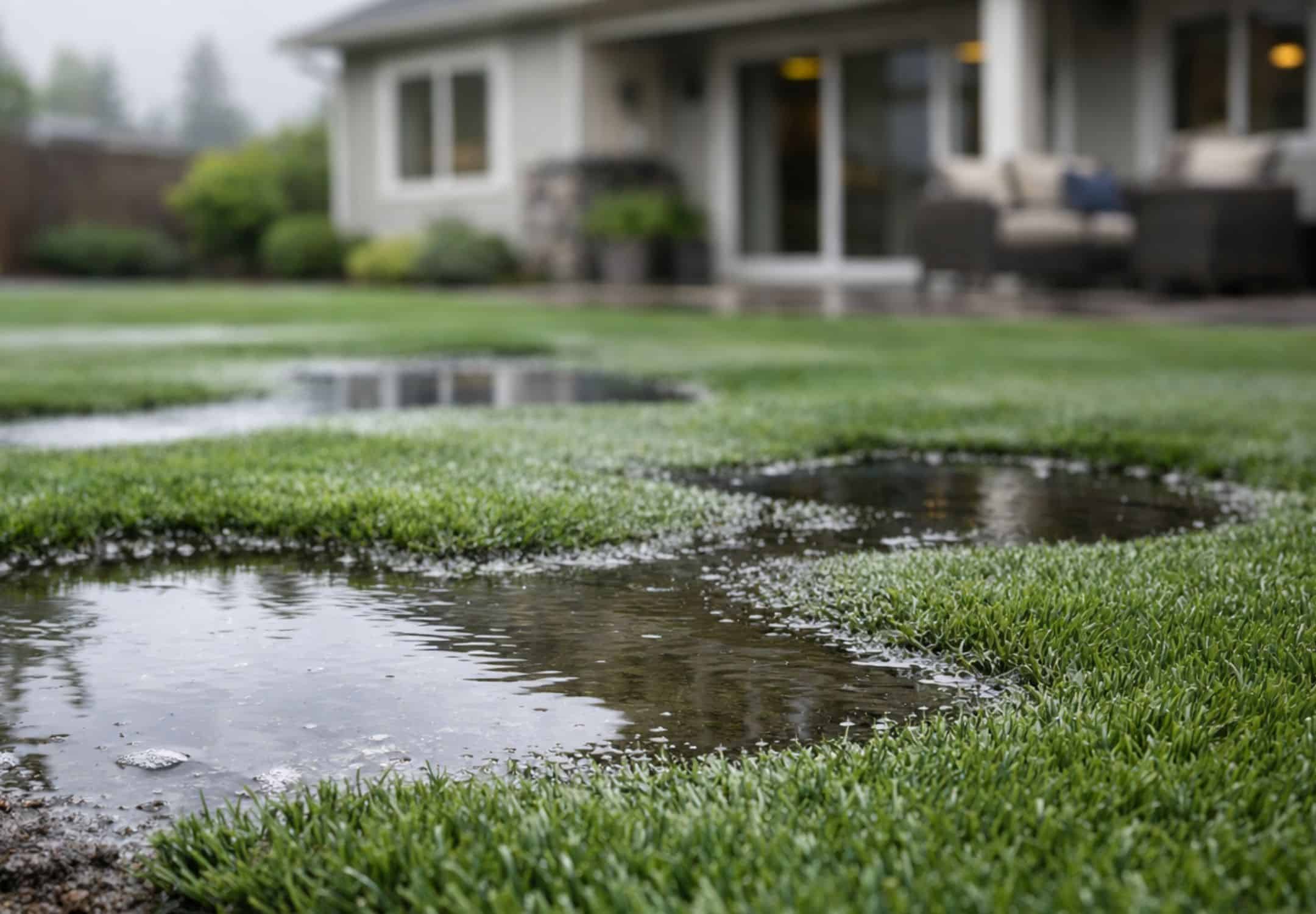
Poor drainage creates cascading issues across the turf system:
- Water pooling on the surface
- Slower drying after rain or cleaning
- Increased odor from trapped moisture
- Higher risk of bacterial buildup
- Reduced usability in wet conditions
👉 Most “turf problems” are actually drainage problems in disguise.
DIAGNOSIS
What Causes Poor Turf Drainage?
Poor drainage is usually the result of system design or installation issues, not the turf product itself.
Common causes include:
- Improper sub-base preparation
- Compacted or clogged infill
- Insufficient slope or grading
- Low-quality backing systems
- Debris buildup blocking flow
👉 Drainage issues are rarely caused by one factor — they are usually systemic.
Application
When Does Drainage Matter Most?
Not all turf installations require the same drainage performance. Drainage becomes critical in:
Pet Turf Systems
Frequent washing + urine = constant moisture exposure
High Rainfall Areas
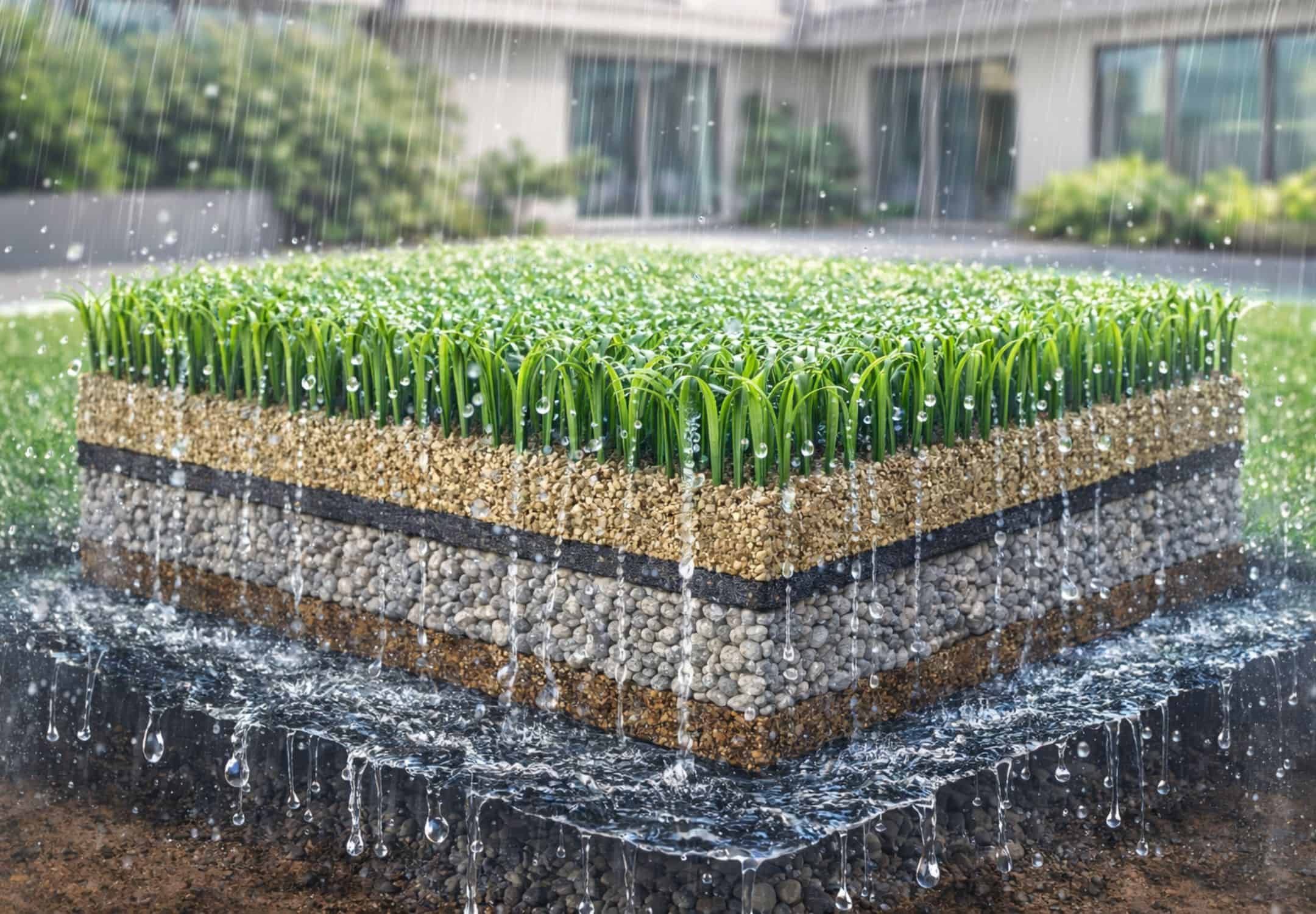
Sustained water volume requires efficient flow
Commercial Installations
Heavy use demands fast recovery after wet conditions
Context
When Is Advanced Drainage Less Important?
Drainage requirements may be lower in:
- Dry climates with minimal rainfall
- Low-use residential lawns
- Decorative or non-functional installations
👉 Even in these cases, baseline drainage is still required.
Feature Comparison
Drainage vs Odor Control vs Antimicrobial
Drainage
Controls water movement and moisture removal
Odor Control
Addresses smell caused by organic buildup
Antimicrobial Protection
Limits microbial growth on treated surfaces
👉 Drainage is foundational — without it, other features become less effective.
System
How Drainage Fits Into the Turf System
Drainage does not operate independently.
It depends on:
It directly impacts:
- Usability after rain
- Hygiene and odor control
- Long-term performance
👉 A turf system is only as effective as its ability to move water.
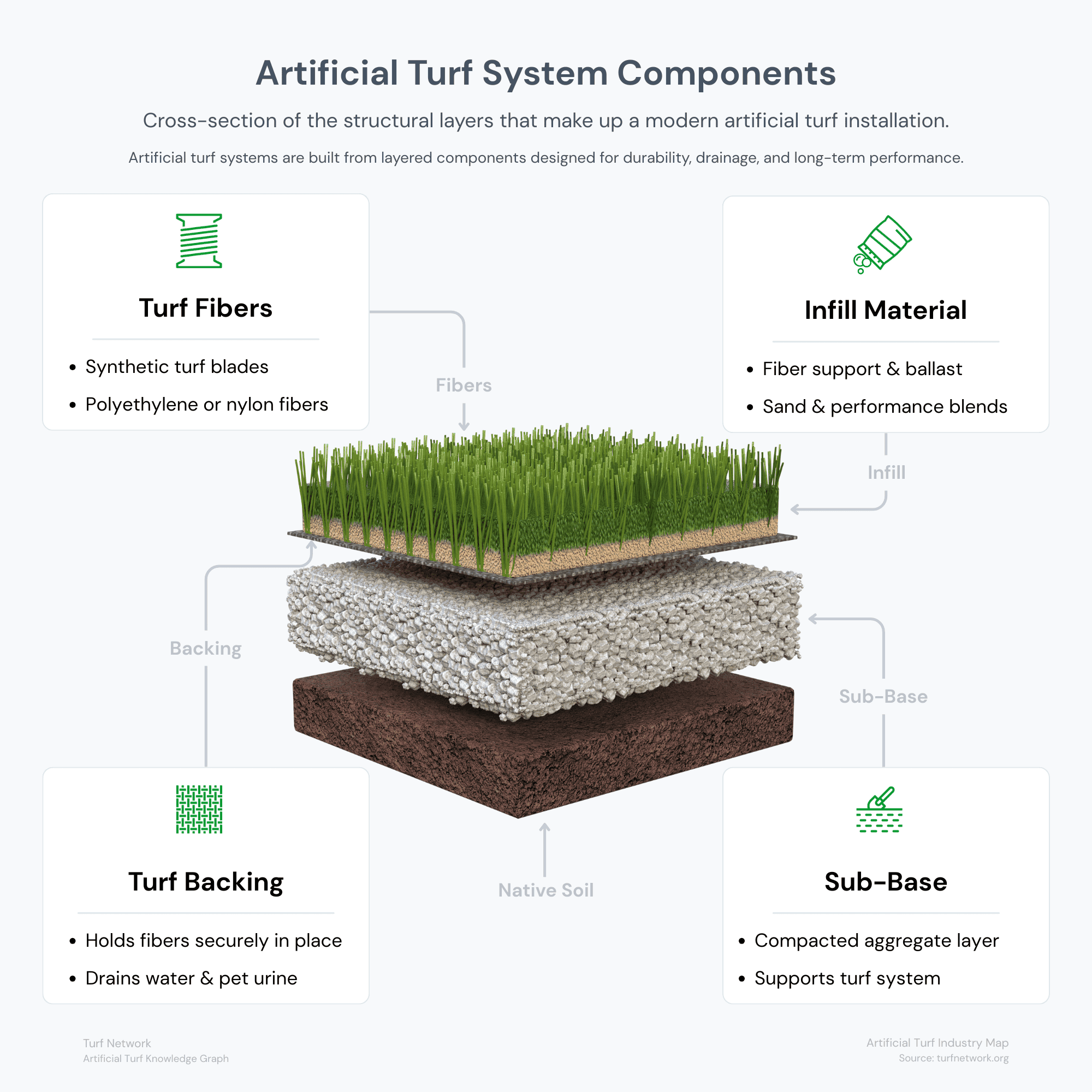
The diagram illustrates the primary components of an artificial turf system and how each layer contributes to overall performance.
Turf Network — Artificial Turf Industry Map
Source: Turf Network – turfnetwork.org/artificial-turf-industry/
Drainage Comparison
Compare Turf Systems Based on Drainage Performance
Not all turf systems are designed the same. Understanding drainage differences can help you choose the right product for your environment and usage.
| Backing Type | How It Drains | Why It Matters | Where It Matters Most |
|---|---|---|---|
|
Hole-Punched Backing
Standard
|
Water drains through evenly spaced perforation holes in the backing rather than across the full surface. | Provides reliable drainage for general-use turf systems while keeping installation simpler and more cost-efficient. | Residential lawns, standard landscapes, moderate-use installations |
|
Fully-Permeable Backing
High Drainage
|
Water passes through the entire backing surface evenly, allowing for continuous drainage across the system. | Improves moisture movement, reduces pooling risk, and supports faster drying in high-demand environments. | Pet turf, heavy-rain regions, rooftops, commercial and high-use applications |
Connections
Related Features & Components
To better understand how UV protection fits into the full turf system, explore the connections below.
(Click or tap to open):
FAQs
Frequently Asked Questions
Click one of the FAQ titles below to open the accordion:
How does drainage work in artificial turf?
Artificial turf drains water through the backing layer and into the sub-base below. Depending on the system, water either flows through perforation holes (hole-punched backing) or evenly across the entire surface (fully-permeable backing), then disperses through the compacted base material.
What is the difference between hole-punched and fully-permeable backing?
Hole-punched backing drains water through spaced perforations, while fully-permeable backing allows water to pass through the entire surface. Fully-permeable systems provide more consistent drainage and faster drying, especially in high-use or pet-friendly installations.
Does artificial turf drain better than natural grass?
In many cases, yes. Properly installed artificial turf systems can drain more efficiently than natural grass because they rely on engineered base layers and consistent drainage pathways rather than soil absorption, which can become compacted over time.
Can artificial turf handle heavy rain?
Yes, when installed correctly. A well-built turf system with proper base preparation and drainage design can handle heavy rainfall without pooling. The key factor is not just the turf itself, but the quality of the sub-base and grading.
Why is drainage important for pet turf?
Drainage plays a critical role in pet turf because it helps move urine through the system quickly. Faster drainage reduces moisture retention, which helps minimize odor buildup and bacterial growth when combined with proper cleaning and infill selection.
Do I need drainage tiles under artificial turf?
Drainage tiles are typically only needed in installations where natural drainage is limited, such as rooftops, concrete surfaces, or areas with poor soil conditions. In standard installations with a properly built base, they are often not necessary.
What causes poor drainage in artificial turf?
Poor drainage is usually caused by improper base preparation, insufficient grading, or compacted sub-base materials. Even high-quality turf products will not perform well if the underlying system is not designed to move water effectively.
How fast does artificial turf drain?
Drainage rates vary by system, but most artificial turf can handle between 30 to 400+ inches of water per hour. Fully-permeable systems generally provide faster and more consistent drainage compared to hole-punched backing.
Does infill affect turf drainage?
Yes. Infill can influence how water moves through the turf system. Some infill materials allow water to pass through more easily, while others may retain moisture longer. The combination of infill, backing, and base determines overall drainage performance.
Is drainage built into all artificial turf products?
Most artificial turf products include some form of drainage through the backing, but not all systems perform equally. Drainage effectiveness depends on the type of backing, installation method, and base construction—not just the turf itself.