
- Home
- Artificial Grass
- Components
- Infill
- HydroChill
HydroChill
Artificial turf systems are built from multiple structural layers that work together to create a stable and durable synthetic grass surface.
DEFINITION
HydroChill® Infill
HydroChill is a moisture-activated cooling infill designed to reduce artificial turf surface temperatures through evaporative cooling. It absorbs water and releases it as heat increases, lowering surface temperature during use. It is commonly used in high-heat and athletic environments.
Key Functions:
- Provides sustained cooling when hydrated
- Improves surface comfort in extreme heat
- Works with standard infill systems
System Role: Acts as a temperature-regulating infill additive that enhances comfort without affecting structural stability.
View in: Artificial Turf Infill Materials →
QUICK SUMMARY
HydroChill®
Best For: High-heat regions • Athletic fields • Premium landscapes
Not Ideal For: Dry climates without irrigation • Budget installs
Key Benefits:
- Significant cooling when hydrated
- Improves surface comfort
- Integrates with existing infill systems
Tradeoffs:
- Requires water to perform
- Higher system cost
- No odor control
Relative Cost: $$$
Performance Profile: Drainage: High • Heat Reduction: Very High • Odor Control: Low • Durability: High
Part of the Artificial Turf Industry Glossary.
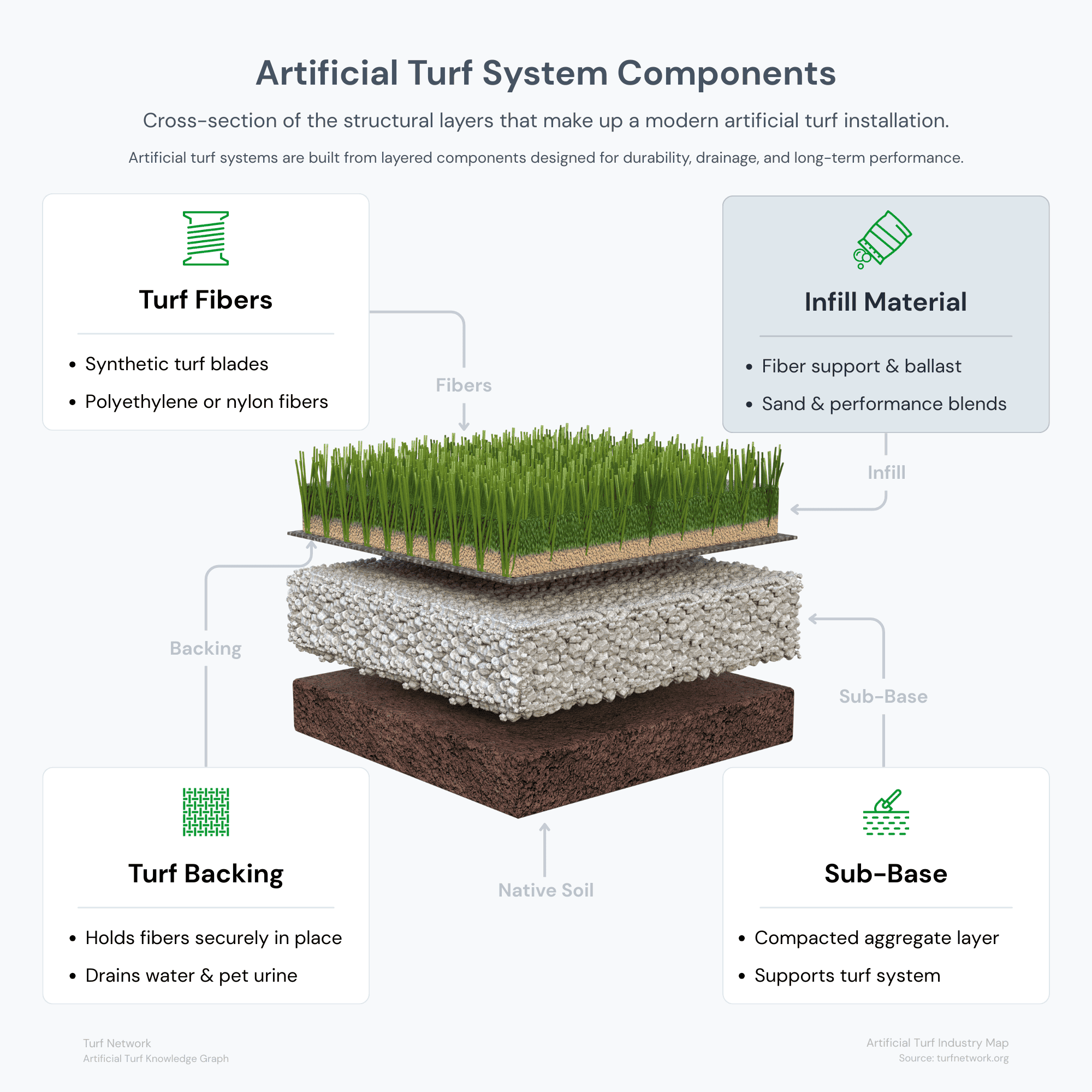
This diagram highlights infill material, the granular layer placed between artificial grass fibers to support the blades and stabilize the turf surface.
Turf Network — Artificial Turf System Components
Source: Turf Network – turfnetwork.org/artificial-grass/components/infill/
System Components
The Role Infill Material Plays in Artificial Turf Systems
During the installation of artificial grass, a very small granular material called infill is spread over the turf.
Infill serves several important purposes that contribute to the overall performance and longevity of artificial grass.
HydroChill integrates into the infill layer and releases cooling through evaporation when exposed to moisture.
It acts as ballast, keeping turf in place, protects the backing from UV damage, keeps fibers upright, and mimics the sensation of walking on natural grass.
Additionally, infill materials can contribute to efficient drainage and reduce odors, especially in pet-friendly environments.
What is HydroChill Infill? How is it Used on Artificial Grass?
HydroChill Infill is a specialized infill for artificial turf that incorporates advanced evaporative cooling technology and antimicrobial protection. This infill is designed to significantly reduce the surface temperature of artificial grass, making it more comfortable and safer to use in hot climates. The evaporative cooling effect is achieved through moisture retention; when water is added to the turf, either through rainfall or a manual application, the HydroChill Infill absorbs it. As the temperature rises and the water begins to evaporate, it naturally cools the surface of the turf, much like the cooling effect of sweat on skin.
In addition to its cooling properties, HydroChill Infill also includes antimicrobial agents that help to prevent the growth of bacteria and odors, a crucial feature for maintaining a hygienic surface, especially in pet-friendly or high-traffic areas. Like traditional infill, HydroChill serves several important roles in artificial turf installations: it acts as a ballast to keep the turf in place, helps to keep the synthetic turf fibers upright for a natural and aesthetically pleasing look, and assists in turf drainage by allowing water to filter through the turf to the ground beneath.
Furthermore, its unique texture and composition contribute to emulating the feel of natural grass underfoot. The combination of cooling technology, antimicrobial protection, and traditional infill functions makes HydroChill Infill a versatile and innovative choice for enhancing the performance and comfort of artificial turf installations.
What is HydroChill Infill Made Of?
HydroChill infill is a specialized type of artificial turf infill that is primarily made of silica sand coated with a moisture-activated cooling technology. This coating is the key to HydroChill’s unique ability to reduce turf temperatures. The technology works on the principle of evaporative cooling, similar to the natural process of perspiration in the human body. When water (either from rainfall or applied manually) interacts with the HydroChill infill, it activates the coating, which retains the moisture. As the temperature rises and the water begins to evaporate, this process draws heat away from the turf, significantly reducing its surface temperature.
This infill also often includes antimicrobial additives to help inhibit the growth of bacteria, mold, and mildew, which can be especially beneficial in dog runs & potty areas or high-traffic sports fields. The combination of silica sand and the cooling technology coating makes HydroChill an innovative solution for hot climates where artificial turf might otherwise become uncomfortably warm. By incorporating this advanced infill into artificial grass installations, users can enjoy a cooler and more comfortable surface while maintaining the benefits of durability and low maintenance that come with artificial turf.
How Much HydroChill Do I Need Per Square Foot?
The amount of HydroChill infill needed per square foot of artificial turf can vary based on the specific type of turf and its intended use, but a general guideline is typically around 1.5 to 3 pounds per square foot. The exact amount can be influenced by factors such as the pile height of the turf, the density of the grass fibers, and the level of cooling desired.
For most residential and commercial applications, aiming for the lower end of this range (around 1.5 pounds) can be sufficient to achieve the desired cooling effect while ensuring proper support and stability for the turf fibers. In areas with higher temperatures or more intense sun exposure, or for sports fields where a significant cooling effect is desired, the higher end of the range (up to 3 pounds) might be more appropriate. It’s important to evenly distribute the HydroChill infill across the turf to ensure consistent coverage and maximum effectiveness. Additionally, consulting with the turf manufacturer or a professional turf installer is recommended to get specific guidance tailored to your particular turf product and installation conditions.

How Should I Use HydroChill Infill?
Using HydroChill infill effectively involves a few key steps during and after the installation of artificial turf. Initially, the HydroChill infill should be evenly distributed over the turf once it has been laid out and secured. This process is similar to spreading traditional infill – it’s evenly scattered across the surface and then brushed into the turf fibers using a power broom. The quantity used should align with the manufacturer’s recommendations, usually about 1.5 to 3 pounds per square foot, depending on the turf’s pile height and density. The goal is to ensure that the infill is sufficiently integrated into the turf to provide stability, keep the fibers upright, and enable the cooling effect.
After installation, the key to activating HydroChill’s cooling properties is moisture. When the turf and infill become hot, watering the surface activates the HydroChill infill, initiating the evaporative cooling process. This can be done manually with a hose or through a sprinkler system, or it can occur naturally with rainfall. The frequency and amount of water needed for activation will depend on the climate and the level of sun exposure the turf receives. It’s important to note that the cooling effect is temporary and will last until the moisture in the infill evaporates, so reapplication of water may be necessary on hot days or in dry climates. Regular maintenance, such as brushing to keep the fibers and infill well-distributed, also helps maintain the effectiveness of the HydroChill infill over time.
How Much Does HydroChill Cost?
The cost of HydroChill infill can vary based on factors such as the supplier, location, and quantity purchased. HydroChill infill typically range from around $0.50 to $1.00 per pound. However, it’s important to note that prices can fluctuate and may be different in your specific area or at the current time.
When calculating the total cost for a project, it’s essential to consider the amount of infill needed for the size of the turf area. Given that the recommended application rate is usually between 1.5 to 3 pounds per square foot, the cost can add up, especially for larger installations. For instance, for a 500-square-foot area, you might need anywhere from 750 to 1,500 pounds of HydroChill infill, translating to a total cost in the range of $375 to $1,500, depending on the exact price per pound. It’s advisable to get a quote directly from turf suppliers or local turf installers for the most accurate and up-to-date pricing. Additionally, some suppliers may offer discounts for bulk purchases, which can be beneficial for larger projects.


How Long Does HydroChill Last?
HydroChill infill is designed to last as long as the artificial turf itself, typically ranging from 5 to 10 years or more, depending on various factors like the quality of the turf, the intensity of use, and maintenance practices. The longevity of HydroChill is closely aligned with the durability of the artificial grass fibers, ensuring that its cooling and antimicrobial protection remain effective throughout the lifespan of the turf. The unique aspect of HydroChill is its ability to be recharged with moisture, either through rainfall or manual watering, to maintain its evaporative cooling effect.
However, the effectiveness of HydroChill can diminish over time if not properly maintained. Regular maintenance, such as brushing the turf to keep the fibers upright and evenly redistributing the infill, can extend the life and effectiveness of HydroChill. The infill may also need to be replenished or refreshed over the years, especially in high-traffic areas where it might get compacted or displaced. While the exact lifespan can vary, with appropriate care and maintenance, HydroChill infill can effectively provide its cooling and antimicrobial benefits for the majority of the artificial turf’s usable life.