
- Home
- Artificial Grass
- Applications
- Swimming Pool Surrounds
Artificial Turf for
Swimming Pool Surrounds
A drainage-first, slip-resistant surface designed for wet, high-traffic environments.
(Background Installation By: Synthetic Grass Pos)
What is Artificial Turf for Pool Surrounds?
Artificial turf for swimming pool surrounds is a specialized synthetic grass system designed to replace or complement traditional poolside surfaces like concrete, pavers, or natural grass.
Unlike standard landscape turf, pool surround systems are built to handle constant water exposure, foot traffic, and chemical contact. They prioritize rapid drainage, surface stability, and comfort underfoot, creating a clean, low-maintenance environment around the pool.
System Overview
How Artificial Turf Pool Surround Systems Work
Artificial turf around a pool functions as a layered system designed to move water away from the surface while maintaining a stable, comfortable footing.
Water passes through the turf fibers and backing, then into a compacted sub-base where it disperses and drains away from the pool area. This prevents standing water, reduces slip risk, and keeps the surface clean.
Key Components of a Pool Surround System:
Each layer contributes to performance:
- Fibers provide surface texture, comfort, and durability
- Backing controls how water flows through the system
- Infill stabilizes the turf and supports the fibers
- Sub-base manages drainage and structural stability
If any part of the system is poorly designed, the entire surface can fail—resulting in pooling, odor, or inconsistent footing.
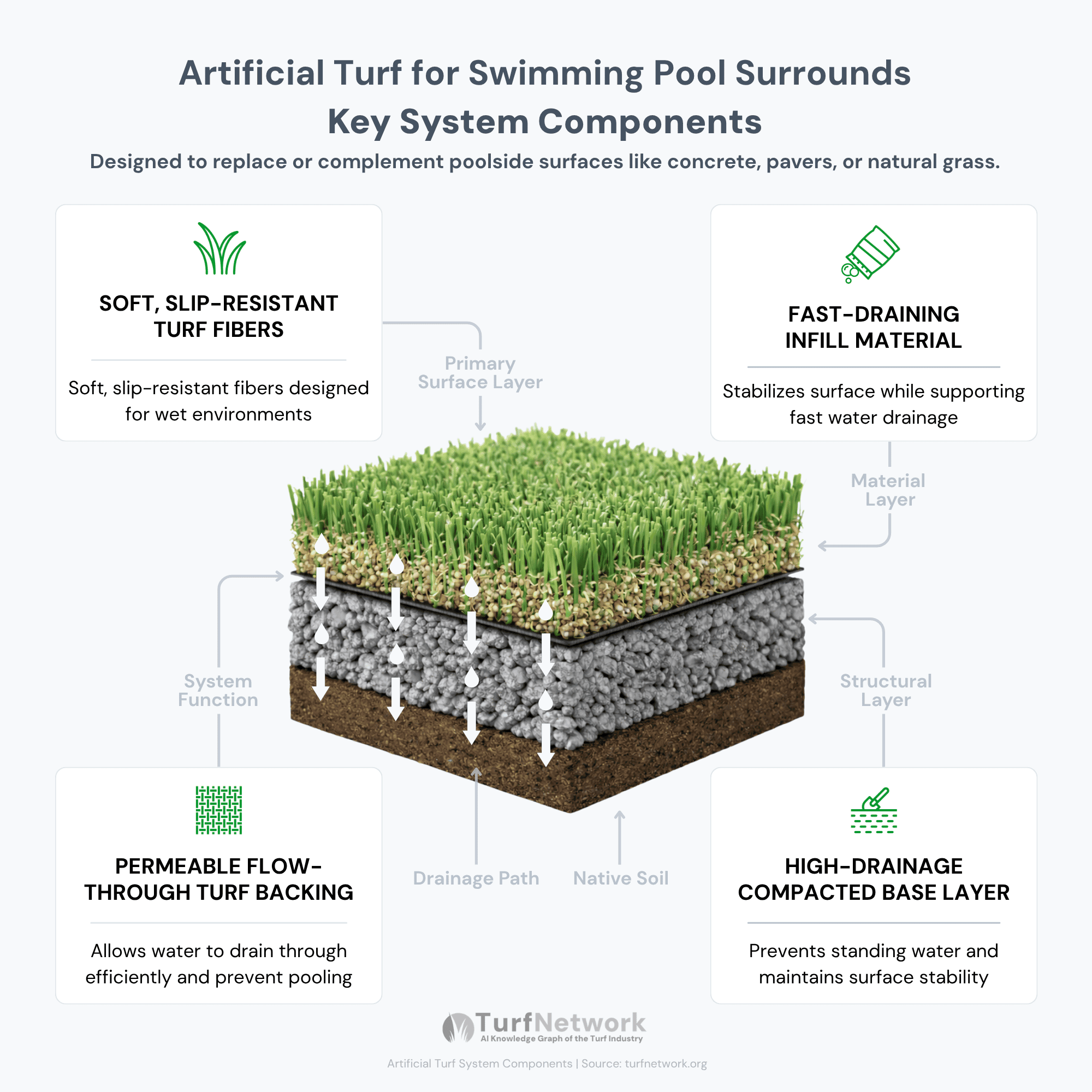
Artificial Turf for Pool Surrounds — Key System Components showing drainage, slip resistance, and structural stability in wet environments
Source: Turf Network – turfnetwork.org/artificial-grass/applications/swimming-pool-surrounds/
Artificial Turf Pool Surround Materials & Construction
Pool surround turf systems rely on materials selected specifically for moisture management and durability.
Each component plays a role in how the system drains, feels, and performs over time.
Fiber Materials
Typically polyethylene or hybrid blends designed for softness, resilience, and reduced heat retention.
Backing Systems
Perforated (a.k.a. hole-punched) or fully permeable backing that allows water to pass through efficiently.
Infill Materials
Compacted crushed stone or aggregate that controls water flow and prevents surface movement.
Features
Key Features of
Artificial Turf for Pool Surrounds
Artificial turf for pool surrounds is designed to solve the specific challenges of wet, high-use environments.
These features work together to create a surface that stays clean, usable, and consistent throughout the year.
Low Maintenance
Minimal maintenance with no mud or debris
Durability
Resistance to chlorine, saltwater, & UV rays
Drainage Performance
Rapid drainage to prevent standing water
Slip-Resistant
Slip-resistant surface for safer footing
Realistic Appearance
Fibers and thatch layers mimic natural grass
Comfort
Soft, cushioned feel underfoot
Feature Comparison
How Turf Features Impact Performance
Use this table to evaluate how different turf features impact system performance and whether they are suited for artificial turf pool surround use.
It highlights what it affects, why it matters, and where it matters most.
| Feature | What It Affects | Why It Matters | Where It Matters Most |
|---|---|---|---|
|
Drainage Capacity
Critical
|
Water flow, surface dryness, usability | Pool areas require rapid drainage to prevent puddling, reduce slip risk, and maintain a clean, usable surface. | All pool surrounds, especially high-use and shaded areas |
|
Fiber Shape
Performance
|
Heat reduction, resilience, visual realism | W-shaped, C-shaped, or wave fibers reduce heat retention, resist flattening, and improve comfort underfoot. | Sunny pool decks and barefoot-use areas |
|
Backing Type
Flow Control
|
Drainage speed, moisture management | Fully permeable or perforated backings allow water to pass through the entire surface, preventing buildup and odor. | Wet environments and areas exposed to frequent splashing |
|
Surface Traction
Safety
|
Slip resistance, stability | Pool surrounds must provide consistent grip when wet to reduce slipping and improve safety. | Steps, edges, and high-traffic walkways |
|
Infill Performance
Stability
|
Fiber support, drainage, odor control | Infill helps stabilize the system, maintain blade position, and improve drainage while reducing bacteria and odor buildup. | Pet-friendly pool areas and high-moisture environments |
|
Heat Reduction
Comfort
|
Surface temperature, barefoot usability | Pool turf should remain comfortable underfoot, even in direct sunlight, through fiber design and material selection. | Open, sun-exposed pool decks |
Installation
How Artificial Turf Pool Surrounds are Installed
Installing artificial turf around a pool requires proper base preparation and drainage planning. Proper installation ensures the system drains correctly and remains stable under continuous use.
Step-by-Step Installation Process:
- Excavation & Grading: Remove 3–4 inches of existing soil and grade the area to create a slight slope away from the pool.
- Sub-Base Installation: Install and compact a layer of crushed stone or aggregate to create a stable, well-draining foundation.
- Weed Barrier & Leveling: Add a geotextile layer if needed, followed by fine grading for a smooth surface.
- Turf Placement & Cutting: Roll out the turf, allow it to acclimate, and cut it to fit the pool layout.
- Seaming & Securing: Join seams with adhesive and secure edges with nails or staples.
- Infill & Finishing: Apply infill material and brush it into the fibers to stabilize the surface and complete the system.

Pool Surround Installation By: SYNLawn Austin
Product Selection
How to Choose the Right Turf for Pool Surrounds
Choosing the right turf for pool surrounds requires focusing on drainage, durability, and comfort. The right combination of materials ensures the system performs reliably in wet conditions.
Key Factors to Consider:
- Prioritize fully permeable or high-flow backing systems
- Select polyethylene or hybrid fibers for a softer, cooler surface
- Use coated silica sand or antimicrobial infill for stability and hygiene
- Choose shorter pile heights for faster drying and easier cleaning
| Priority | What to Look For | Why It Matters | What to Ask |
|---|---|---|---|
|
Drainage Performance
Primary
|
Fully permeable or high-flow perforated backing | Pool environments require rapid water movement to prevent pooling and maintain usability. | Is this turf fully permeable or only hole-punched? |
|
Fiber Material
Comfort
|
Polyethylene or hybrid fibers | These materials provide a softer feel, better heat resistance, and improved durability in pool environments. | Is this polyethylene or nylon, and how does it handle heat? |
|
Backing Type
Durability
|
Polyurethane (PU) backing or multi-layer system | Backing determines long-term durability and resistance to moisture and chemicals. | Is the backing latex or polyurethane? |
|
Infill Selection
Stability
|
Coated silica sand or antimicrobial infill | Infill improves stability, drainage, and hygiene in wet environments. | What infill is recommended for pool use? |
|
Pile Height
Function
|
Short to mid pile (1.0–1.5 inches) | Shorter pile dries faster, is easier to clean, and performs better under frequent use. | What pile height is recommended for pool surrounds? |
System Types
Types of Artificial Turf Pool Surround Systems
Artificial turf systems for pool surrounds vary based on drainage method and construction.
- Perforated Backing Systems
Traditional systems with drainage holes that allow water to pass through specific points - Fully Permeable Systems
Advanced backing that allows water to drain across the entire surface - Hybrid Systems
Designed for enhanced durability, combining different fiber types for performance and resilience
Each system type offers different levels of drainage efficiency and durability depending on the environment.

Pool Surround Installation By: ToughLawn Austin
APPLICATION CONTEXT
Where Pool Surrounds Fit
Within Artificial Turf Applications
Artificial turf is used across multiple applications, each designed for specific environments, performance requirements, and system configurations.
Understanding how each application differs helps ensure the right system is selected for long-term performance.
Swimming Pool Surrounds
Fast-draining, slip-resistant turf systems built to perform in wet environments with exposure to water and chemicals
Best for: pool decks, splash zones, water features, and wet areas
Putting Greens
Short-pile, high-density turf engineered for ball roll, speed control, and consistent putting performance
Best for: backyard golf, training, recreational putting
Lawns & Landscapes
General-purpose turf designed for landscaping, balancing appearance, durability, and everyday usability.
Best for: front yards, backyards, general landscaping, everyday use
Pet Turf (Dogs & Pets)
Specialized turf systems engineered for drainage, odor control, and durability under active pet use.
Best for: dog runs, backyards, kennels, pet relief areas
Playgrounds & Play Areas
Safety-focused turf systems with shock-absorbing layers designed to reduce impact from falls.
Best for: schools, parks, daycare centers, and backyard play zones
Rooftops, Decks & Patios
Lightweight turf systems designed for hard surfaces, prioritizing drainage, stability, and low-profile installation.
Best for: balconies, rooftops, patios, and hardscape living spaces
System Context
How Pool Surrounds Fit Within Artificial Turf Systems
Pool surround turf uses the same basic system layers as other artificial turf applications, but the system is configured for moisture, safety, and exposure.
Unlike lawn turf, pool surround systems must deal with constant splash-out, wet foot traffic, direct sun, and repeated exposure to chlorine or saltwater. That makes drainage speed, material durability, and slip-resistant surface performance more important than in most residential applications.
Compared with standard lawn turf, pool surround systems place more emphasis on:
- Permeable or high-drainage backing
- Stable, fast-draining sub-base preparation
- Infill that supports drainage and surface stability
- Fibers chosen for comfort, resilience, and barefoot use
The result is a turf system built to stay cleaner, drier, and more stable in wet environments where water movement and surface usability matter more than ornamental lawn performance alone.
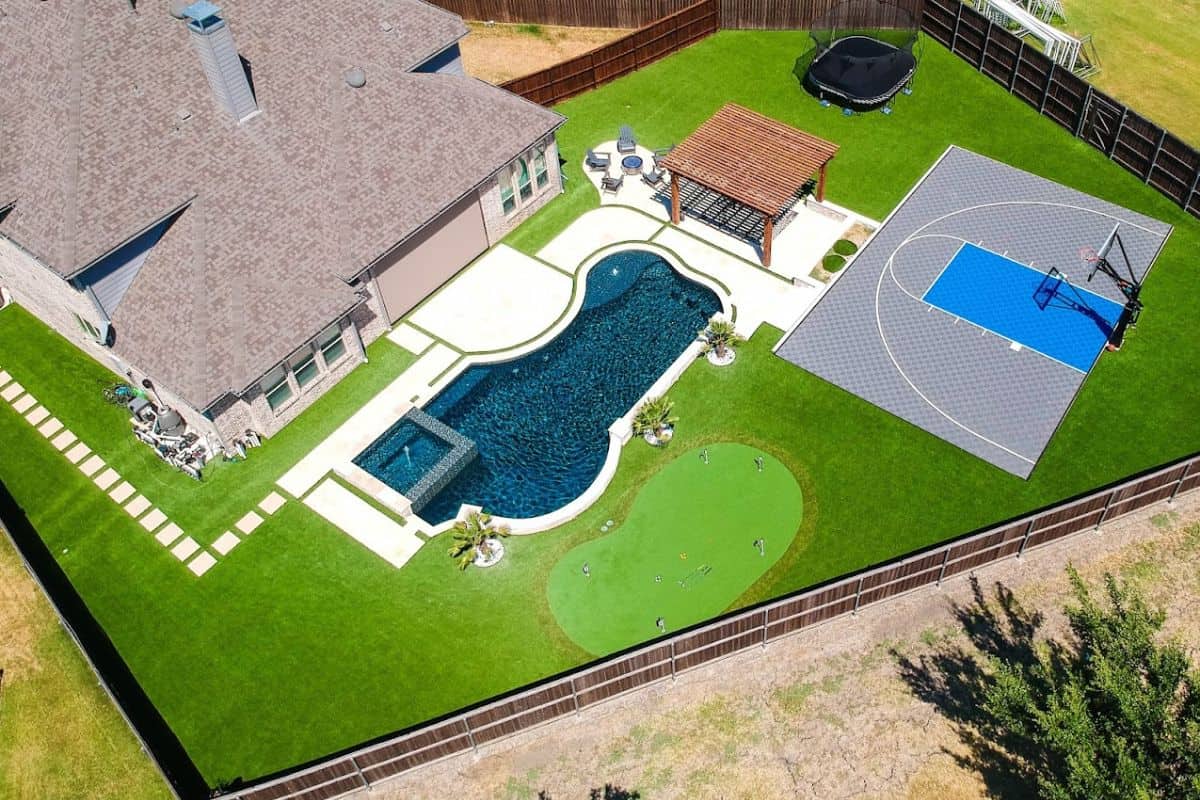
Playground Turf Installed By: Epic Turf Landscaping
Gallery
Real-World
Pool Surround Installations
Check out real-world installations of artificial turf swimming pool surrounds.
The images below are artificial turf installations by members of the Turf Network.
Turf Monsters AZ
ProGreen Central Florida - Turf Backyard
Tuffys Turf - Pool Surround & Golf Green
Music City Turf-Swimming Pool Surround
Turf Noggin-Swimming Pool Surround 1
Capitol Turf Pros-Landscape Grass Pool Surround
TOF Turf & Outdoors-Landscape Grass Around Pool
Southern Turf Co Charlotte-Swimming Pool Surround
FAQs
Common Questions
About Artificial Turf Lawns
What type of turf is best for pool surrounds?
Turf with polyethylene fibers, fully permeable backing, and a shorter pile height is typically best for comfort, drainage, and durability.
Related Topics:
• Turf Fibers • Turf Backing
Is artificial turf safe around swimming pools?
Yes. Pool-specific turf systems are designed to provide a slip-resistant, cushioned surface that reduces the risk of slipping compared to concrete or tile.
Does artificial turf drain well around pools?
High-quality turf systems use fully permeable or perforated backing combined with a properly installed sub-base to allow water to drain quickly and prevent puddling.
Related Topics:
• Turf backing • Turf Drainage
What type of infill is best for pool areas?
Coated silica sand or antimicrobial infill materials are commonly used because they improve drainage, stabilize the surface, and help reduce odor or bacteria buildup.
Related Topics:
• Infill Material • Silica Sand • Envirofill
Can artificial turf handle chlorine and pool chemicals?
Yes. Modern turf systems are designed to resist chlorine, saltwater, and UV exposure without breaking down or fading prematurely.
Related Topics:
• UV Protection
How long does pool turf last?
With proper installation and materials, artificial turf around pools can last 10–15 years or more depending on usage.
Related Topics:
• Installation • Materials
Does turf get hot around pools?
Artificial turf can retain heat in direct sunlight, but fiber shape, material selection, and infill can significantly reduce surface temperature compared to older turf systems.
Related Topics:
• Turf Fibers • Fiber Shapes • Artificial Turf Heat Issue
How much does turf for pool surrounds cost?
Swimming pool area turf installation costs vary from project to project. The total cost of your project will be determined by the following:
- Size of the Project
- Site Prep Required
- Sub-base used (amount and type)
- Turf Product
- Infill material
Related Topics:
• Artificial Grass Cost Guide • Artificial Grass Cost Calculator
Blog


