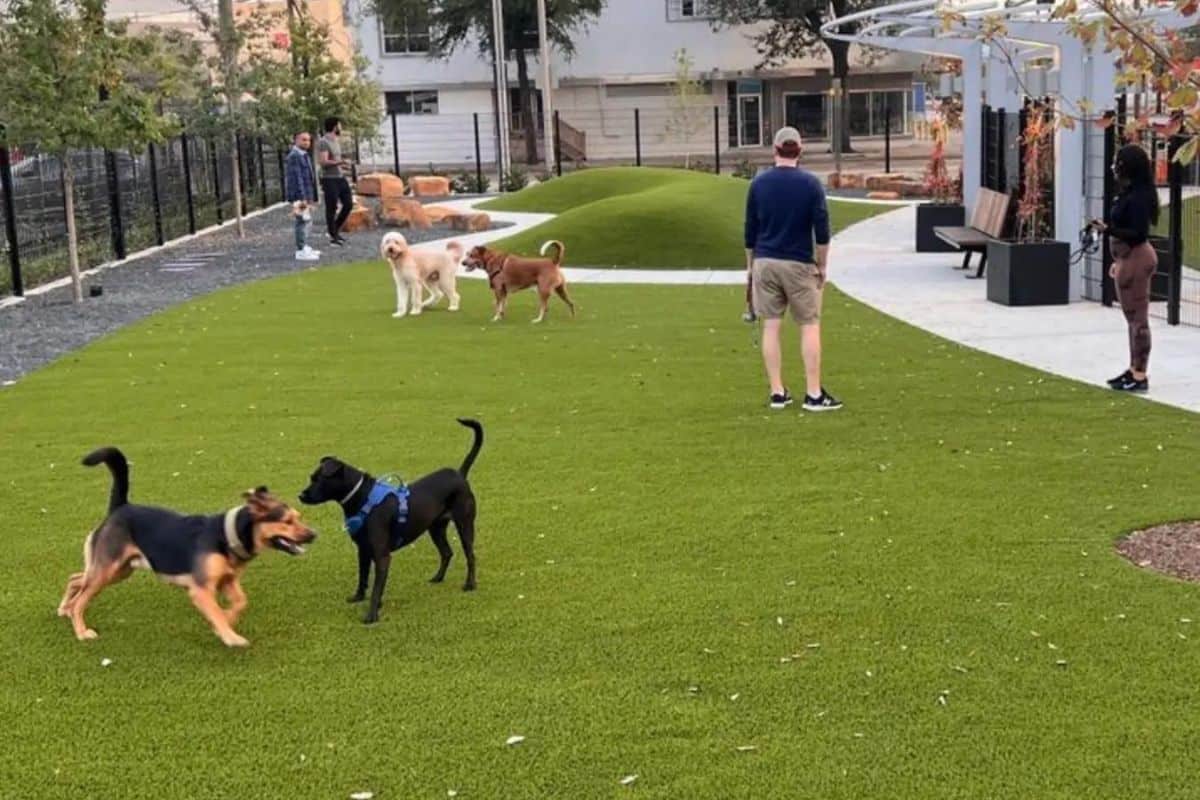
Artificial turf for dogs is an application-specific turf system designed for drainage, odor control, durability, and easier cleanup under repeated pet use.
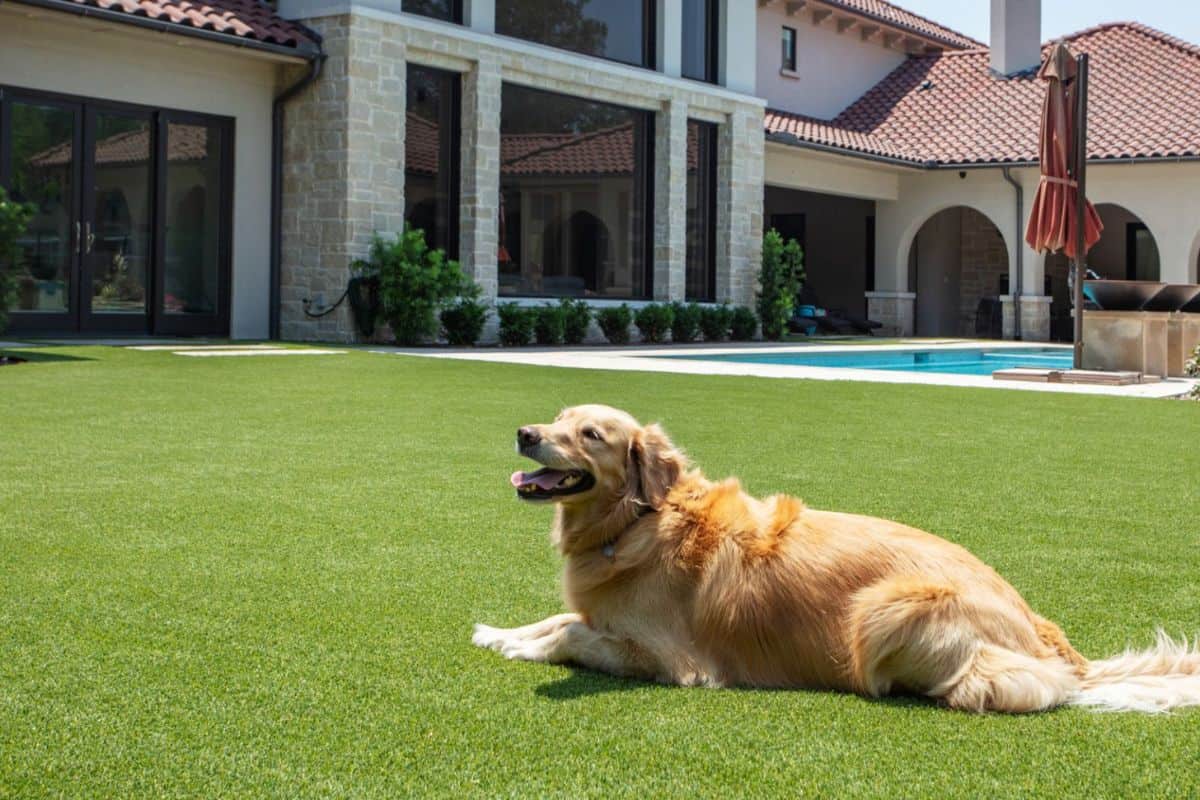
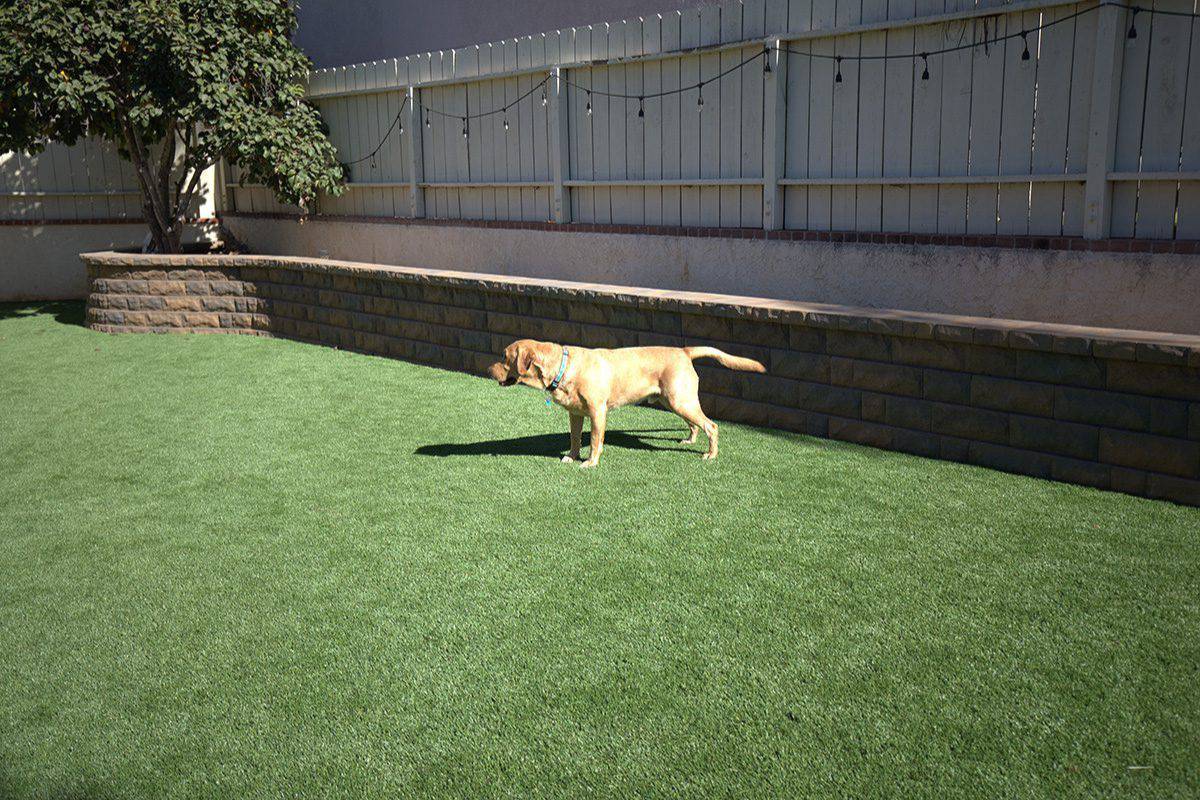
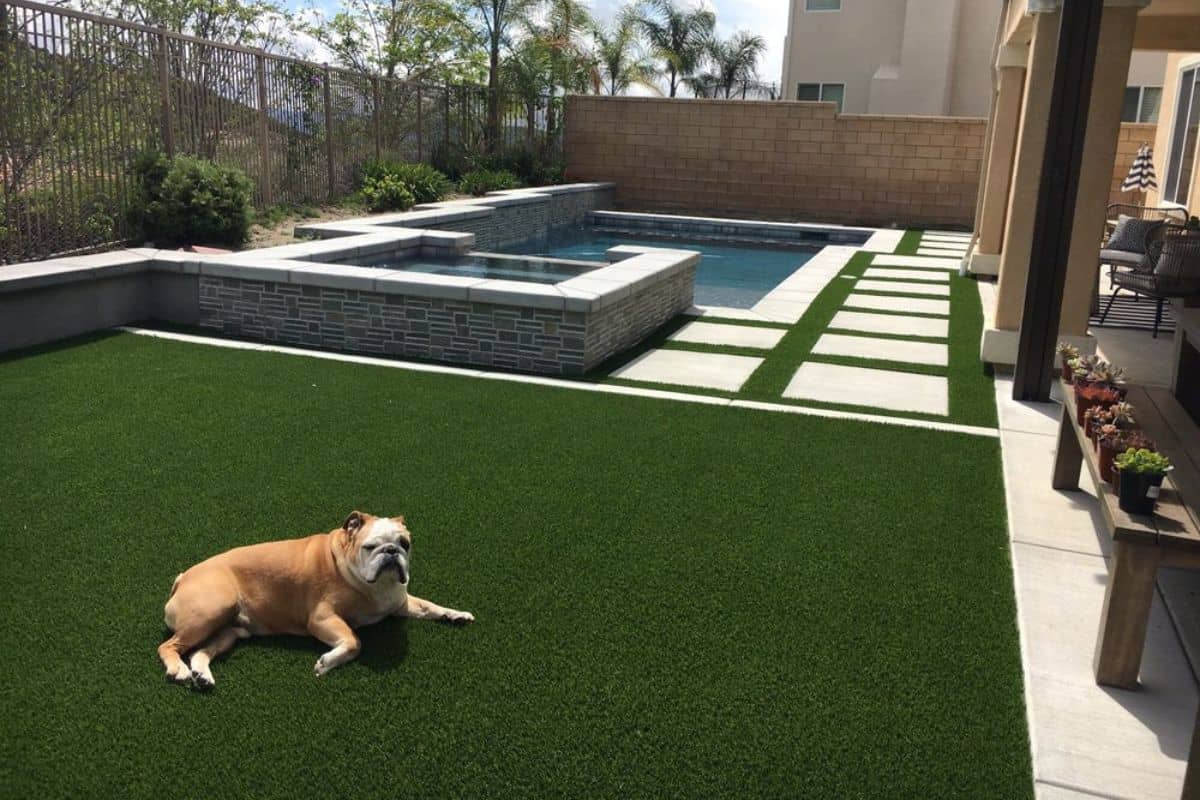
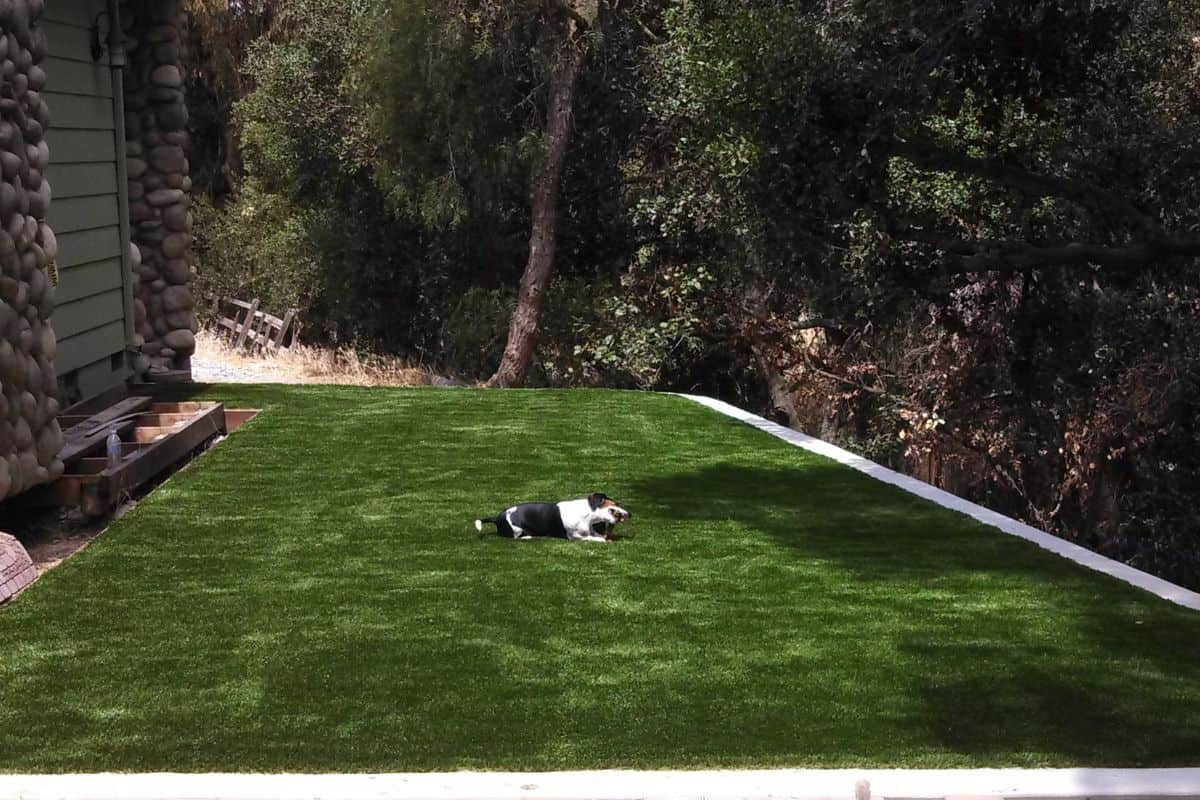
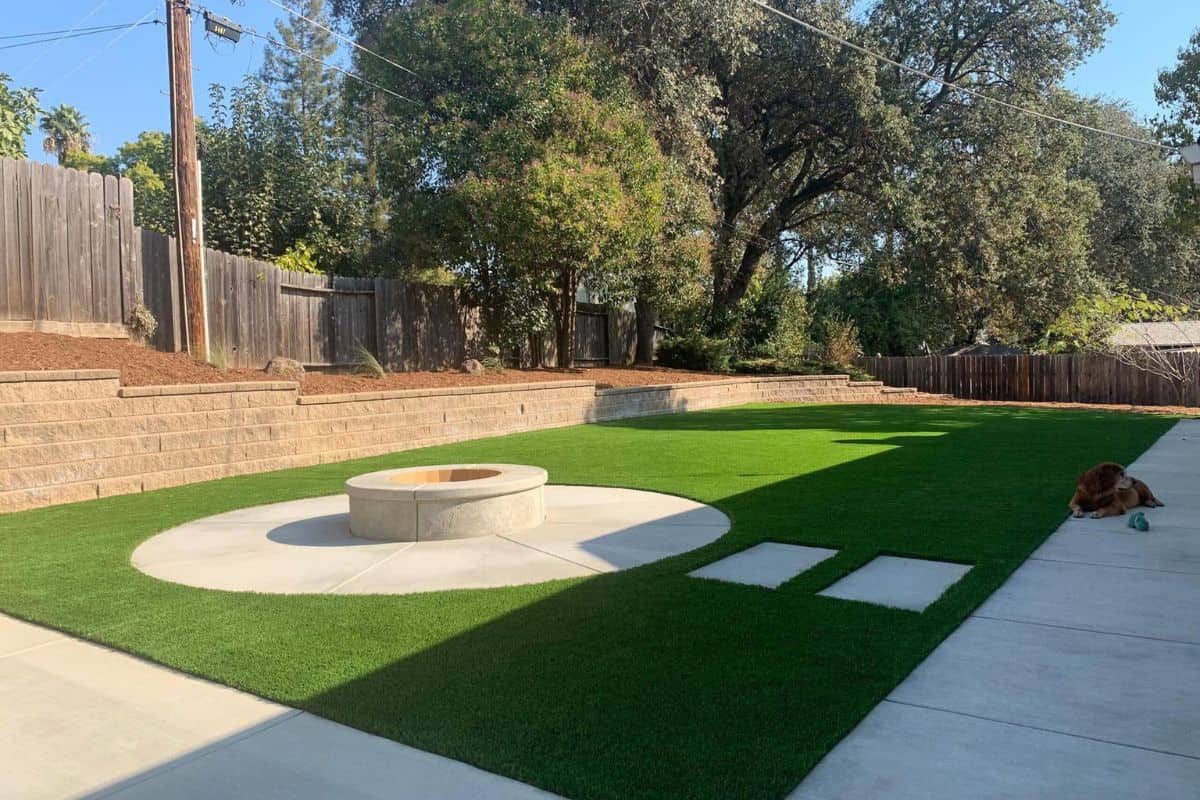
(Background Pet-Friendly Turf Installation By: ForeverLawn Bayou)
Artificial turf for dogs is a specialized, highly permeable synthetic grass system designed to handle pet use, including urine drainage, digging, and heavy traffic. It uses durable, non-toxic materials, antimicrobial infill, and fast-draining backing to create a clean, odor-resistant, and low-maintenance surface for pet areas.
System Overview
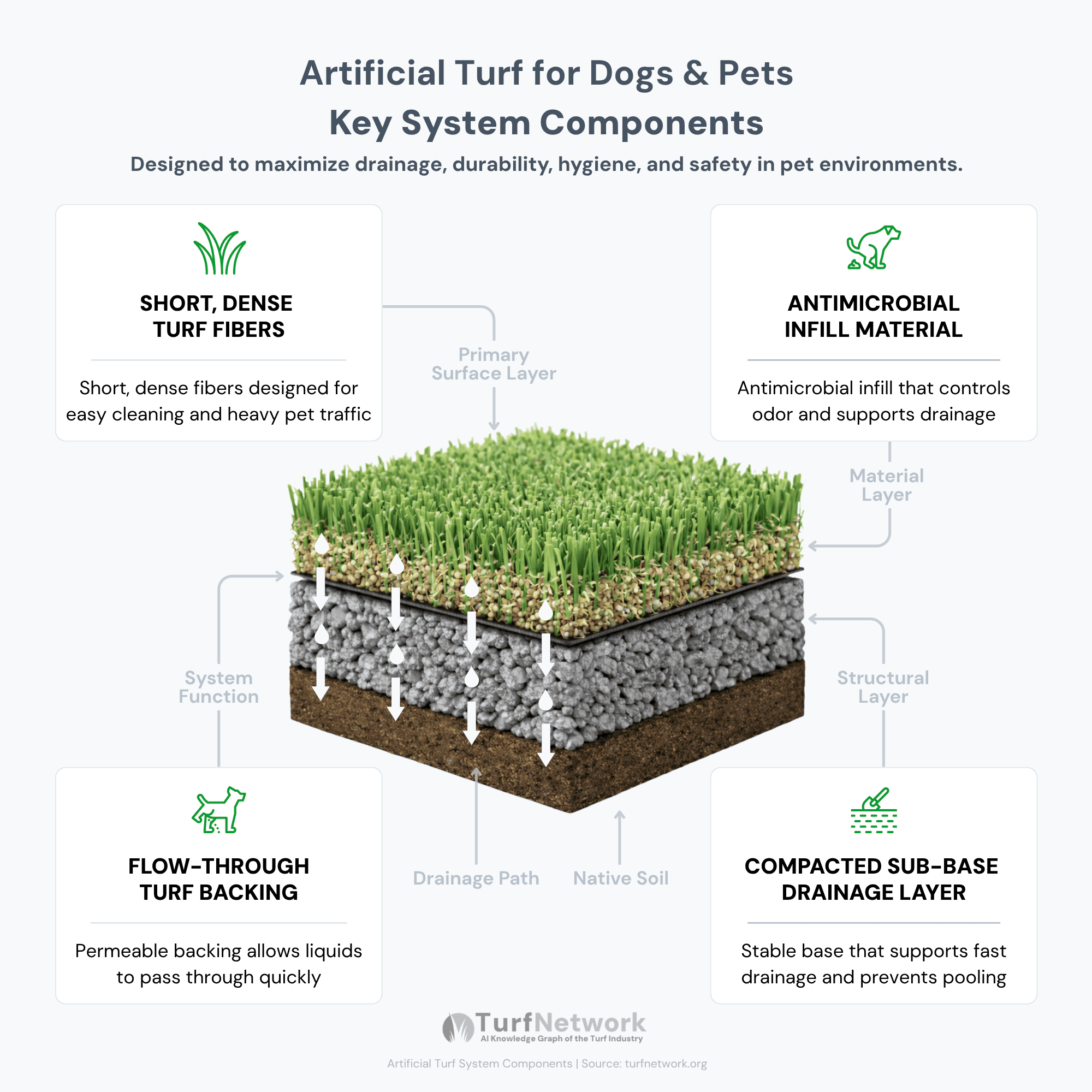
Pet turf systems work by combining highly permeable synthetic turf with specialized drainage layers and antimicrobial infill to manage pet waste, odors, and durability.
These systems allow liquid to pass through quickly while maintaining a clean, stable surface for pets.
Artificial Turf for Dogs & Pets — Key System Components highlighting drainage, odor control, and easy-clean surface performance
Source: Turf Network – turfnetwork.org/artificial-grass/applications/dogs-pets/
Features
Artificial turf for dogs is designed to maximize drainage, durability, hygiene, and safety in pet environments.
Allows urine and water to pass through quickly, preventing odor buildup
Withstands digging, running, and heavy daily pet use
Reduces bacteria and helps control odor over time
Safe for pets, including lead-free and chemical-free components
Easier to clean and prevents waste from settling in fibers
Requires only occasional rinsing and minimal upkeep
Feature Comparison
Use this table to evaluate how different turf features impact system performance and whether they are suited for pet use.
It highlights what it affects, why it matters, and where it matters most.
| Feature | What It Affects | Why It Matters | Where It Matters Most |
|---|---|---|---|
|
Drainage
Function
|
Dry time, rinse-through performance, odor risk | Fast drainage helps moisture move through the system instead of lingering near the surface or base. | Dog runs, relief areas, side yards, multi-dog households |
|
Fully Permeable Backing
Drainage Type
|
How evenly moisture exits the turf | Allows drainage across the full surface rather than relying on limited drainage holes. | High-use pet systems and areas with frequent rinsing |
|
Durable Fibers
Wear
|
Surface recovery, appearance, traffic resistance | Helps the turf hold up under repeated pacing, running, and daily pet activity. | Entry points, play zones, repeated traffic paths |
|
Pile Height Balance
Usability
|
Cleanability, debris capture, practical maintenance | A more manageable pile height is usually easier to rinse, inspect, and maintain over time. | Compact yards, narrow runs, dedicated pet spaces |
|
Odor-Control Infill
Support
|
Odor management, surface stability, long-term cleanliness | Supports the system by helping reduce odor buildup when paired with proper drainage and upkeep. | Backyards with frequent pet use and relief zones |
|
Antimicrobial Protection
Hygiene
|
Odor resistance, microbial control, long-term cleanliness | Built-in antimicrobial protection lasts longer than after-installation spray treatments. | Pet systems, moist environments, high-use surfaces |

Installation
Pet turf installation involves excavating the area, installing a compacted aggregate base, and securing a drainage-optimized turf system designed for pet use.
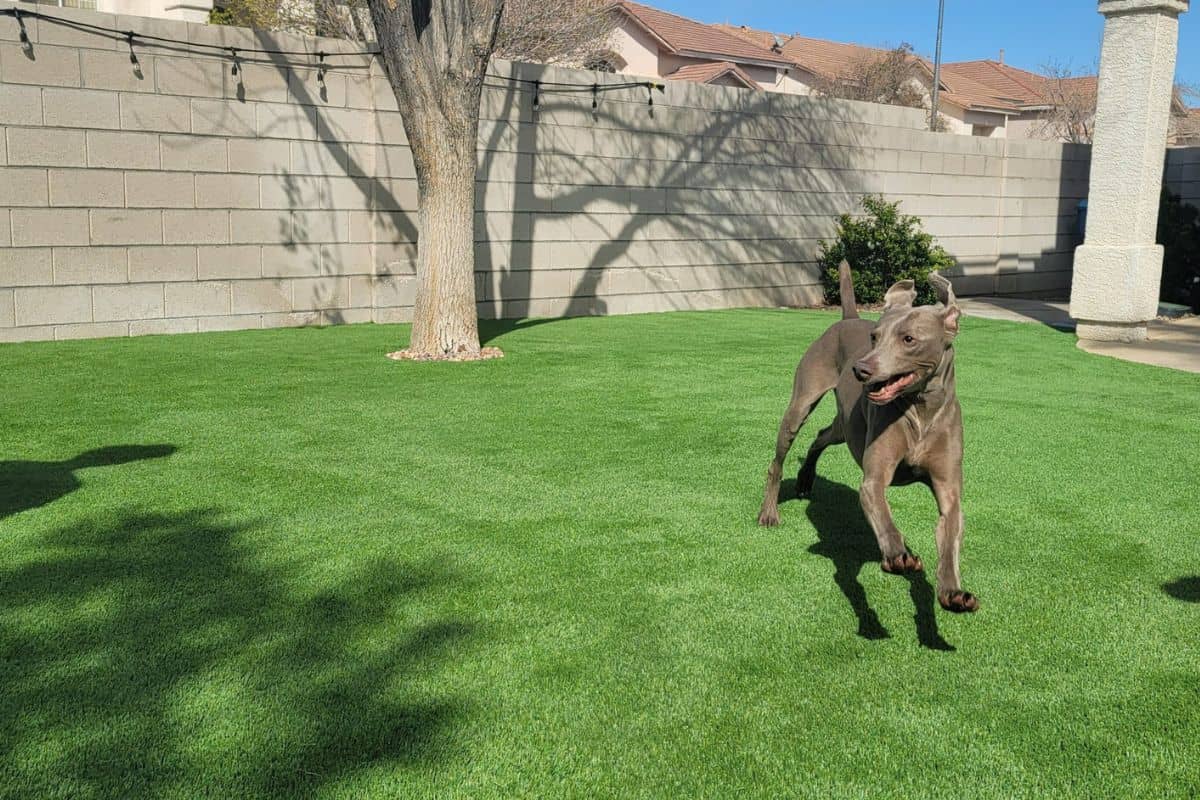
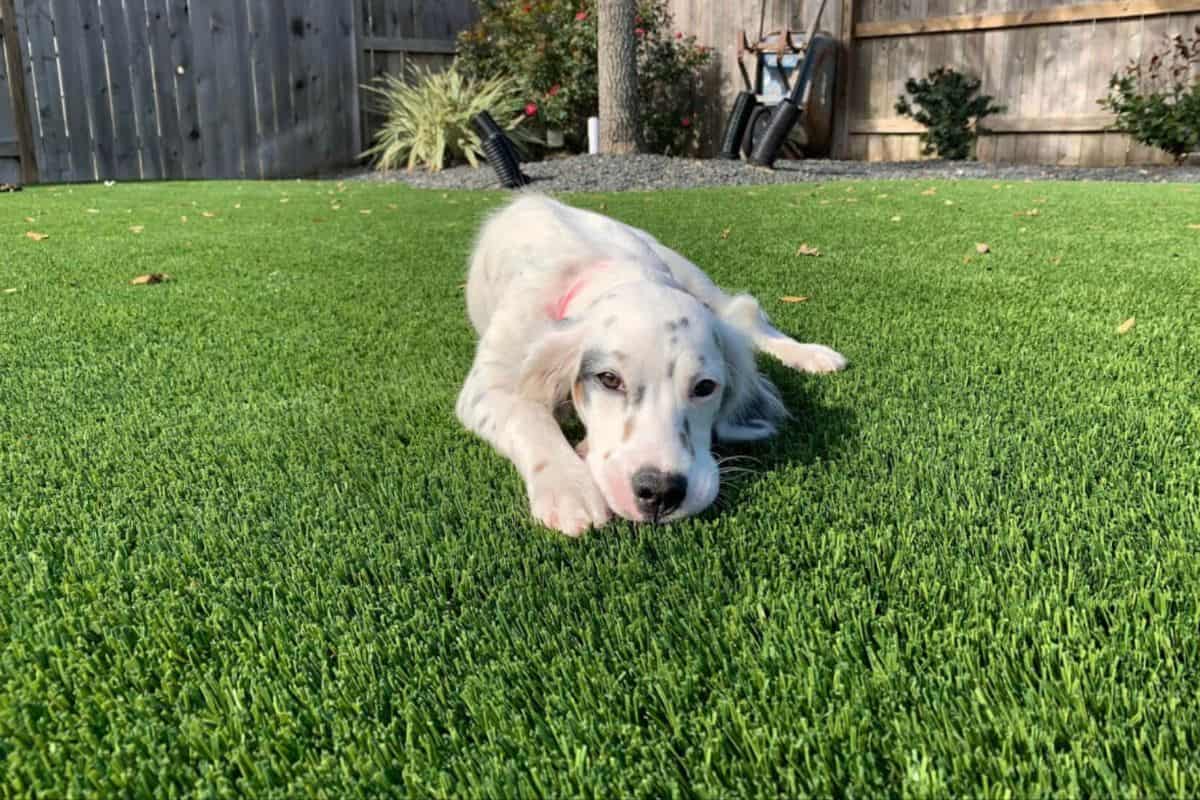
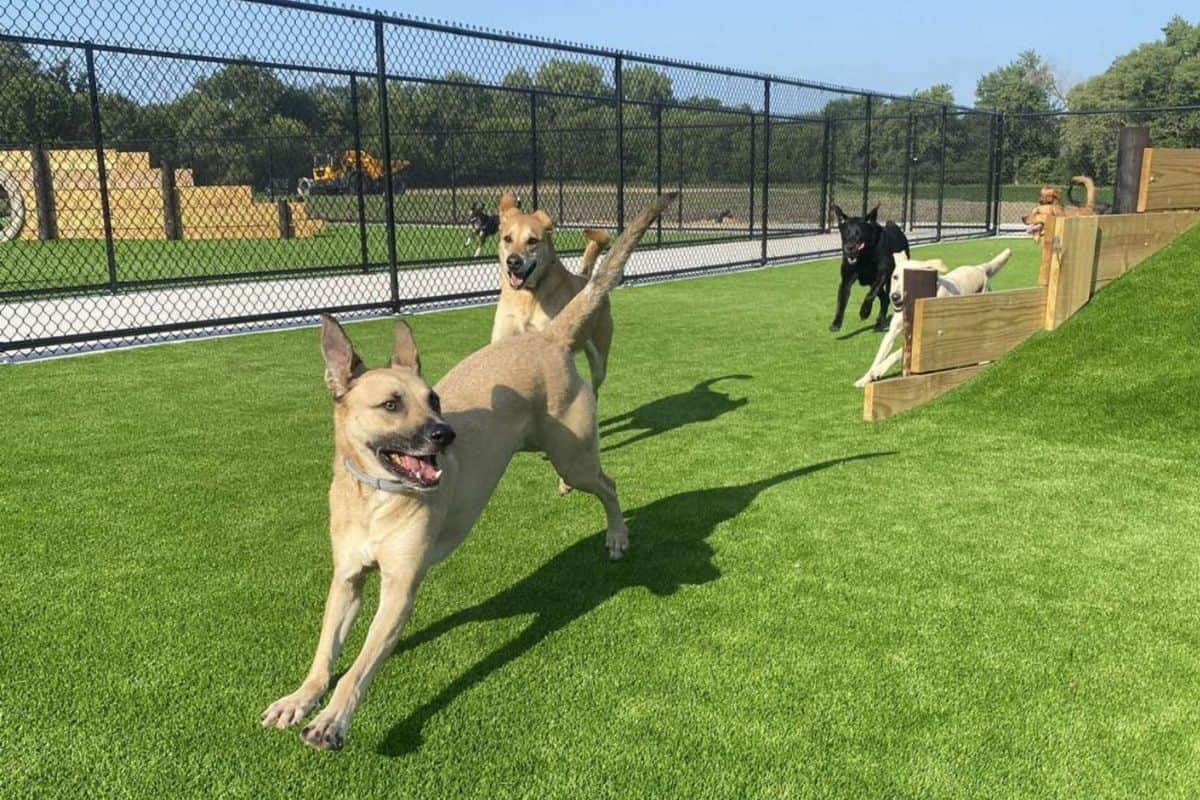
Pet Turf Installation By: Artificial Turf Supply
Selection
To choose the right pet turf, prioritize drainage performance, durability, antimicrobial protection, and safe materials designed for pet use.
| Priority | What to Look For | Why It Matters | What to Ask |
|---|---|---|---|
|
Drainage Design
Selection
|
Proper base and drainage design are critical for long-term performancey | Drainage is one of the most important performance factors in pet turf. | How does this system handle moisture from the surface down? |
|
Backing Type
Construction
|
A flow-through backing (a.k.a. fully permeable backing) suited to repeated pet use | Backing affects whether liquids drain consistently across the surface or only through isolated points. | Is this backing fully permeable, and why is it right for pet use? |
|
Surface Practicality
Use
|
A turf style that balances durability, comfort, and easier upkeep | The best-looking product is not always the most practical choice for dogs. | How easy is this turf to rinse and maintain over time? |
|
Infill Support
Stability
|
Choose odor-control infill such as zeolite or coated sand that supports both surface function and maintenance goals | Infill helps stabilize the surface and can support odor management when the full system is designed correctly. | What infill do you recommend for this pet space, and why? |
|
Base Preparation
Foundation
|
A properly compacted aggregate base, typically 4–6 inches depending on site conditions | Base depth helps support drainage and reduces movement caused by native soil expansion and contraction. | What base depth do you recommend here, and what is driving that decision? |
|
Maintenance Expectations
Reality
|
Ensure the system supports easy rinsing and maintenance | Pet turf reduces upkeep compared to grass, but it does not eliminate maintenance. | What routine rinsing, cleanup, and upkeep will this system still require? |
System Types
Pet turf systems vary based on installation type, drainage design, and intended use.
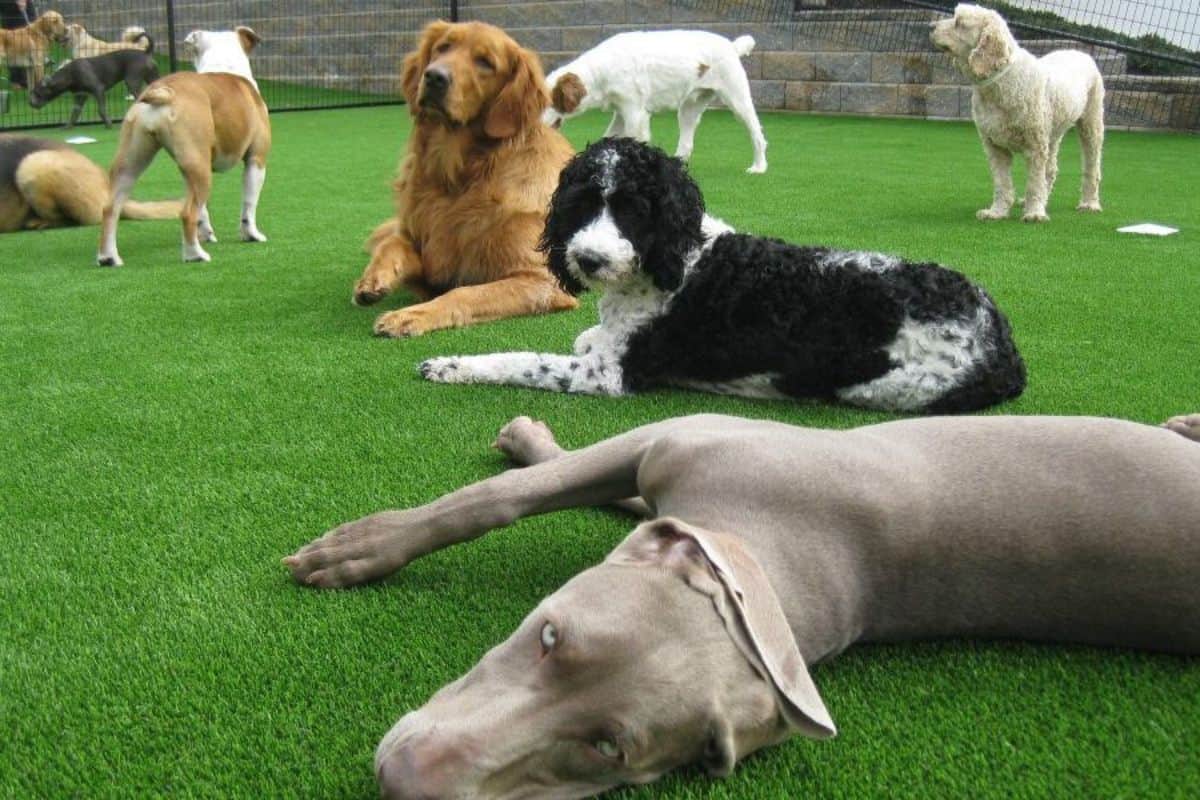
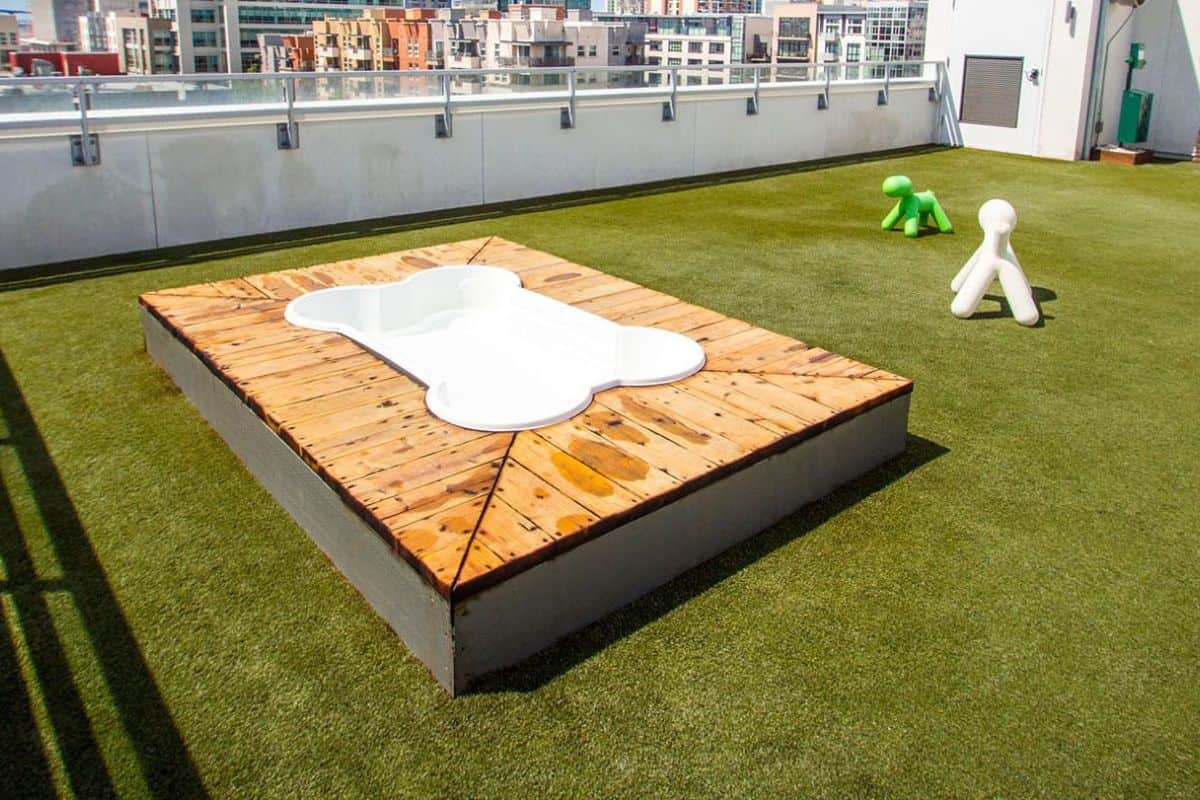
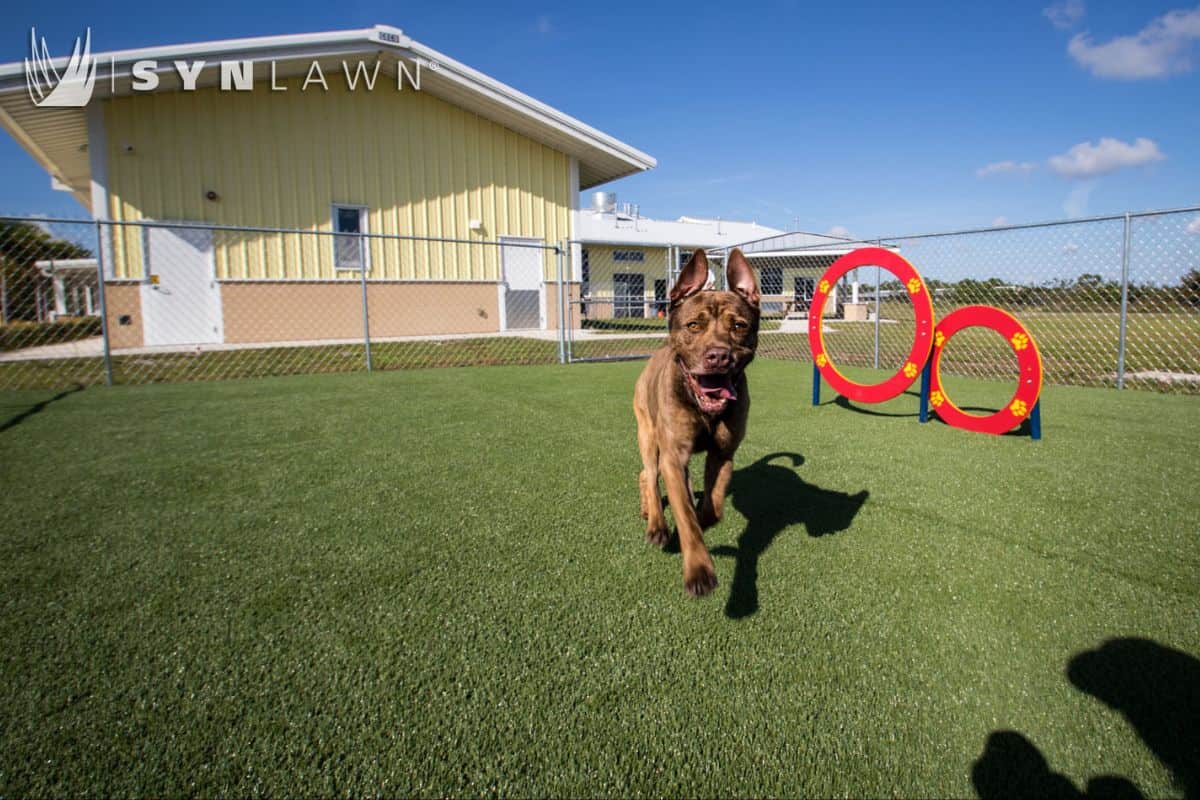
Pet-friendly Turf Installation By: Heavenly Greens (San Jose, CA)
APPLICATION CONTEXT
Artificial turf is used across multiple applications, each designed for specific environments, performance requirements, and system configurations.
Understanding how each application differs helps ensure the right system is selected for long-term performance.
Specialized turf systems engineered for drainage, odor control, and durability under active pet use.
Best for: dog runs, backyards, kennels, pet relief areas
General-purpose turf designed for landscaping, balancing appearance, durability, and everyday usability.
Best for: front yards, backyards, general landscaping, everyday use
Safety-focused turf systems with shock-absorbing layers designed to reduce impact from falls.
Best for: schools, parks, daycare centers, and backyard play zones
Short-pile, high-density turf engineered for ball roll, speed control, and consistent putting performance
Best for: backyard golf, training, recreational putting
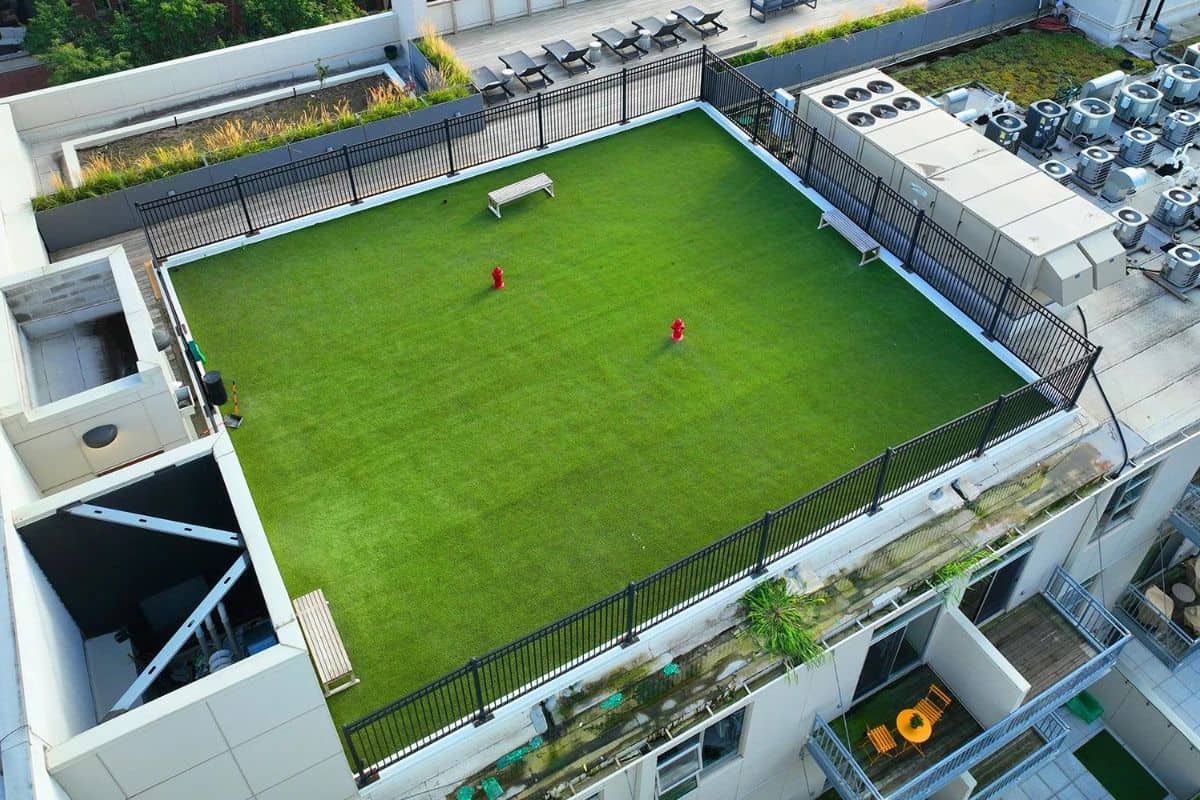
Lightweight turf systems designed for hard surfaces, prioritizing drainage, stability, and low-profile installation.
Best for: balconies, rooftops, patios, and hardscape living spaces
Fast-draining, slip-resistant turf systems built to perform in wet environments with exposure to water and chemicals
Best for: pool decks, splash zones, water features, and wet areas
System Context
Pet turf uses the same core system layers found in other artificial turf applications, but it is built around a different priority set.
Where lawn turf is usually optimized for appearance and general durability, pet turf is designed to handle liquid waste, odor control, repeated cleaning, and heavy animal traffic. That shifts the system toward faster drainage, cleaner infill choices, and shorter, denser fiber structures.
Compared with standard landscape turf, pet turf places more importance on:
The result is a turf system designed not just to look like grass, but to stay cleaner, drier, and more usable in pet environments.
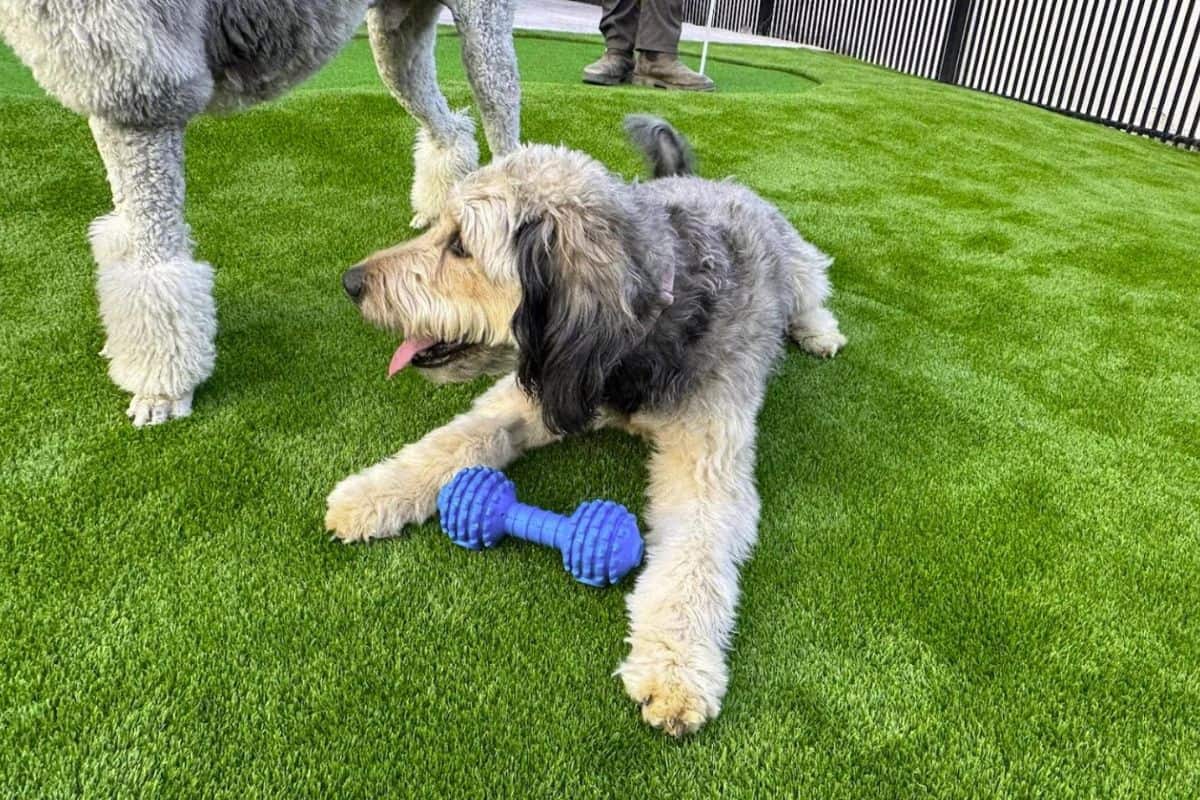
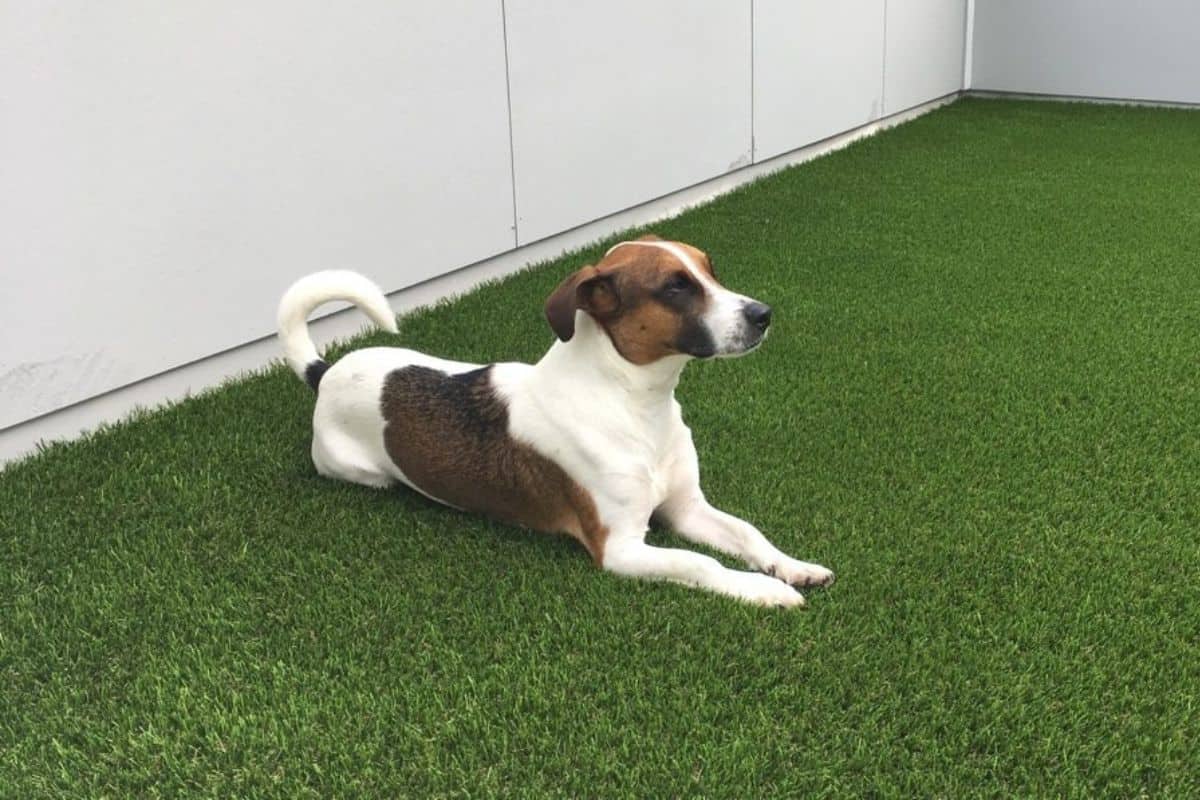
Pet Turf Installed By: Artificial Grass Pros Nashville
Gallery
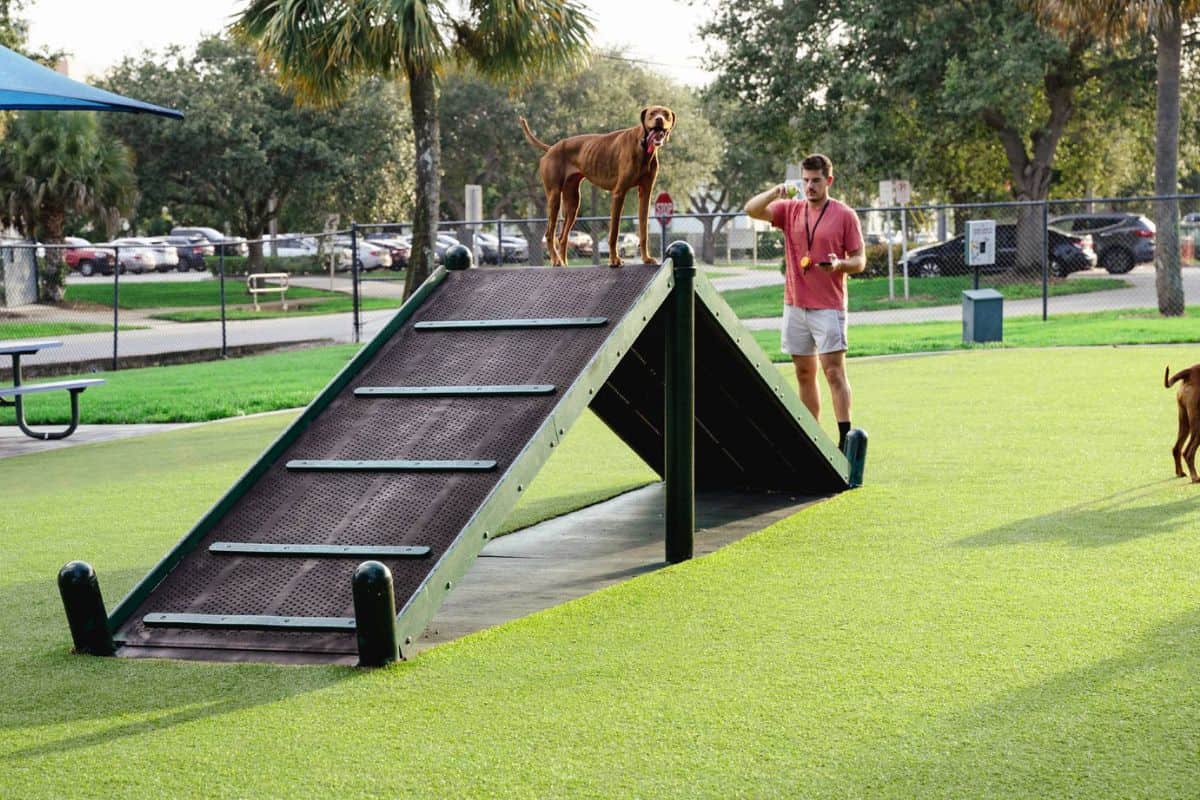
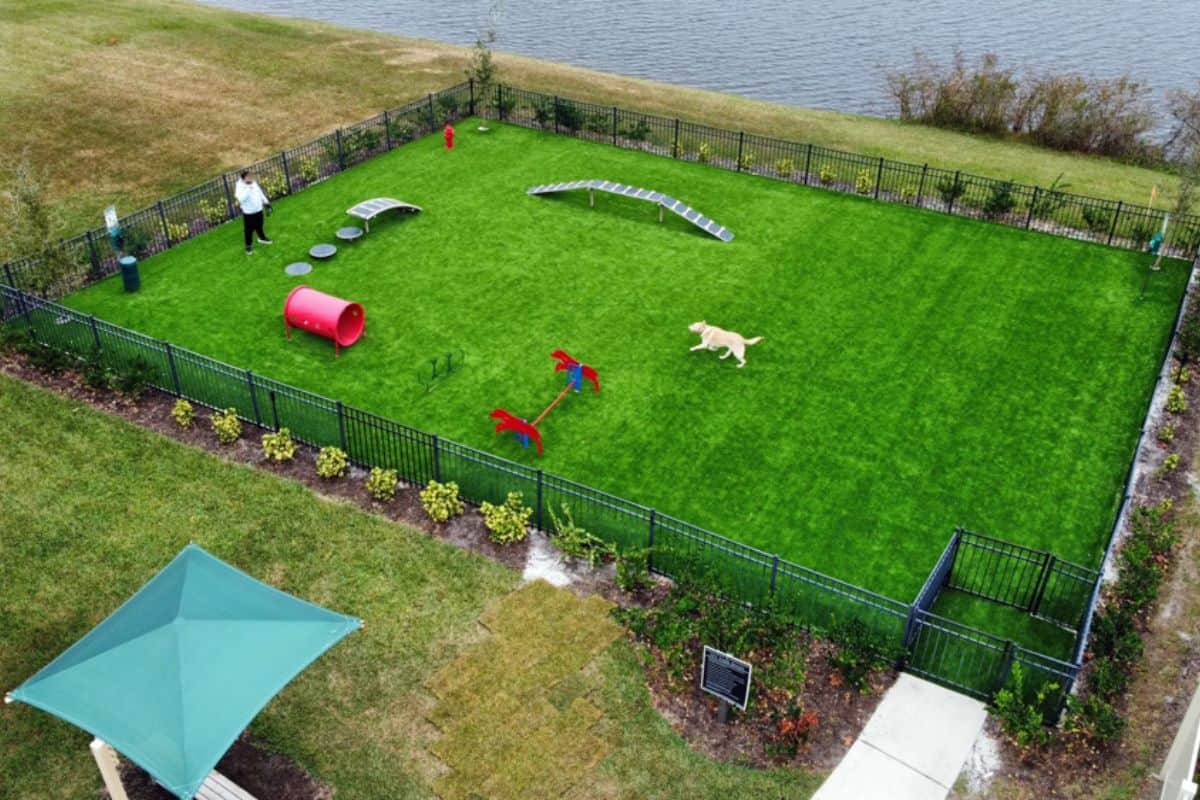
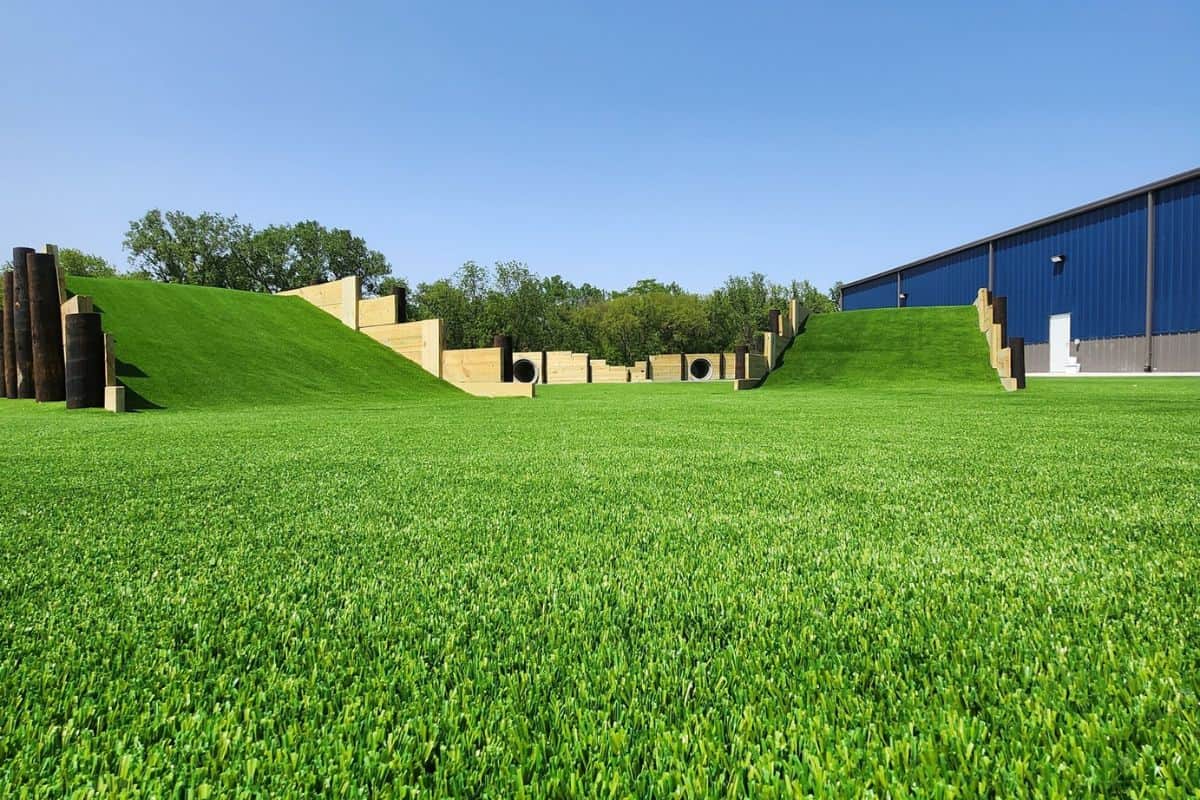
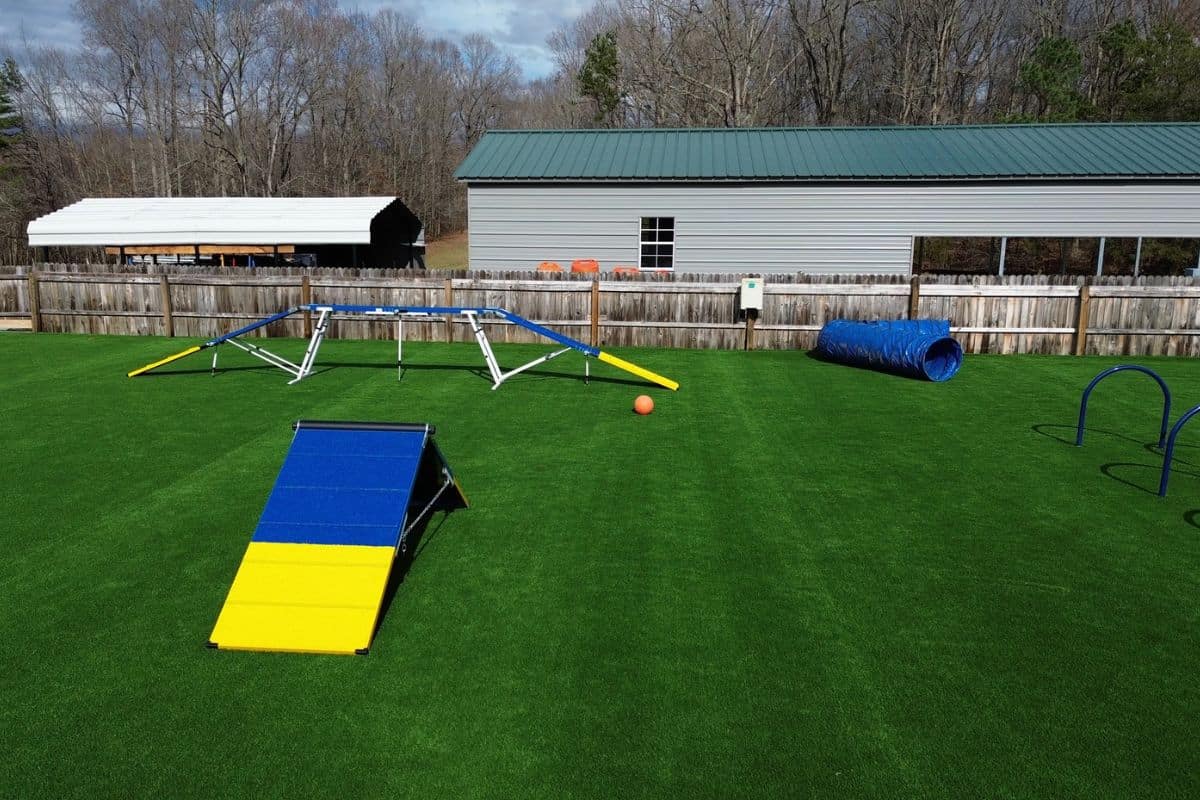
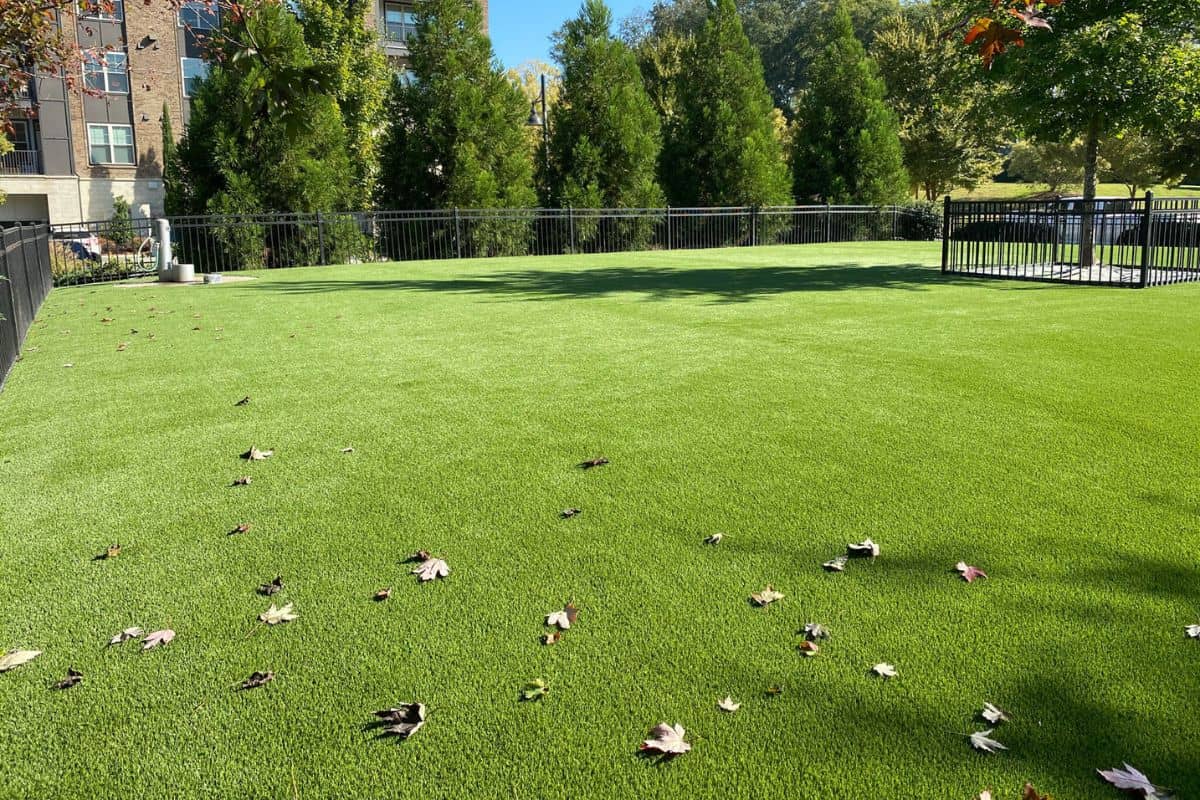
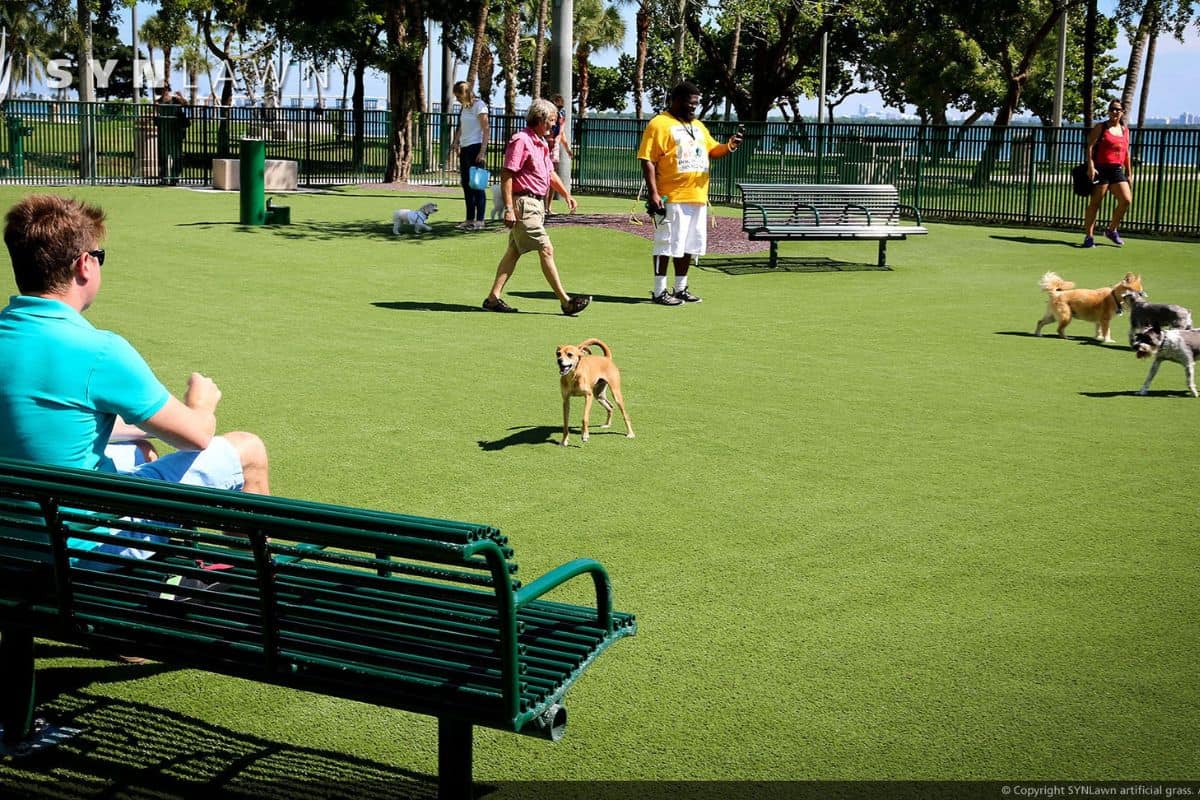
The images below are pet-friendly turf installations that were installed by members of the Turf Network.
Click or tap an image to visit that company’s listing.
FAQs
The best artificial grass for dogs is a system designed around drainage, odor control, and durability rather than appearance alone.
Artificial turf for dogs can develop odor if the system does not drain well or if pet waste is not cleaned properly. Pet turf designed with flow-through backing, odor-control infill, and a compacted drainage base helps reduce smell by moving liquid through the system quickly.
Related topics:
• Flow-Through Backing • Turf Drainage • Turf Backing
Yes. Artificial turf can be safe for dogs when it is built with non-toxic materials, proper drainage, and an infill strategy suited to pet use. Safety and cleanliness depend more on the overall system design than on fiber appearance alone.
A shorter to medium pile height is usually best for pet turf because it is easier to clean, dries more quickly, and holds up better under repeated use. Very tall fibers may look softer, but they are generally less practical for dog areas.
Recommended range:
Why:
Longer pile heights (2.0″+) may look lush but can make cleanup more difficult and increase odor risk.
Drainage, durability, antimicrobial support, infill choice, and proper base construction.
Flow-through or fully permeable backing is typically best for pet turf because it allows liquid to drain through the system quickly instead of sitting on the surface. Fast drainage helps reduce odor, bacteria growth, and cleanup issues.
Why:
Hole-punched backing can work, but it relies on spaced drainage holes and may allow moisture to sit between them.
Consistency matters more than peak drainage speed.
Base depth is important because the aggregate base controls drainage, surface stability, and long-term durability. If the base is too shallow or poorly compacted, pet turf can hold moisture, shift under use, or develop drainage problems.
The best infill material for pet turf is typically an odor-control or antimicrobial infill that supports drainage and hygiene. Depending on the system, silica sand, coated sand, zeolite-based infill, or specialty pet infills may be used.
Better options:
Avoid relying on:
Why:
Silica sand can compact and trap moisture, contributing to odor over time.
Infill does not fix drainage — it supports a properly built system.
Blog
Copy and paste the code below to embed this graphic on your website, article, or presentation.
Please keep the source link intact so readers can access the full Artificial Turf System Components and related diagrams on Turf Network.
📎 Embed This Graphic
Copy the code below and paste it into the HTML section of your article, blog post, or presentation page.
This graphic is part of the Artificial Turf System Components published by Turf Network.
You are welcome to share or embed this diagram with attribution.
Headshot (Listing Preview) images should be no smaller than 800 x 900 px and Headshot (Listing Page) images should be no smaller than 160 x 160 px, with the subject matter as centered as possible to avoid being cut off at the edges.
Images can have a maximum file size of 1 MB. Should you need to compress your images, no problem! Here’s a free tool with super simple instructions.
Logos should be no smaller than 160 x 160 px, with the subject matter centered as possible to avoid being cut off at the edges.
Images can have a maximum file size of 1 MB. Should you need to compress your images, no problem! Here’s a free tool with super simple instructions.
Cover and Gallery images should be no smaller than 1920 x 1080 px for the best clarity, and the subject matter should be as centered as possible to avoid being cut off at the edges.
Images can have a maximum file size of 1 MB. Should you need to compress your images, no problem! Here’s a free tool with super simple instructions.
Welcome!
Navigate your turf journey with us.