- Home
- Artificial Grass
- Applications
- Lawns & Landscapes
Artificial Turf for
Lawns & Landscapes
Artificial turf for lawns and landscapes is designed to replicate the appearance and function of natural grass while reducing maintenance and improving long-term performance.
(Background Artificial Lawn Installation By: SYNLawn of Georgia)
What is Artificial Turf for Lawns?
Artificial turf for lawns is a durable, low-maintenance surface made from synthetic fibers designed to replicate the look and feel of natural grass in residential and landscape settings.
Unlike traditional grass, artificial lawn turf does not require watering, mowing, or fertilizing, while maintaining a consistent green appearance year-round. Modern systems combine polyethylene or polypropylene fibers, a reinforced backing, and infill material to create a stable, resilient surface suitable for everyday use.
Artificial turf lawns are commonly used in residential yards, pet areas, decorative landscapes, and high-traffic outdoor spaces where natural grass struggles to grow or maintain consistency.
System Overview
How Artificial Lawn Systems Work
Artificial turf lawn systems function as multi-layered surfaces designed to provide stability, drainage, and long-term durability.
Key Components of an Artificial Lawn System:
Each system includes:
- A compacted sub-base that provides structural support and prevents shifting
- A backing layer that secures the turf fibers and allows for drainage
- Synthetic turf fibers that replicate the appearance and feel of natural grass
- Infill material that adds weight, supports the fibers, and improves performance
Water drains through the turf backing into the sub-base below, preventing pooling and allowing the surface to dry quickly. The combination of fiber structure, backing type, and infill determines how the lawn performs under foot traffic, weather exposure, and long-term use.
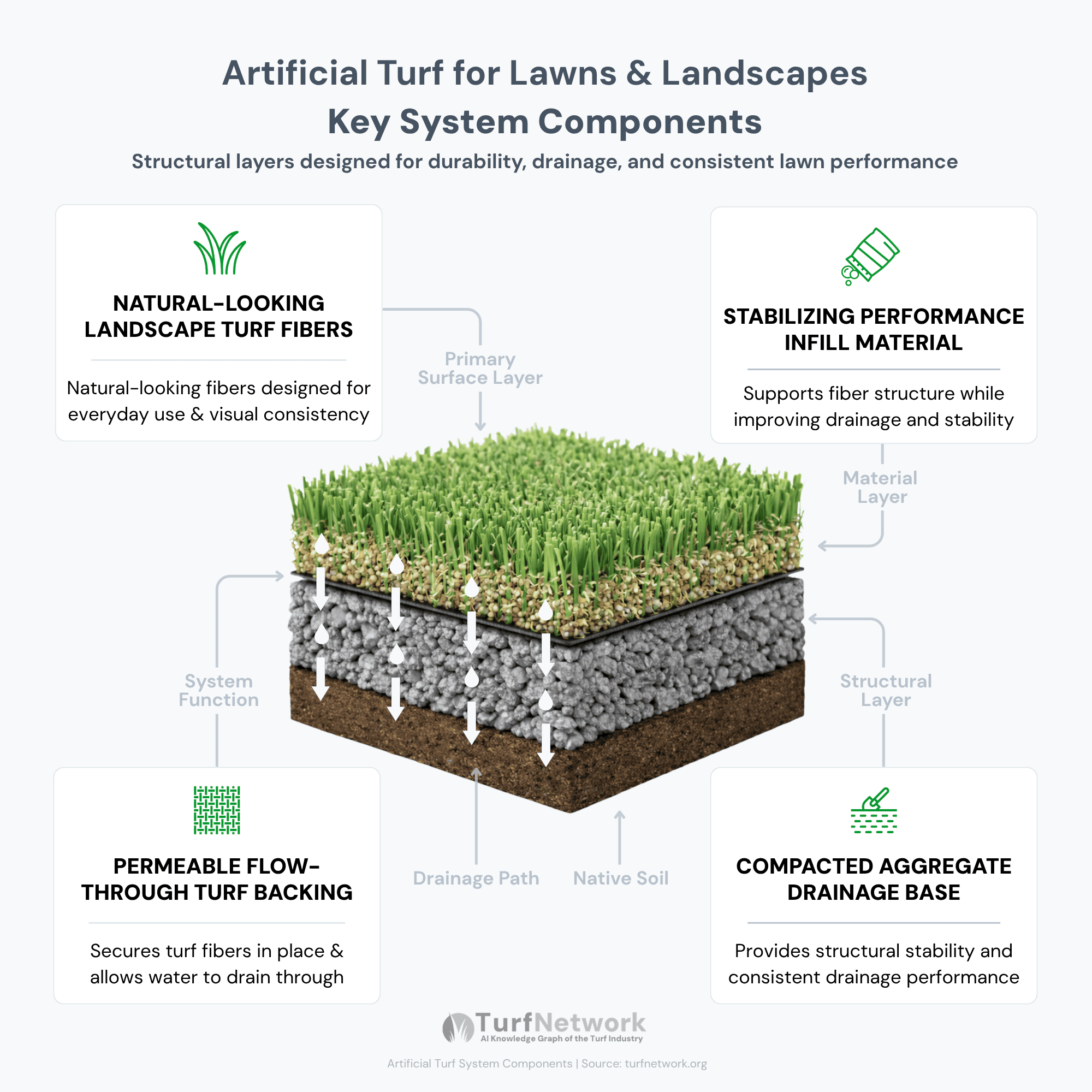
Artificial Turf for Lawns & Landscapes — Key System Components illustrating everyday durability, drainage performance, and structural support
Source: Turf Network – turfnetwork.org/artificial-grass/applications/lawns-landscapes/
Artificial Turf Lawn Materials & Construction
Artificial turf lawn performance is determined by the materials used within the system, particularly the fiber type, backing, and infill.
Fiber Materials
Most residential lawns use polyethylene fibers for a soft, natural feel, while polypropylene is sometimes used in lower-cost systems or thatch layers.
Nylon may be used in high-traffic areas due to its strength.
Backing Systems
High-quality turf uses polyurethane (PU) backing for durability and dimensional stability.
For improved drainage, flow-through backing systems allow water to pass evenly through the entire surface rather than relying on perforation holes.
Infill Materials
Common infill options include silica sand for stability, coated sand or organic infills (such as zeolite) for odor control and temperature regulation.
The combination of these materials directly impacts durability, comfort, drainage performance, and overall lifespan.
Features
Key Features of
Artificial Turf for Lawns
Artificial turf lawn systems are designed to replicate the look, feel, and performance of natural grass.
Low Maintenance
Eliminates mowing, watering, and fertilizing only requiring minimal upkeep
Durability
Designed to withstand foot traffic, pets, and weather exposure
Drainage Performance
Backing systems allow water to pass through efficiently
UV Stability
Fibers are treated to resist fading from sun exposure
Realistic Appearance
Multi-tone fibers and thatch layers mimic natural grass
Versatile Design
Available in different pile heights, densities, and textures
Feature Comparison
How Turf Features Impact Performance
Use this table to evaluate how different turf features impact system performance and whether they are suited for artificial lawn use.
It highlights what it affects, why it matters, and where it matters most.
| Feature | What It Affects | Why It Matters | Where It Matters Most |
|---|---|---|---|
|
Pile Height
Appearance
|
Visual softness, realism, surface comfort | Pile height changes how lush the lawn looks and feels, but taller turf is not always better for durability or easy cleanup. | Front yards, backyards, and decorative landscape areas |
|
Face Weight
Durability
|
Density, resilience, long-term wear | Higher face weight generally means more fiber per square yard, which improves durability, fullness, and recovery under traffic. | Family lawns, pet areas, and higher-traffic residential spaces |
|
Fiber Shape
Performance
|
Resilience, shine reduction, heat response | Blade shape influences how well fibers stand upright, how natural the lawn looks, and how the surface performs in sun and traffic. | Residential lawns where appearance and durability both matter |
|
Backing Type
Support
|
Drainage, dimensional stability, lifespan | The backing controls how water moves through the system and how well the turf holds its shape over time. | Pet-friendly lawns, wet climates, and long-term residential installs |
|
Infill Material
Stability
|
Blade support, ballast, odor control, cushioning | Infill helps keep fibers upright, adds weight to the system, and can improve comfort, drainage, or odor management depending on the material used. | General lawns, pet areas, and multi-use backyard spaces |
|
Drainage Capacity
Usability
|
Dry time, runoff management, surface cleanliness | Good drainage keeps the lawn usable after rain, reduces puddling, and improves hygiene in spaces exposed to water or pet use. | Shaded yards, pet lawns, and regions with frequent rainfall |
Installation
How Artificial Lawns are Installed
Artificial turf lawn installation is a structured process designed to create a stable, well-draining surface that performs consistently over time.
Step-by-Step Installation Process:
- Site Preparation: Remove existing grass and soil to a depth of 3–4 inches and grade for drainage.
- Base Installation: A compacted layer of crushed stone or road base (typically 3–4 inches) is installed to provide structural support and proper drainage.
- Optional Weed Barrier: A permeable fabric may be installed to help prevent weed growth while maintaining water flow.
- Turf Placement & Cutting: Roll out and trim turf to fit the area precisely.
- Seaming & Securing: Edges and seams are secured using landscape nails or spikes to prevent movement over time.
- Infill Application: Infill material (typically silica sand or specialty infill) is spread across the surface to add weight, stability, and support.
- Final Grooming: Brush the turf to distribute infill and create a natural appearance.
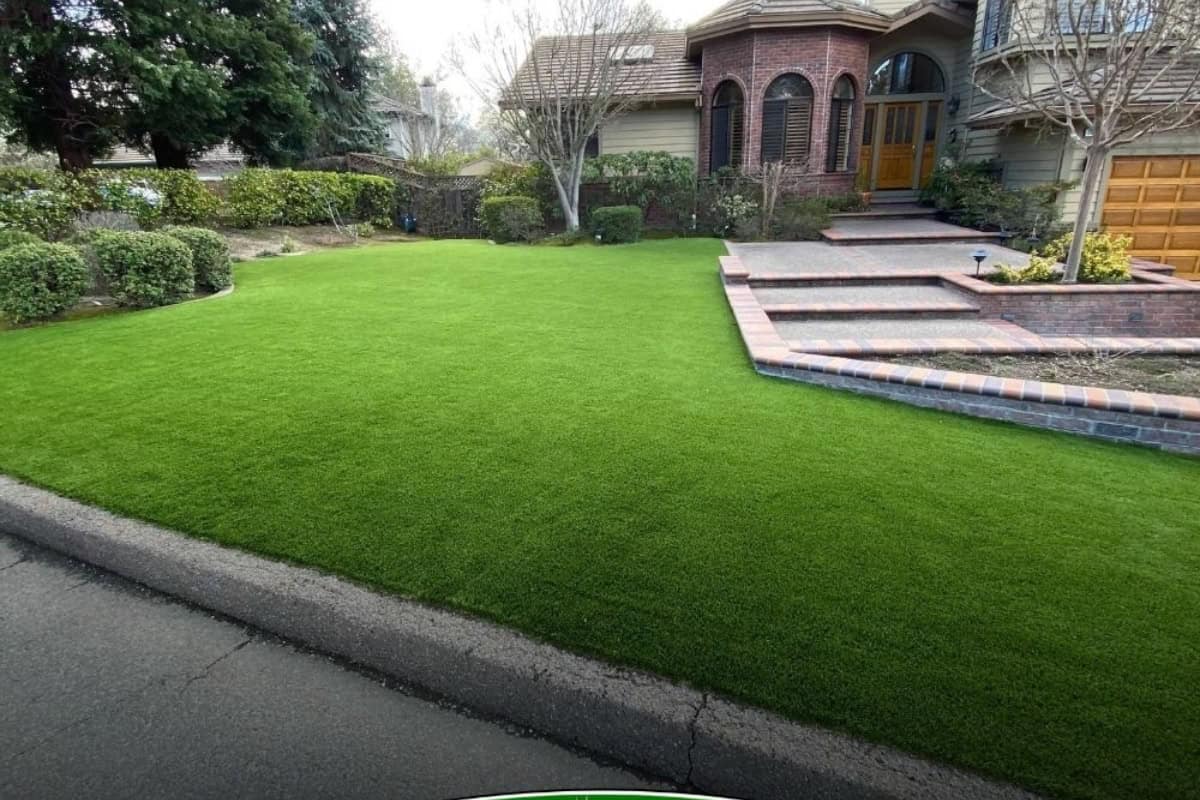
Artificial Lawn Installation By: Heavenly Greens (San Jose, CA)
Product Selection
How to Choose the Right Turf for Lawns
Choosing the right artificial turf for lawns depends on balancing durability, appearance, and intended use.
Key Factors to Consider:
- Usage & Traffic: High-traffic areas require shorter pile heights and higher face weights for durability. Decorative areas can prioritize longer, softer fibers.
- Fiber Type: Polyethylene offers the most realistic look and feel, while nylon provides maximum strength for heavy-use areas.
- Drainage Needs: For pet areas or wet climates, flow-through backing systems provide faster, more consistent drainage.
- Comfort & Appearance: Blade shape and thatch layers affect softness, realism, and surface temperature.
| Priority | What to Look For | Why It Matters | What to Ask |
|---|---|---|---|
|
Realistic Appearance
Visual Quality
|
Multi-tone polyethylene fibers, natural-looking thatch, moderate pile height | Lawn turf should look balanced and believable from multiple angles, not flat, overly shiny, or uniformly colored. | Does this product use multiple fiber colors and a realistic thatch layer? |
|
Traffic Durability
Wear Resistance
|
Higher face weight, resilient blade shape, stronger backing | Lawns used by families, pets, or frequent guests need fibers that recover well and resist matting over time. | What is the face weight, and which fiber shape is used for resilience? |
|
Drainage Performance
Water Flow
|
Perforated or flow-through backing paired with a properly prepared sub-base | Drainage is what keeps the lawn usable after rain and helps prevent odor or pooling in pet and shaded areas. | What drainage rate does the turf support, and what base is recommended? |
|
Heat & Comfort
Surface Feel
|
Softer polyethylene fibers, lower sheen blade shapes, cooling or lighter infill options | Some lawn systems get hotter or feel harsher than others, especially in direct sun or barefoot spaces. | How does this turf handle surface temperature, and what infill options help reduce heat? |
|
Pet Compatibility
Cleanup
|
Fast drainage, odor-control infill, non-toxic materials, easy-clean surface | If the lawn will be used by dogs, performance depends on drainage speed, surface cleanup, and odor management. | Is this lawn turf suitable for pets, and which infill is recommended for odor control? |
|
Long-Term Value
Lifespan
|
PU backing, UV stabilization, quality installation system, solid warranty | The lawn’s lifespan depends on material quality and installation detail, not just how it looks on day one. | What is the backing type, UV protection level, and warranty coverage? |
System Types
Types of Artificial Lawn Systems
Artificial turf lawn systems vary based on material composition, intended use, and performance characteristics.
- Landscaping Turf: Designed for residential yards with a focus on realism and comfort
- Pet Turf Systems: Built for drainage, odor control, and durability
- High-Traffic Turf: Uses stronger fibers and higher density for heavy use
- Budget Turf: Lower-cost systems using polypropylene or reduced density
While these systems share the same structural foundation, variations in materials and construction determine how they perform over time.

Artificial Lawn Installation By: ToughLawn Austin
APPLICATION CONTEXT
Where Lawns & Landscapes Fit
Within Artificial Turf Applications
Artificial turf is used across multiple applications, each designed for specific environments, performance requirements, and system configurations.
Understanding how each application differs helps ensure the right system is selected for long-term performance.
Lawns & Landscapes
General-purpose turf designed for landscaping, balancing appearance, durability, and everyday usability.
Best for: front yards, backyards, general landscaping, everyday use
Putting Greens
Short-pile, high-density turf engineered for ball roll, speed control, and consistent putting performance
Best for: backyard golf, training, recreational putting
Pet Turf (Dogs & Pets)
Specialized turf systems engineered for drainage, odor control, and durability under active pet use.
Best for: dog runs, backyards, kennels, pet relief areas
Playgrounds & Play Areas
Safety-focused turf systems with shock-absorbing layers designed to reduce impact from falls.
Best for: schools, parks, daycare centers, and backyard play zones
Rooftops, Decks & Patios
Lightweight turf systems designed for hard surfaces, prioritizing drainage, stability, and low-profile installation.
Best for: balconies, rooftops, patios, and hardscape living spaces
Swimming Pool Surrounds
Fast-draining, slip-resistant turf systems built to perform in wet environments with exposure to water and chemicals
Best for: pool decks, splash zones, water features, and wet areas
System Context
How Lawns & Landscapes Fit Within Artificial Turf Systems
Lawns and landscape turf represent the most general-use version of an artificial turf system. The same core layers still matter, but the system is usually balanced around appearance, comfort, drainage, and everyday durability.
Unlike pet turf, playground turf, or putting greens, lawn systems are not usually built around one dominant performance demand. Instead, they are designed to perform well across a broader mix of residential uses, including foot traffic, visual realism, surface comfort, and low-maintenance upkeep.
Compared with other applications, lawn and landscape turf typically place more emphasis on:
- Realistic fiber appearance and color blend
- Balanced drainage and stability
- Infill that supports everyday resilience
- General-use backing and base construction
The result is a versatile turf system built for consistent landscape performance across front yards, backyards, side yards, and ornamental outdoor spaces.

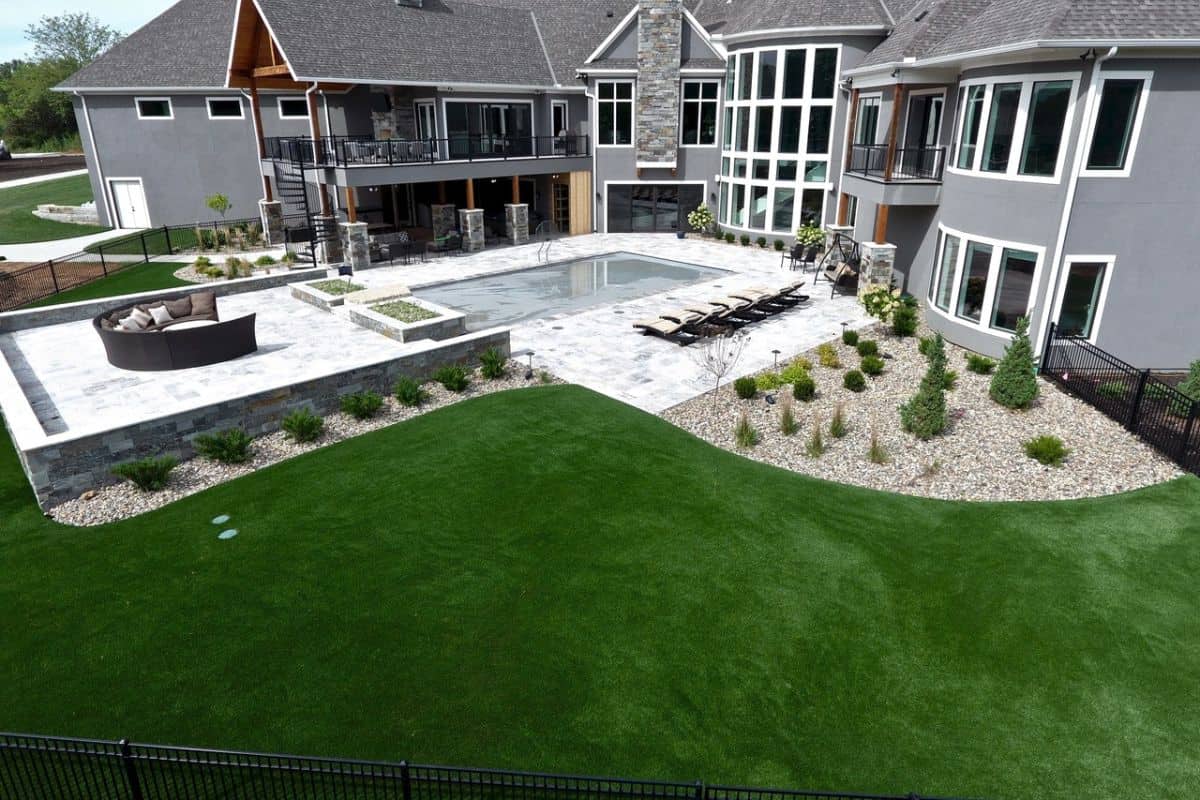
Artificial Lawn Installed By: GoTurf Nebraska
Gallery
Real-World
Artificial Lawn Installations
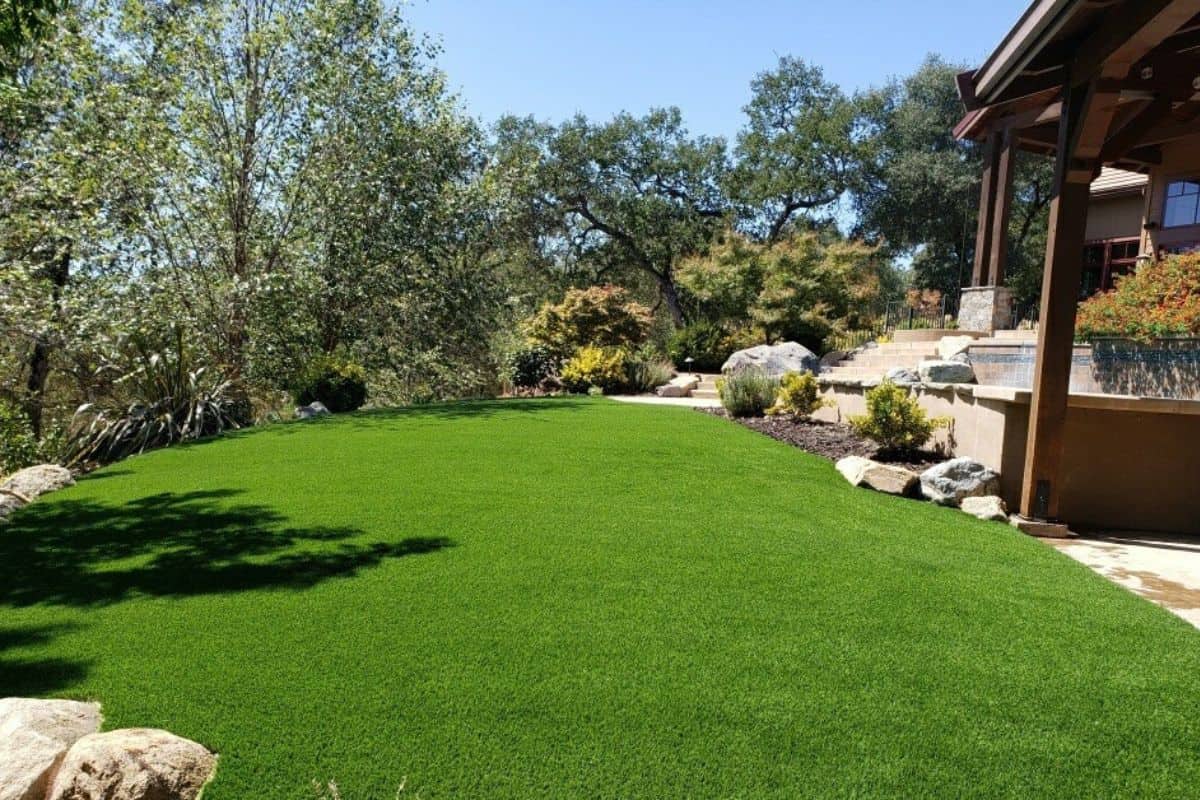
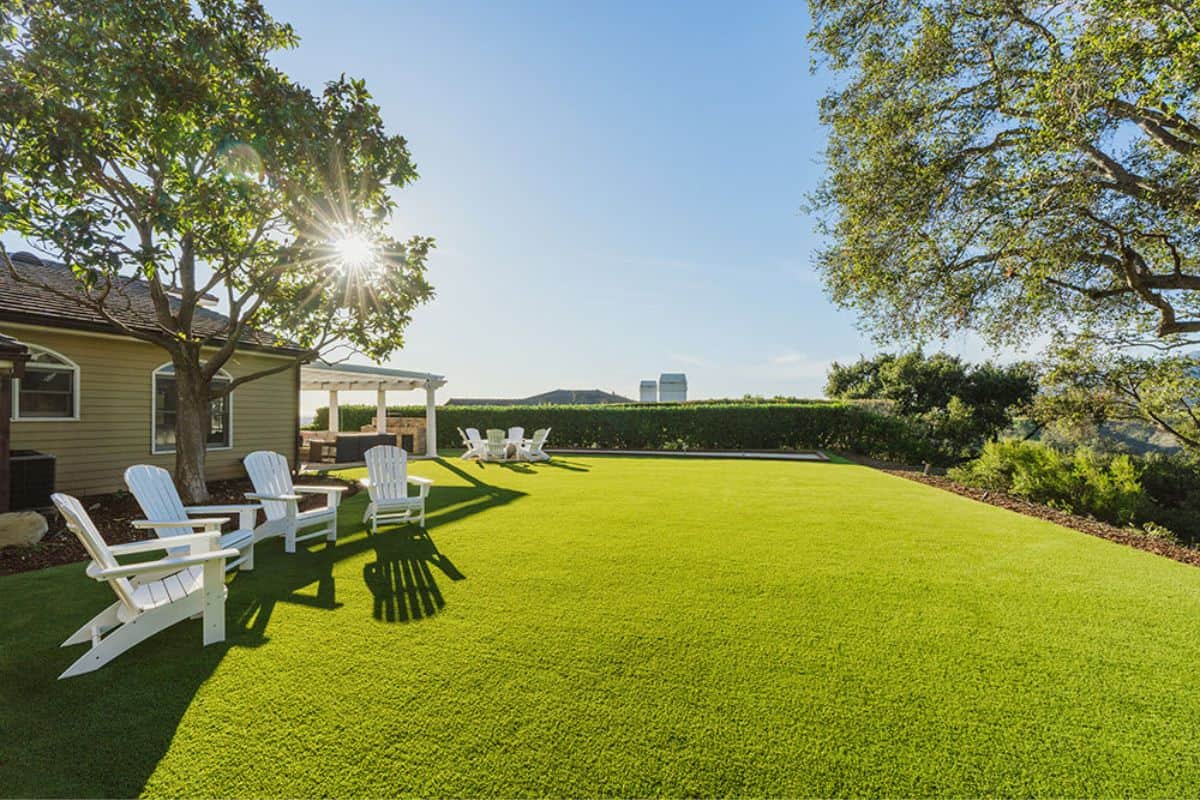
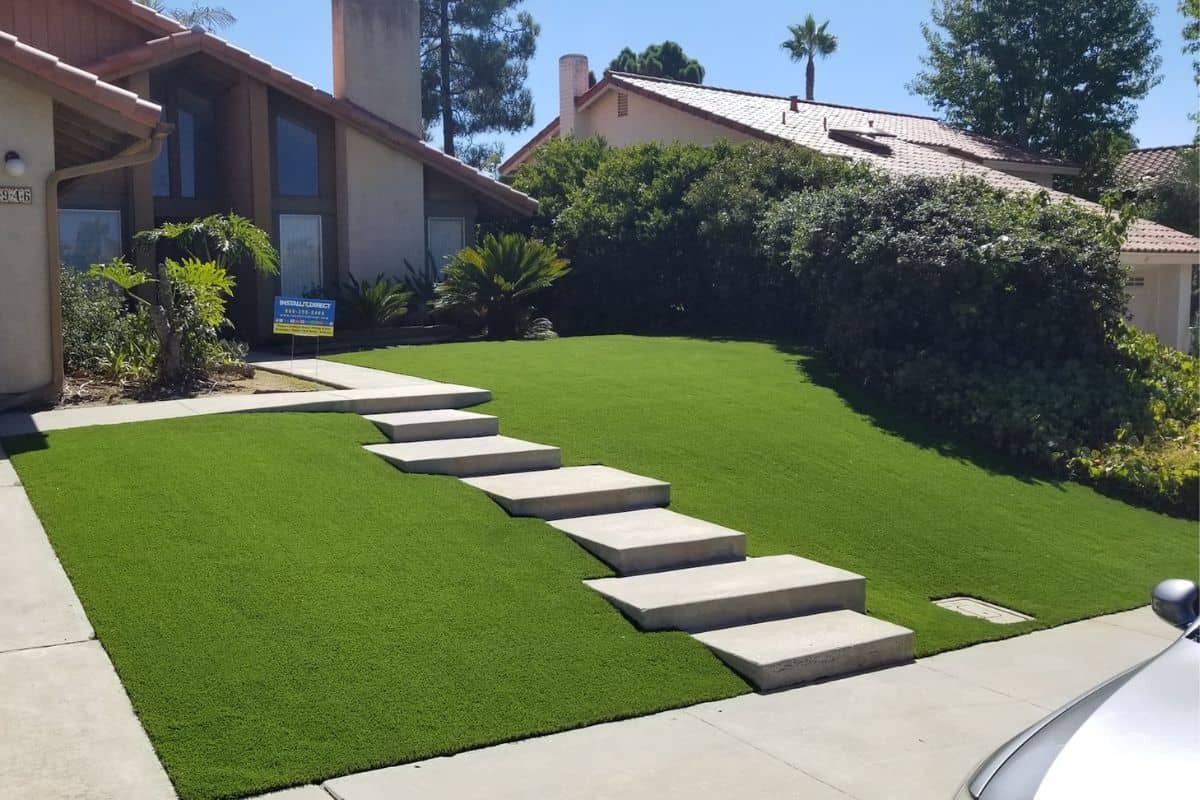
Artificial turf lawns are used across a wide range of landscape applications:
The images below are real-world artificial turf lawn installations that were installed by members of the Turf Network.
FAQs
Common Questions
About Artificial Turf Lawns
What is artificial turf for lawns made of?
Artificial turf lawns are made from synthetic fibers such as polyethylene, polypropylene, or nylon, combined with a backing system and infill material. These components work together to create a durable, stable surface that mimics natural grass.
Related Topics:
• Components • Turf Fibers • Turf Backing • Infill Material
What type of fiber is best for artificial lawns?
Polyethylene fibers are the most common choice for residential lawns because they provide a soft, natural appearance. Fiber shape (such as W-shaped or C-shaped blades) also impacts durability, heat reduction, and realism.
What kind of infill is used for artificial turf lawns?
Most lawn systems use silica sand for stability, while pet-friendly or premium systems may use coated sand, zeolite, or organic infill for odor control and temperature management.
Related Topics:
• Infill Material
What is the best backing for artificial turf lawns?
High-quality systems use polyurethane (PU) backing for durability and structural stability. Flow-through backing systems are often preferred in pet areas because they allow water to drain evenly across the entire surface.
Related Topics:
• Turf backing • Turf Drainage
How do you maintain an artificial turf lawn?
Maintenance typically includes occasional brushing, debris removal, and rinsing. Pet areas may require more frequent cleaning.
Related Topics:
• Artificial Turf Maintenance • Maintenance & Repair Services
How long does artificial turf last in residential lawns?
Most artificial turf lawns last between 10–20 years depending on usage, material quality, and installation.
Does artificial turf get hot in the sun?
Artificial turf can retain heat in direct sunlight. However, fiber technology, infill selection, and lighter color blends can help reduce surface temperature.
Related Topics:
• Turf Fibers • Fiber Shapes • Artificial Turf Heat Issue
Is artificial turf safe for pets and children?
Yes. Modern artificial turf systems are designed to be non-toxic and safe. Pet-specific systems often include antimicrobial or odor-control infill for improved hygiene.
Related Topics:
• Antimicrobial Protection • Infill Material
Blog