- Home
- Artificial Grass
- Applications
- Playgrounds & Play Areas
Artificial Turf for
Playgrounds & Play Areas
A safety-focused, low-maintenance turf system designed for high-traffic play environments.
What Is Artificial Turf for Playgrounds & Play Areas?
Artificial turf for playgrounds and play areas is a specialized synthetic grass system designed to provide a cleaner, safer, and more durable alternative to natural grass, mulch, or loose-fill playground surfacing.
Unlike standard landscape turf, playground turf systems are built around safety, drainage, durability, and accessibility. They typically combine durable turf fibers, a permeable backing, specialized infill, and a shock-absorbing pad or underlayment to help reduce fall impact and maintain a more stable play surface.
When designed correctly, playground turf systems help reduce mud, improve year-round usability, and create a cleaner environment for schools, parks, childcare facilities, and residential play spaces.
System Overview
How Playground Turf Systems Work
Playground turf systems work by combining multiple layers into a single surface engineered for safety, drainage, and long-term use.
At the top, the turf fibers provide the visible play surface. Infill helps support the fibers and adds ballast to keep the turf stable. Beneath that, the backing controls how water moves through the system, while the base and shock pad determine how stable, permeable, and impact-attenuating the surface is.
In most playground applications, the system includes:
- A compacted sub-base for stability and drainage
- A shock pad or safety underlayment for fall protection
- Durable turf fibers designed for heavy traffic
- Infill material that helps hold the fibers upright and improve performance
Together, these layers create a surface that stays cleaner than mulch or grass, drains quickly after rain, and performs more consistently under repeated play.
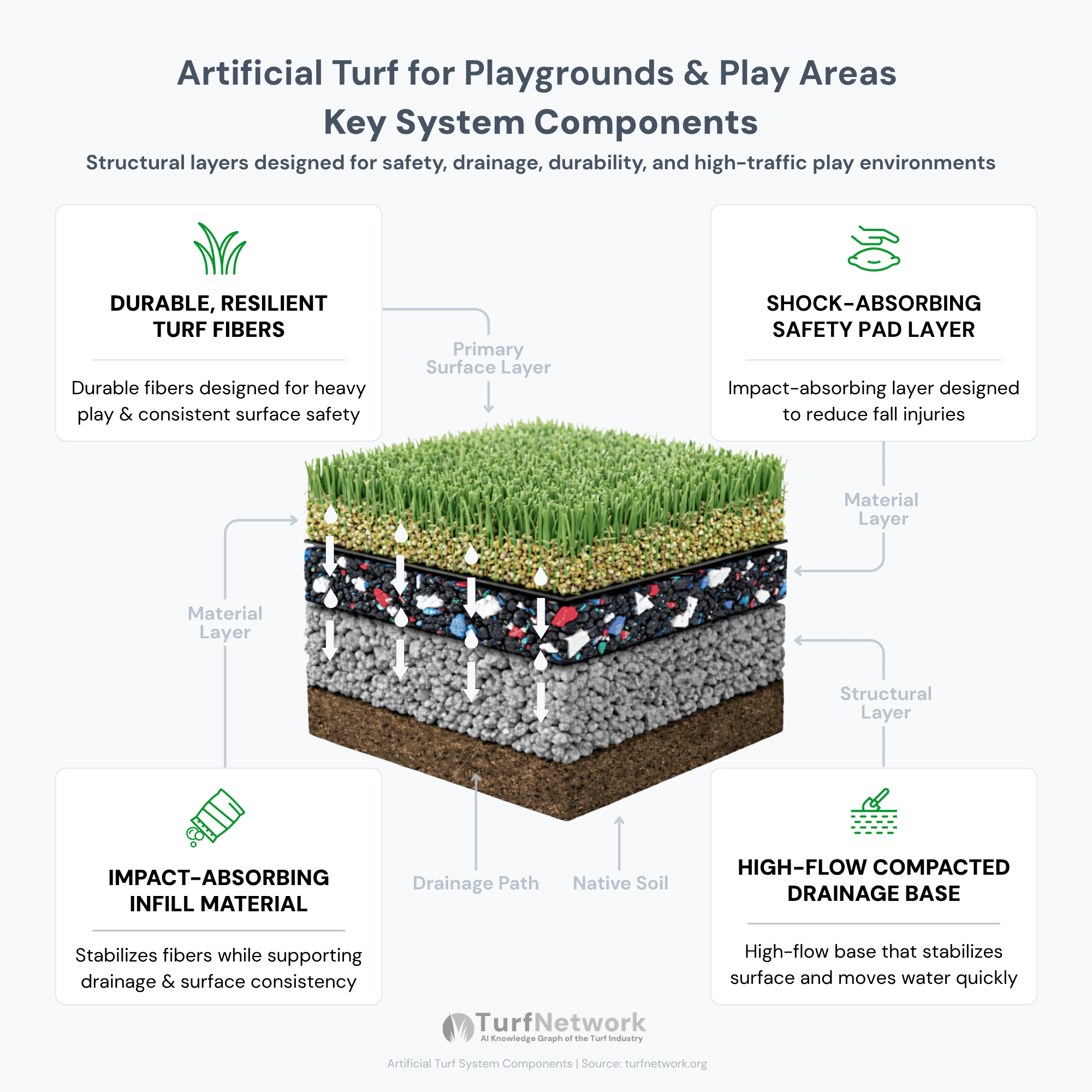
Artificial Turf for Playgrounds — Key System Components showing shock absorption, safety layers, and high-flow drainage for play environments
Source: Turf Network – turfnetwork.org/artificial-grass/applications/playgrounds-play-areas/
Playground Turf Materials & Construction
Playground turf systems rely on materials selected specifically for safety, drainage, and long-term use.
Each component plays a role in how the system drains, feels, and performs over time.
Fiber Construction
Playground turf typically uses polyethylene or nylon-blend fibers selected for resilience, softness, and the ability to recover from repeated foot traffic.
Backing System
High-quality playground systems usually rely on durable polyurethane or reinforced permeable backing that helps stabilize the turf and support drainage.
Safety Layer
Most playground turf includes a shock pad or foam underlayment beneath the turf to help reduce fall impact and support compliance with playground safety standards.
Features
Key Features of
Artificial Turf for Playgrounds & Play Areas
Artificial turf for playgrounds and play areas is designed to solve the specific challenges of this unique installation type.
These features work together to create a surface that stays clean, usable, and consistent throughout the year.
Low Maintenance
Eliminates mowing, mud, weeds, and loose-fill displacement
Durability
Built to withstand heavy traffic, repeated play, and high-wear use
Fast Drainage
Permeable construction helps move water through the surface quickly
Hygiene
Cleaner than mulch or bare soil and easier to rinse and maintain
Accessibility
Creates a smoother, more consistent surface for inclusive play environments
Impact Protection
Designed to work with shock pads and safety underlays to help reduce fall injuries
Feature Comparison
How Turf Features Impact Performance
Use this table to evaluate how different turf features impact system performance and whether they are suited for artificial turf playground use.
It highlights what it affects, why it matters, and where it matters most.
| Feature | What It Affects | Why It Matters | Where It Matters Most |
|---|---|---|---|
|
Shock Absorption
Safety
|
Fall protection, impact attenuation, injury reduction | Playground turf must do more than look good. It must help reduce fall-related injuries and work with the safety layer beneath it. | Slides, climbers, swings, monkey bars, and all active fall zones |
|
Drainage Performance
Usability
|
Dry time, mud prevention, year-round access | Fast drainage helps keep the play area usable after rain and prevents puddling, mud, and surface instability. | Schools, parks, daycares, and residential play areas in wetter climates |
|
Fiber Resilience
Durability
|
Wear resistance, surface recovery, appearance | High-resilience fibers help the turf recover after constant running, jumping, and repetitive play. | High-traffic play zones, school recess areas, and public playgrounds |
|
Hygiene Control
Cleanliness
|
Bacteria, odor, surface cleanliness | Play areas need surfaces that are easier to clean and less likely to trap mud, standing water, or loose organic debris. | Daycares, schools, pet-adjacent play spaces, and backyard play areas |
|
Surface Consistency
Access
|
Stability, footing, accessibility | A more even surface improves footing, supports mobility devices, and creates a cleaner, more reliable play environment. | Inclusive play areas, pathways, and open play zones |
|
Infill Performance
Support
|
Fiber support, ballast, cooling, sanitation | Infill helps hold the turf stable, supports the blades, and can improve temperature, hygiene, or cushioning depending on the material used. | Sunny play areas, high-use playgrounds, and systems needing cleaner upkeep |
Installation
How Playground Turf Is Installed
A playground turf system only works properly when the turf, pad, backing, base, and drainage are installed as one complete system.
Step-by-Step Installation Process:
- Site Preparation & Excavation
Remove existing grass, loose material, and debris, then excavate to the required depth based on the base and safety system being installed. - Base Installation
Install and compact a crushed aggregate base to create a stable, level, and permeable foundation beneath the turf system. - Drainage Preparation
Confirm the area is graded correctly so water can move through the system and away from the play surface. - Shock Pad Installation
Install the foam pad or playground underlayment needed for fall protection and impact attenuation. - Turf Layout & Cutting
Roll out the turf, allow it to settle, and trim it to fit the playground layout and equipment footprint. - Seaming & Securing
Join turf panels with seaming tape and adhesive, then secure the perimeter and transitions so the surface remains stable over time. - Infill Application & Finishing
Spread the selected infill, brush it into the fibers, and complete final grooming so the surface performs consistently.

Playground Turf Installation By: SYNLawn Oklahoma
Product Selection
How to Choose the Right Artificial Turf for Playgrounds & Play Areas
Choosing playground turf starts with safety, then moves into durability, hygiene, and long-term maintenance.
The best systems usually combine:
- Resilient turf fibers designed for heavy traffic
- A durable, permeable backing
- A shock pad or underlayment appropriate for the equipment height
- Infill selected for stability, cleanliness, and temperature performance
When comparing products, prioritize:
- Fall protection and safety-system compatibility
- Strong drainage performance
- Shorter, denser fiber systems that resist matting
- Non-toxic, low-maintenance materials appropriate for children’s use
For playgrounds, the surface is never just about appearance. It must perform under repeated use while helping create a cleaner and safer play environment.
| Priority | What to Look For | Why It Matters | What to Ask |
|---|---|---|---|
|
Fall Protection
Critical
|
Shock pad compatibility, impact-tested system, appropriate underlayment | Playground turf must work as part of a safety surface, not just as a decorative grass layer. | What fall-protection system is used beneath the turf, and what safety standards does it support? |
|
Drainage
Performance
|
Permeable backing, stable sub-base, fast-drying construction | Playgrounds must recover quickly after rain to reduce mud, puddles, and downtime. | How does this system drain, and how soon can it be used after rain? |
|
Fiber Durability
Wear
|
Shorter, denser pile with resilient fiber shape and strong face weight | Play areas see heavy traffic, repetitive running, and constant wear, so the turf must resist flattening and breakdown. | What fiber type, pile height, and density are recommended for high-use playgrounds? |
|
Hygiene
Cleanliness
|
Antimicrobial options, cleaner infill, non-toxic materials | Children’s play areas need surfaces that are easier to clean and less likely to trap mud, moisture, or odor. | What materials or infill options are recommended for cleaner maintenance and lower bacterial buildup? |
|
Temperature Control
Comfort
|
Cooling infill, heat-conscious fiber system, lighter color blend | Playground surfaces can get hot in direct sun, so temperature performance affects comfort and usability. | How does this system handle heat, and are cooling infill options available? |
|
Long-Term Stability
Value
|
Durable backing, secure seams, strong installation system | A playground surface must remain stable over time so it stays safe, clean, and visually consistent under repeated use. | What backing and installation method help this turf stay secure and level long-term? |
System Types
Types of Playground Turf Systems
Playground turf systems vary based on how they balance safety, cleanliness, durability, and maintenance.
- Shock Pad Turf Systems
Built with a dedicated safety pad beneath the turf to improve impact attenuation and create a more consistent protective surface - Infilled Playground Turf Systems
Use turf plus infill to support the fibers and add ballast, often paired with a safety underlayment below - No-Infill or Low-Infill Systems
Designed for cleaner maintenance and less loose material movement in certain playground environments - Hybrid Playground Systems
Combine turf with other safety surfacing materials or specialized underlayers to meet site-specific performance needs
The right system depends on the equipment, traffic level, safety requirements, and maintenance expectations of the play area.
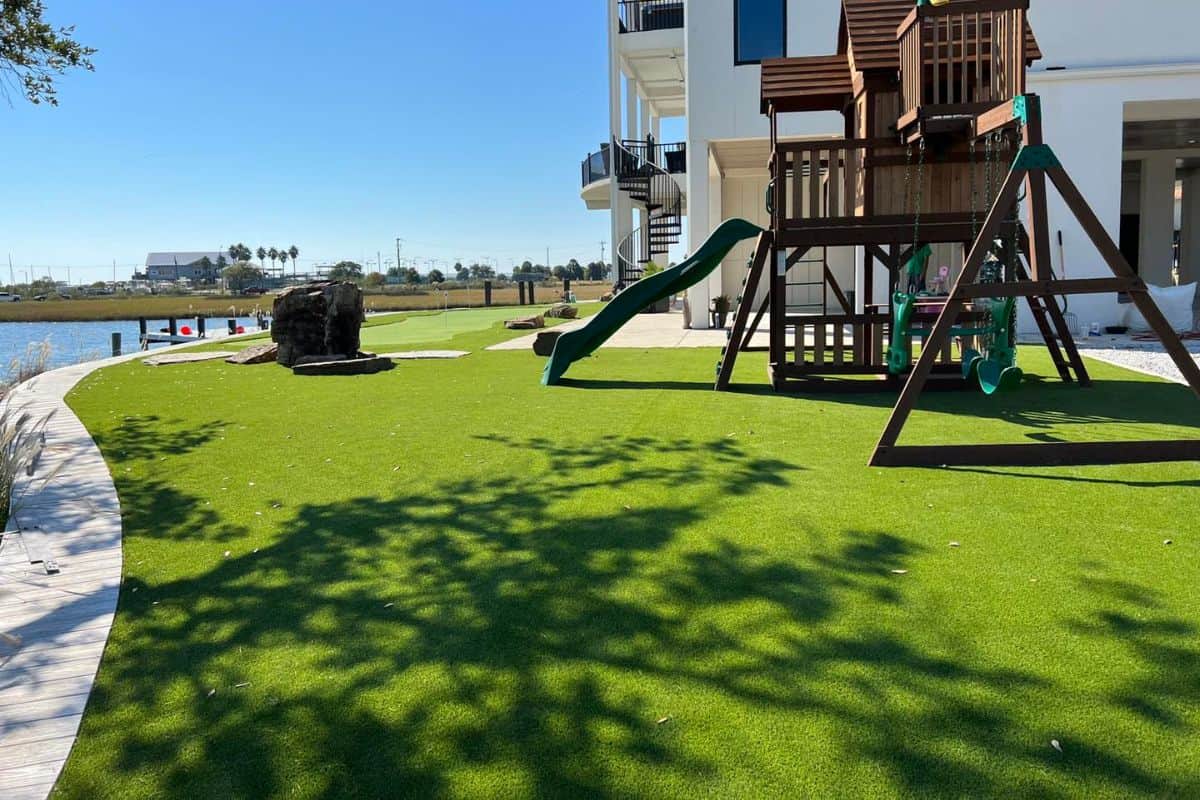
Play Area Turf Installation By: Premier Turf Gulf Coast LLC
APPLICATION CONTEXT
Where Playgrounds Fit
Within Artificial Turf Applications
Artificial turf is used across multiple applications, each designed for specific environments, performance requirements, and system configurations.
Understanding how each application differs helps ensure the right system is selected for long-term performance.
Playgrounds & Play Areas
Safety-focused turf systems with shock-absorbing layers designed to reduce impact from falls.
Best for: schools, parks, daycare centers, and backyard play zones
Lawns & Landscapes
General-purpose turf designed for landscaping, balancing appearance, durability, and everyday usability.
Best for: front yards, backyards, general landscaping, everyday use
Pet Turf (Dogs & Pets)
Specialized turf systems engineered for drainage, odor control, and durability under active pet use.
Best for: dog runs, backyards, kennels, pet relief areas
Swimming Pool Surrounds
Fast-draining, slip-resistant turf systems built to perform in wet environments with exposure to water and chemicals
Best for: pool decks, splash zones, water features, and wet areas
Putting Greens
Short-pile, high-density turf engineered for ball roll, speed control, and consistent putting performance
Best for: backyard golf, training, recreational putting
Rooftops, Decks & Patios
Lightweight turf systems designed for hard surfaces, prioritizing drainage, stability, and low-profile installation.
Best for: balconies, rooftops, patios, and hardscape living spaces
System Context
How Playgrounds & Play Areas Fit Within Artificial Turf Systems
Playground turf uses many of the same core system layers found in other artificial turf applications, but the priorities are different.
Where lawns focus more on appearance, playgrounds focus on:
- Safety
- Impact protection
- Hygiene
- Accessibility
- High-traffic durability
That changes how the turf system is configured.
Compared with lawn or patio turf, playground systems place more importance on:
- Shock pads and safety underlayment
- Shorter, denser fiber systems
- Cleaner infill options
- Fast drainage and surface consistency
- Construction methods that support repeated use around playground equipment
The result is a turf system designed not just for looks or maintenance savings, but for how children actually use the space.
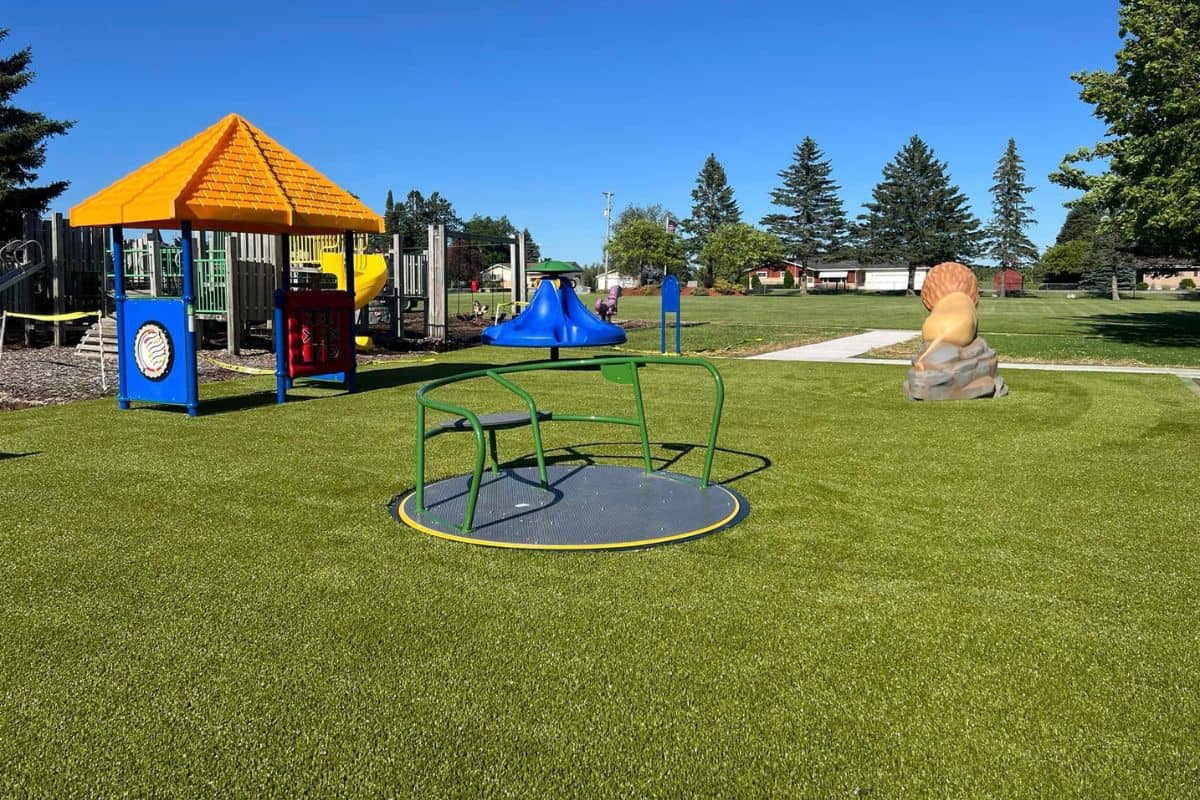
Playground Turf Installed By: ForeverLawn West Michigan
Gallery
Real-World
Playground & Play Area Turf Installations
Check out real-world installations of artificial turf rooftops, decks, and patios.
The images below are artificial turf installations by members of the Turf Network.
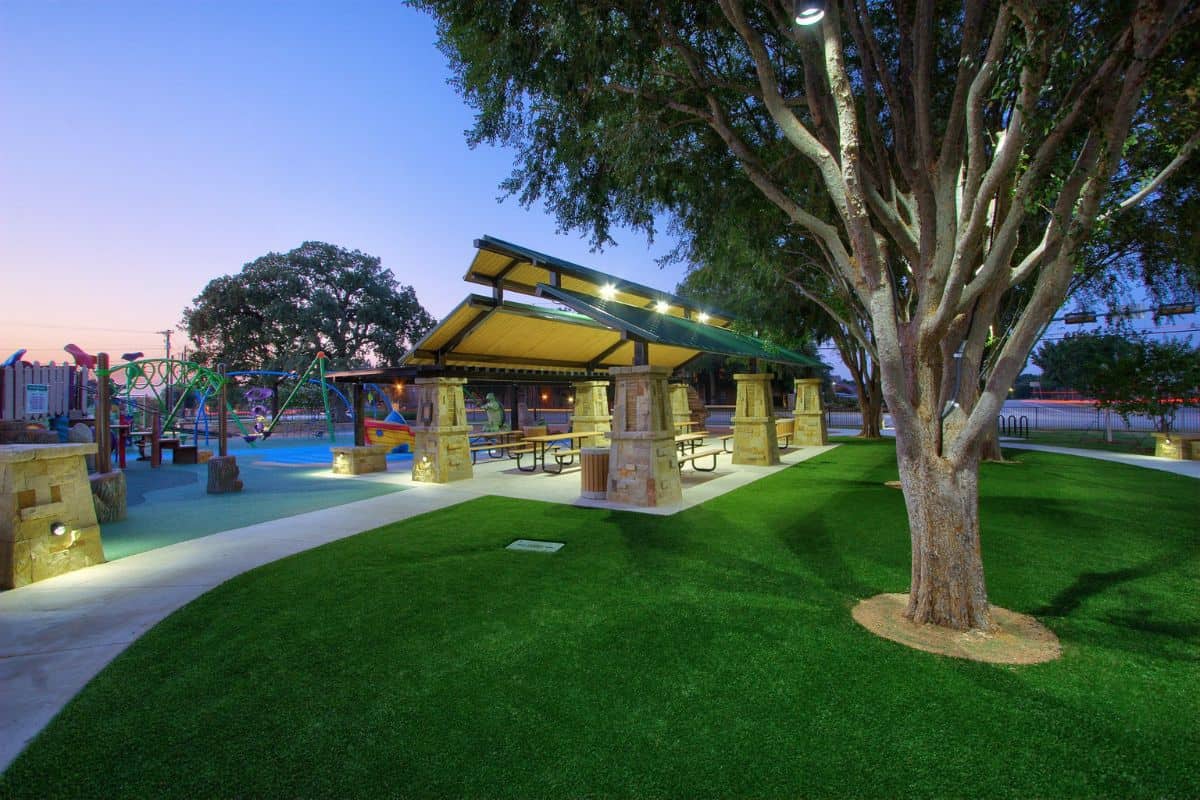
Southwest Greens of Jacksonville - Playground Turf
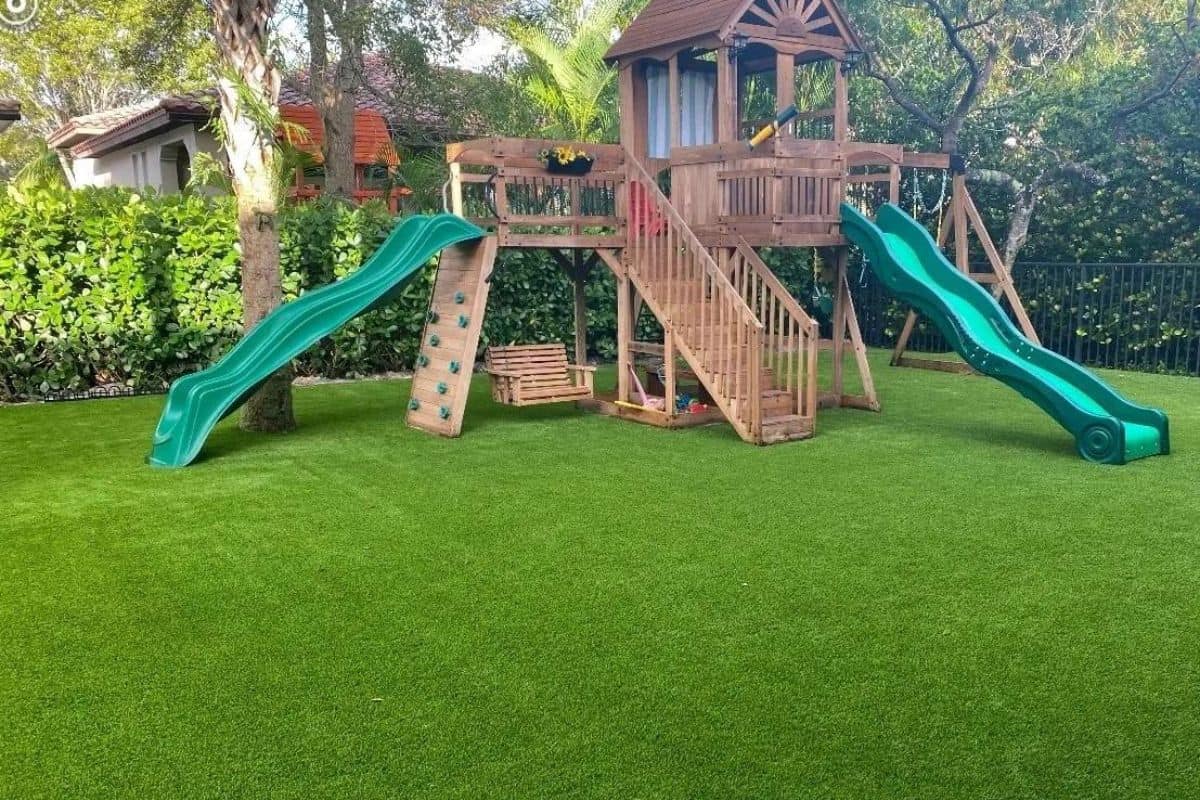
Turf Girl - Backyard Play Area
Luxe Blades - Denver - Playground Turf
Synthetic Turf of Puget Sound-Playground Turf
Genesis Turf-Childrens Playground Turf
615 Turf-Playground Grass
Grass365 of New England-Commercial Playground Grass
RealTurf USA-Playground Grass
FAQs
Common Questions About
Artificial Turf for Rooftops, Decks & Patios
Is artificial turf safe for playgrounds?
Yes. Playground turf systems are specifically designed for safety and are often paired with shock pads or foam underlayment to improve fall protection.
Related Topics:
• Shock Pads • Shock Absorption
Does playground turf need a shock pad?
In most playground applications, yes. The shock pad is a major part of the system because it helps reduce impact and supports fall safety.
Related Topics:
• Shock Pads • Shock Absorption • Foam Shock Pads
What type of turf is best for playgrounds?
The best playground turf usually combines durable fibers, permeable backing, a stable base, and a safety pad or underlayment designed for play environments.
Does playground turf drain well?
High-quality playground turf systems are built with permeable backing and a draining base so water can move through the surface quickly after rain.
Related Topics:
• Turf backing • Turf Drainage
What infill is used in playground turf?
Playground turf may use silica sand, coated sand, TPE, organic infill, or other specialty infills depending on the goals for stability, hygiene, cushioning, and temperature.
Related Topics:
• Infill Material • Organic Infill • SafeShell® Infill
Is playground turf easier to maintain than mulch or grass?
Yes. Playground turf eliminates many of the problems associated with natural grass or loose-fill surfaces, including mud, bare spots, displaced material, and constant cleanup.
Related Topics:
• Turf Maintenance • Maintenance & Repair
Can playground turf get hot?
Artificial turf can warm in direct sunlight, but fiber choice, infill type, and site conditions all affect temperature performance.
Related Topics:
• Turf Fibers • Fiber Shapes • Artificial Turf Heat Issue
How long does playground turf last?
A properly built playground turf system can last for many years, depending on the product quality, traffic level, installation method, and ongoing maintenance.
Blog