
- Home
- Artificial Grass
- Features
- Antimicrobial Protection
Antimicrobial Protection
in Artificial Turf
Antimicrobial protection is a built-in feature in artificial turf systems designed to inhibit the growth of bacteria, mold, and other microorganisms. It works at a material level to help maintain a cleaner, more hygienic surface
DEFINITION
Antimicrobial Protection
Antimicrobial protection refers to treatments or infill materials designed to inhibit the growth of bacteria and odor-causing microbes within an artificial turf system. It is primarily associated with infill selection and moisture management.
Key Functions:
- Reduces odor-causing bacteria
- Improves hygiene
- Supports pet use environments
System Role: Acts as a hygiene-focused feature driven by infill composition and system drainage performance.
Related Components: Infill Material • Turf Drainage • Turf Fibers
Used With: Infill Material • Drainage • Backing
Commonly Used In: Pet Turf Systems • Residential Lawns • Athletic Fields
View in: Artificial Turf Glossary →
Foundation
What is Antimicrobial Protection?
Antimicrobial protection refers to additives or treatments integrated into artificial turf materials that help slow or prevent the growth of microorganisms.
These microorganisms — including bacteria, mold, and mildew — can develop in environments where moisture, heat, and organic matter (like pet waste or debris) are present.
By disrupting the growth cycle of these microbes, antimicrobial protection helps reduce:
- Odor buildup
- Surface contamination
- Hygiene-related issues
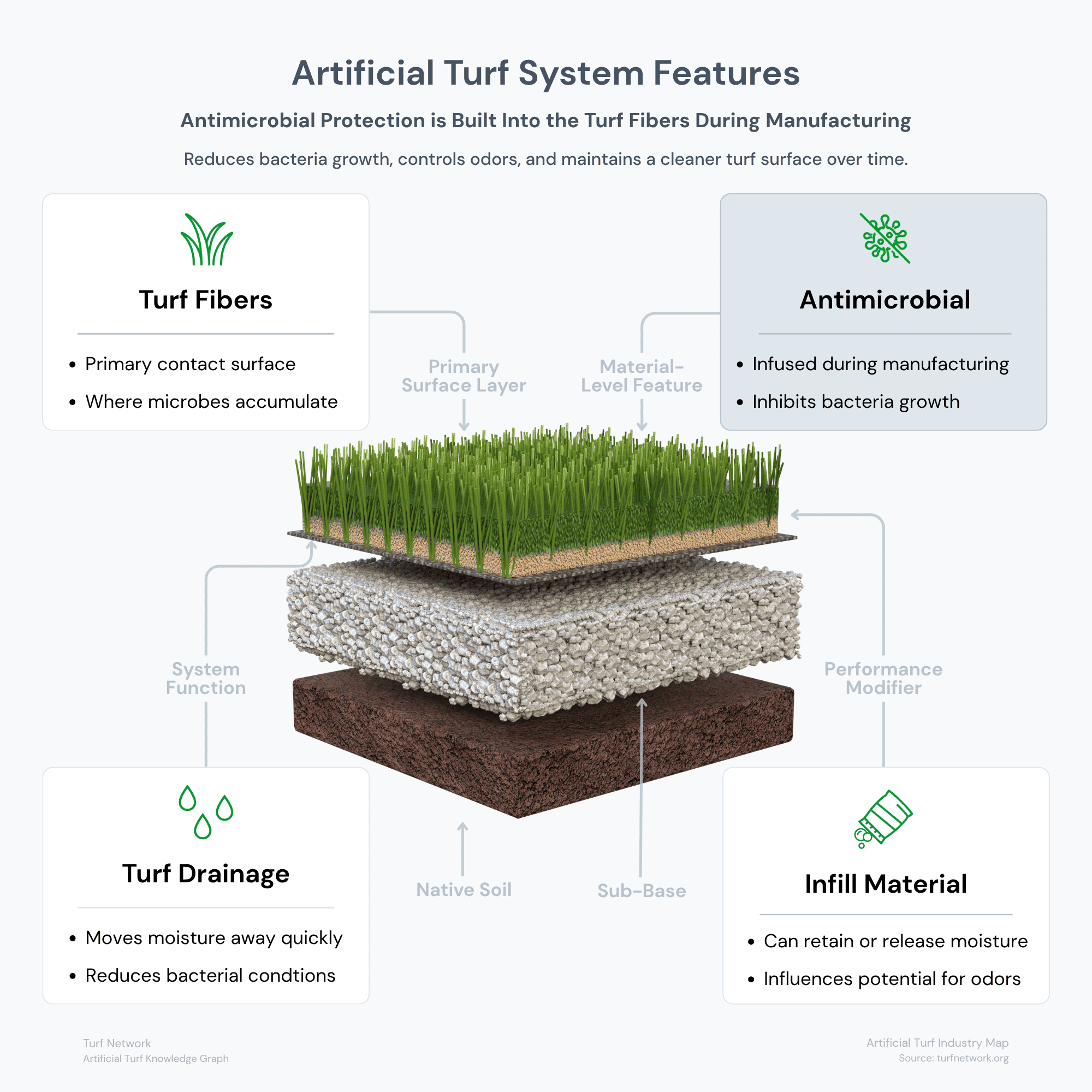
Antimicrobial protection is integrated into artificial turf at the fiber level to reduce bacteria growth and control odor, while drainage and infill conditions influence how effectively the system stays clean over time.
Turf Network — Artificial Turf System Features
Source: Turf Network – turfnetwork.org/artificial-grass/features/antimicrobial-protection/
Process
How Antimicrobial Technology Works
Antimicrobial protection works through a continuous interaction between treated turf materials and microorganisms.
1. Integration Into Turf Materials
Antimicrobial additives are typically introduced during the manufacturing process and become embedded within:
- Turf Fibers
- Backing layers
- Infill materials (in some systems)
This ensures the protection is built into the product rather than applied as a surface coating.
2. Contamination
2. Contamination Occurs
Over time, the treated artificial turf can be exposed to contaminents in the environment:
- Moisture (rain, irrigation, pet urine)
- Organic material (dust, debris, waste)
- Environmental bacteria
Without proper system design, these conditions can allow microbes to develop within the turf.
3. Antimicrobial Action
The antimicrobial agents interfere with the biological processes of microorganisms by:
- Disrupting cell membranes
- Inhibiting reproduction
- Preventing colony formation
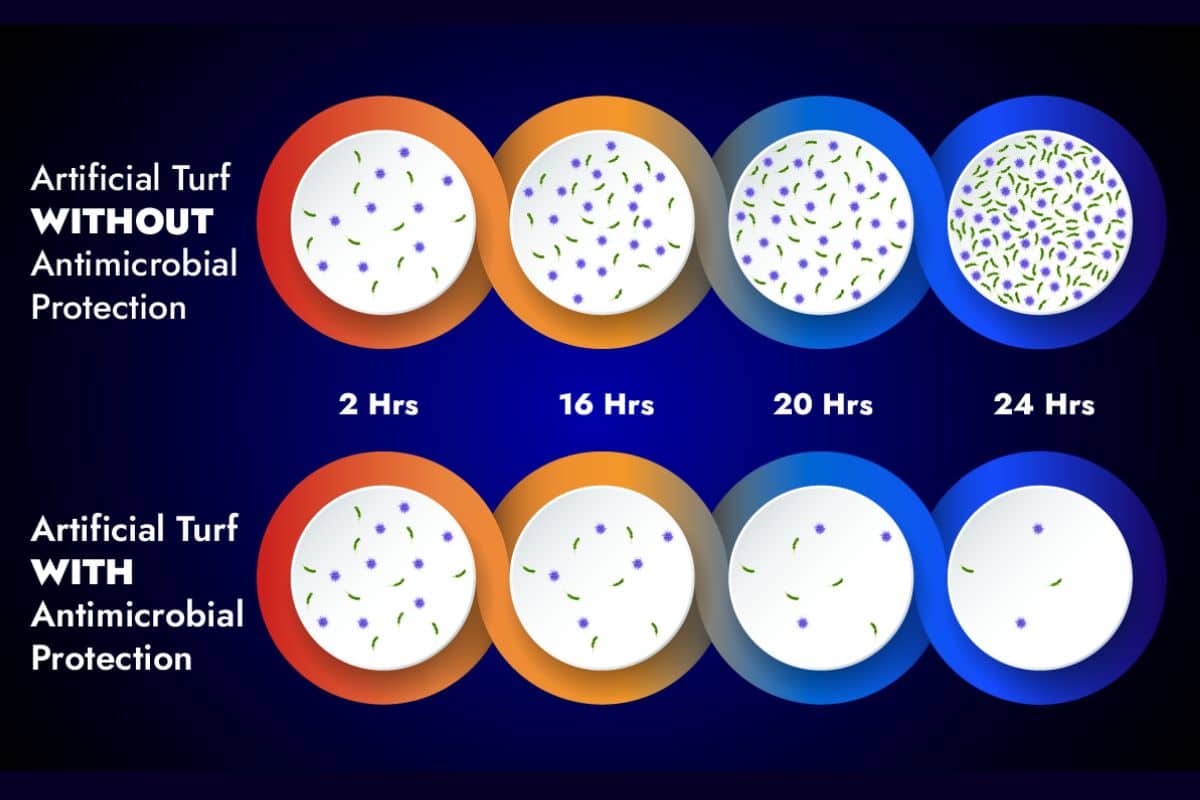
This reduces the ability of bacteria and microbes to grow and spread within the turf system.
4. Cleaner Turf Outcome
As microbial growth is controlled, the turf system remains protected against the proliferation of stain and odor-causing bacteria:
- More hygienic
- Less prone to odor buildup
- Easier to maintain over time
These features are especially important in playgrounds, pet areas, and recreational spaces.
Materials
What is an Antimicrobial Additive?
Antimicrobial additives are compounds used during manufacturing to provide long-term microbial resistance.
Common types of antimicrobial additives include:
- Silver-ion based technologies
- Zinc-based additives
- Organic antimicrobial compounds
These additives are designed to remain active over the lifespan of the turf product rather than wearing off over time.

System Failure
What Happens Without Proper Hygiene Control?
Microbial buildup in artificial turf systems is typically caused by moisture retention, organic debris, and limited airflow within the surface.
Without proper control, this can lead to:
- Persistent odors from trapped bacteria and pet urine
- Increased microbial growth in moist environments
- Surface discoloration or buildup over time
- Reduced usability in high-traffic or pet areas
👉 Most odor issues are not caused by the turf itself — they are the result of moisture + organic accumulation within the system.
Diagnosis
What Causes Microbial Buildup in Turf Systems?
Antimicrobial performance is influenced by several system-level factors:
Moisture Retention
Poor drainage allows water and contaminants to remain trapped in the system
Organic Matter
Dust, dirt, and pet waste provide nutrients for microbial growth
Infill Type
Certain infill materials will retain more moisture than others
Cleaning Frequency
Lack of maintenance increases buildup microbes & bacteria over time
👉 Antimicrobial additives help reduce microbial growth, but they do not replace proper system design and maintenance.
APPLICATION
When Antimicrobial Protection Matter Most
Antimicrobial protection becomes more important in environments where moisture and organic matter are consistently present.
Pet-Friendly Turf Installations
High exposure to pet urine and organic waste makes microbial control more important.
High-Moisture Environments
Areas with poor drainage or frequent water exposure can increase microbial growth risk.
Commercial & Public Spaces
Shared environments and public spaces with heavy use benefit from improved hygiene control.
Context
When Antimicrobial Protection is Less Critical
Antimicrobial protection is not always a primary decision factor.
In many applications:
- Proper drainage
- Regular maintenance
- Appropriate infill selection
have a greater impact on overall performance than antimicrobial additives alone.
This is especially true in dry climates or low-use environments where microbial buildup is less likely.
Comparison
Antimicrobial vs Drainage vs Odor Control
These three concepts are often confused but serve different roles within the turf system.
| Feature | Primary Job | What It Does Not Do | Where It Matters Most |
|---|---|---|---|
|
Antimicrobial Protection
Microbial Control
|
Helps inhibit microbial growth at the material level and supports a cleaner turf surface. | Does not replace proper drainage, cleaning, or odor management practices. | Pet turf, moist environments, high-use areas, hygiene-sensitive installations |
|
Turf Drainage
Moisture Control
|
Moves water through the turf system to reduce moisture retention and improve drying. | Does not neutralize odor on its own or directly stop microbial growth at the surface. | Pet turf, rainy climates, commercial areas, all functional outdoor installations |
|
Odor Control
Symptom Management
|
Helps reduce or neutralize unwanted smells caused by pet use or organic buildup. | Does not solve the underlying moisture or hygiene conditions causing odor. | Pet-friendly turf, dog runs, backyards, enclosed or frequently used surfaces |
👉 Drainage controls the environment. 👉 Antimicrobial controls microbial activity. 👉 Odor control addresses the symptom.
System
How Antimicrobial Protection Works Within the Turf System
Antimicrobial protection does not function independently.
It depends on:
It directly impacts:
- Odor management
- Suface hygiene
- Long-term usability in pet and high-traffic areas
👉 Antimicrobial is most effective when combined with proper drainage and maintenance.
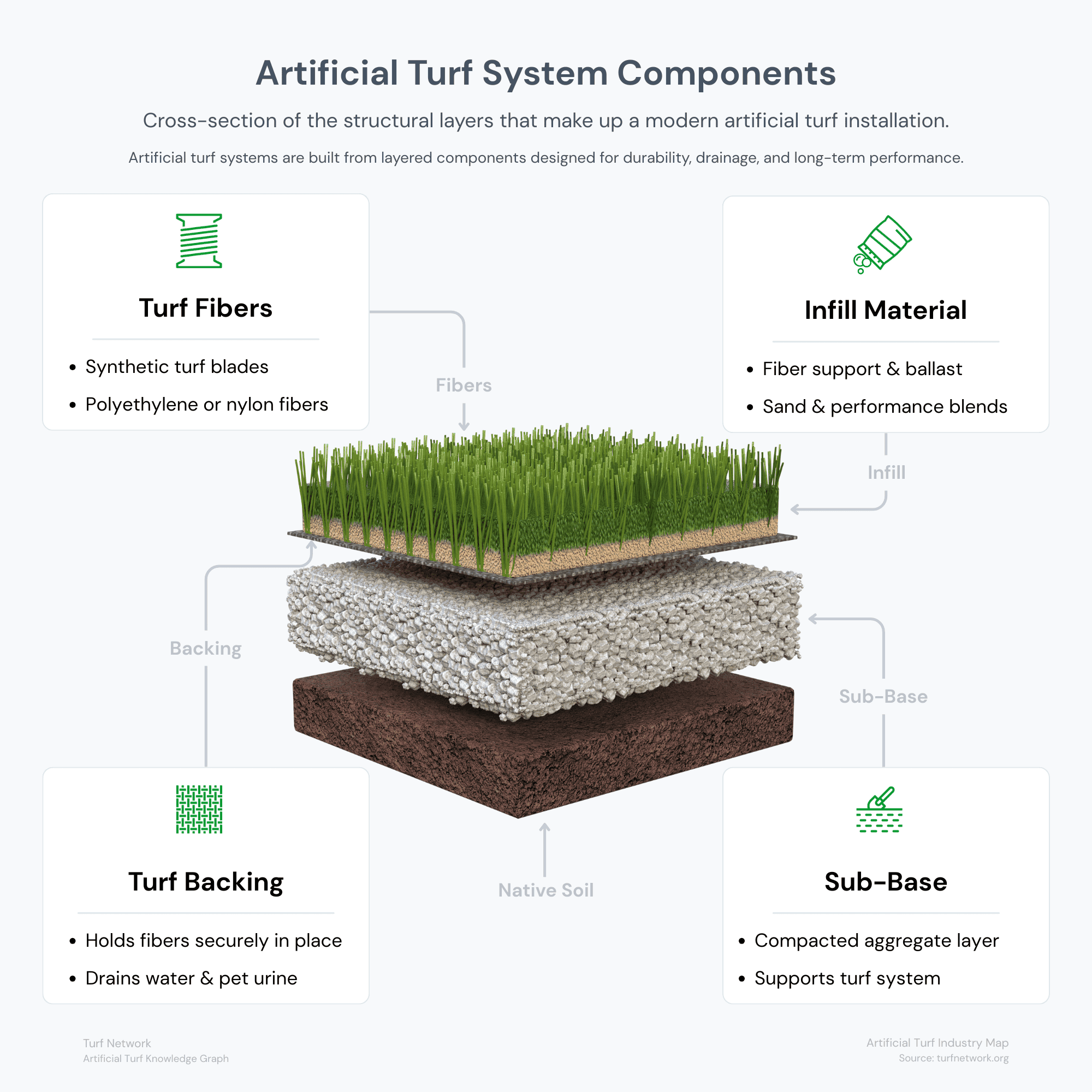
The diagram illustrates the primary components of an artificial turf system and how each layer contributes to overall performance.
Turf Network — Artificial Turf Industry Map
Source: Turf Network – turfnetwork.org/artificial-turf-industry/
Connections
Related Features & Components
To better understand how antimicrobial protection fits into the full turf system, explore the connections below.
(Click or tap to open):
FAQs
Frequently Asked Questions
Click one of the FAQ titles below to open the accordion:
Does antimicrobial turf eliminate odors completely?
No. While it helps reduce bacteria that contribute to odors, proper drainage and maintenance are still required to fully manage smell.
Is antimicrobial protection necessary for all turf installations?
Not always. It is most beneficial in dog and pet areas, high-moisture environments, and high-traffic spaces.
How long does antimicrobial protection last?
When integrated during manufacturing, it is designed to last for the lifespan of the turf product.
Can antimicrobial turf replace cleaning and maintenance?
No. It supports hygiene but does not replace regular cleaning or proper system design.