
- Home
- Artificial Grass
- Components
Artificial Turf System Components
Artificial turf systems are built from multiple structural layers that work together to create a stable and durable synthetic grass surface.
Click or tap an icon to jump to the relevant section:
DEFINITION
Artificial Turf Components
Artificial turf components are the individual structural layers that make up a complete turf system, including fibers, infill, backing, and sub-base. Each component contributes to overall performance, durability, and system behavior.
Key Functions:
- Defines system structure
- Distributes performance responsibilities
- Enables modular system design
System Role: Acts as the framework that separates and organizes the functional layers of a turf system.
Related Components: Turf Fibers • Infill Material • Turf Backing • Sub-Base
Used With: Drainage • Fiber Shapes
Commonly Used In: All Artificial Turf Systems
View in: Artificial Turf Glossary →
System Components
Core Components of an Artificial Turf System
Artificial turf installations are built from multiple structural layers that work together to create a stable, well-drained surface.
Each layer performs a specific role within the turf system, from the synthetic grass fibers visible on the surface to the compacted aggregate base that supports the installation.
The diagram illustrates the primary components found in most artificial turf systems.
Each component affects performance differently. Compare Turf Specs to see how complete systems vary.
Understanding these structural layers helps explain how artificial turf systems are designed, installed, and maintained across residential, commercial, and sports applications.
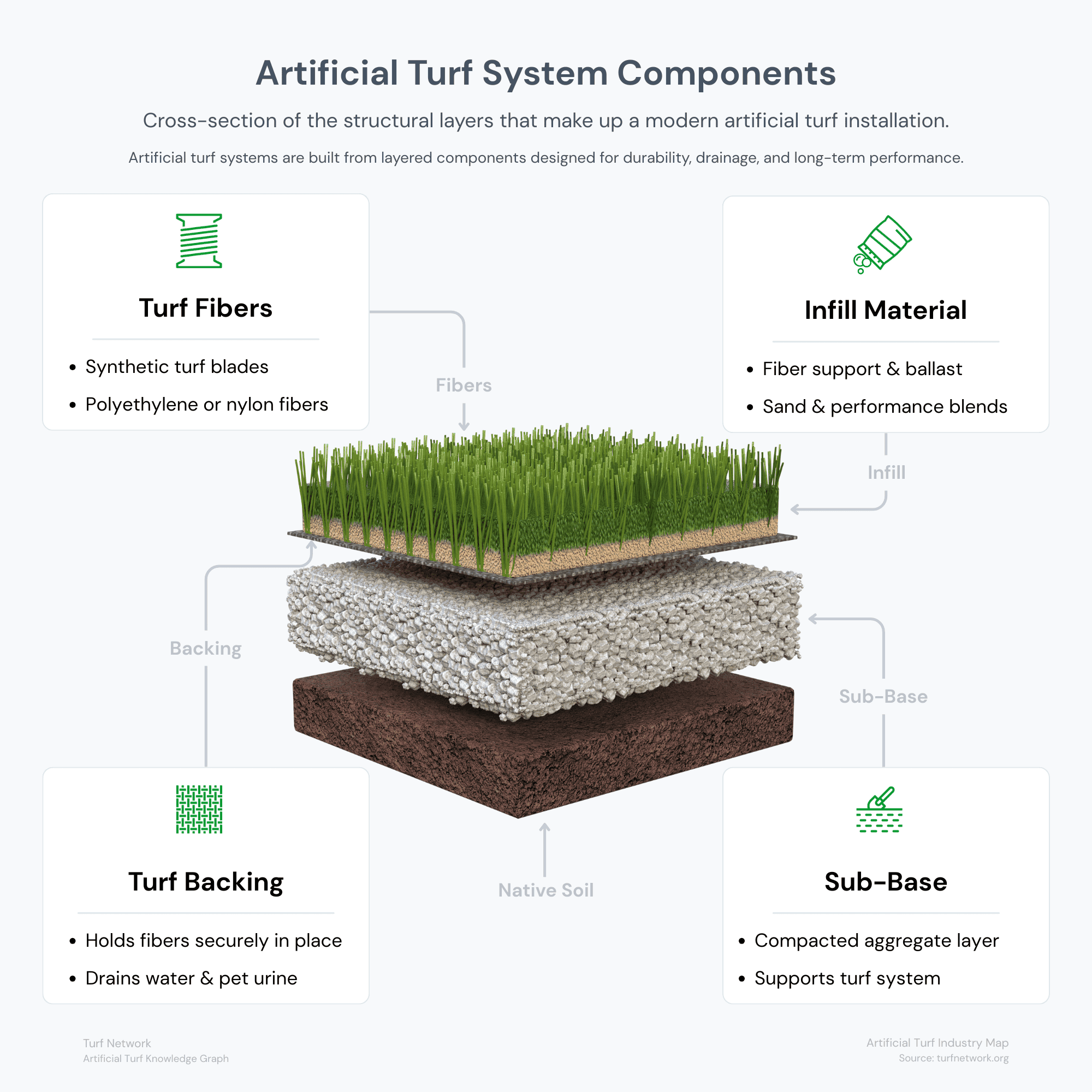
The diagram illustrates the primary components of an artificial turf system and how each layer contributes to overall performance.
Turf Network — Artificial Turf Industry Map
Source: Turf Network – turfnetwork.org/artificial-grass/components/
Turf Fibers
The foundation of artificial grass lies in its synthetic fibers.
These fibers are typically made of materials such as polyethylene, polypropylene, or a blend of both.
Polyethylene offers a soft, natural texture, while polypropylene provides durability.
These fibers are designed to withstand the rigors of outdoor use while maintaining a lifelike appearance.
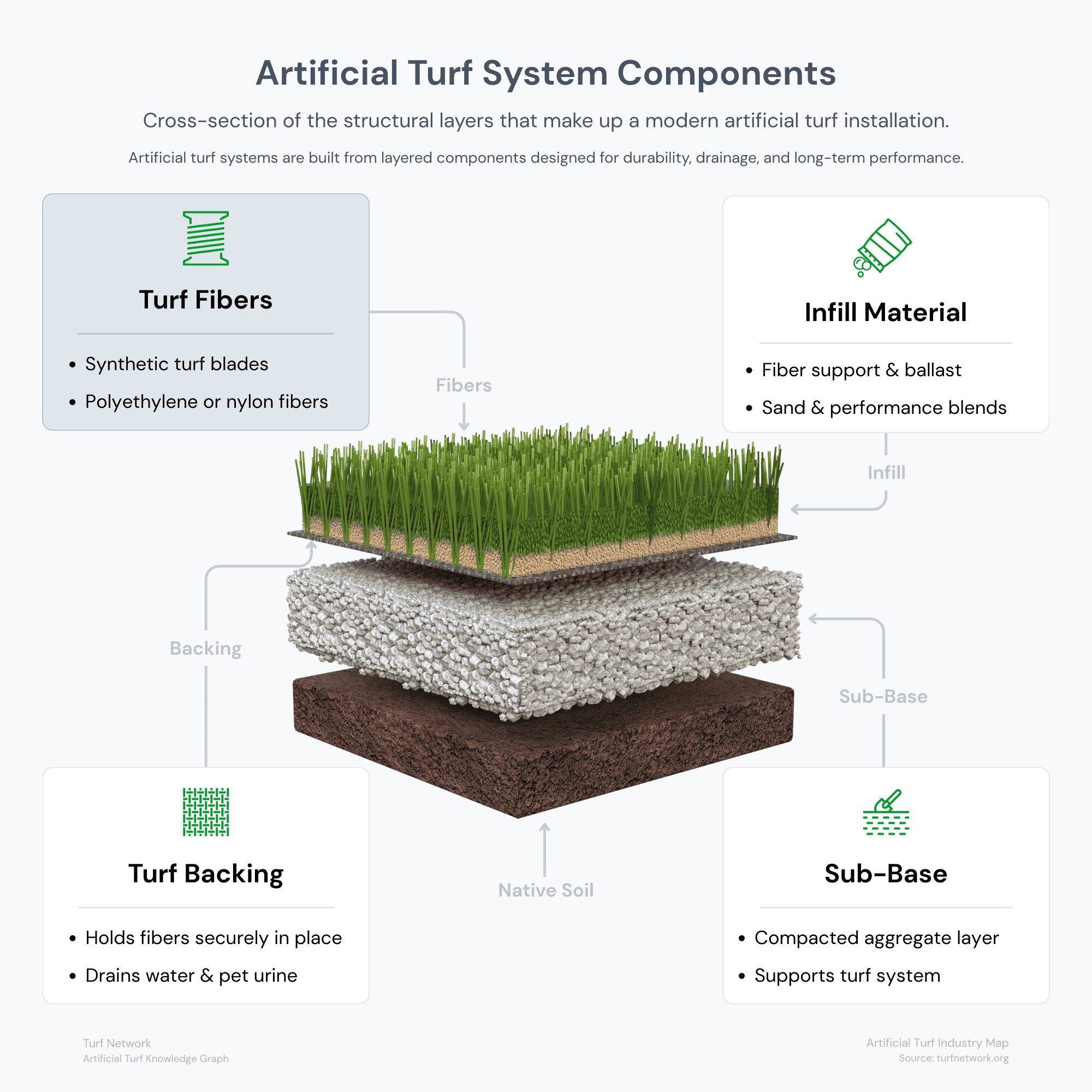
This diagram highlights turf fibers, the visible synthetic blades that form the surface of an artificial turf system.
Turf Network — Artificial Turf System Components
Source: Turf Network – turfnetwork.org/artificial-grass/components/fibers/
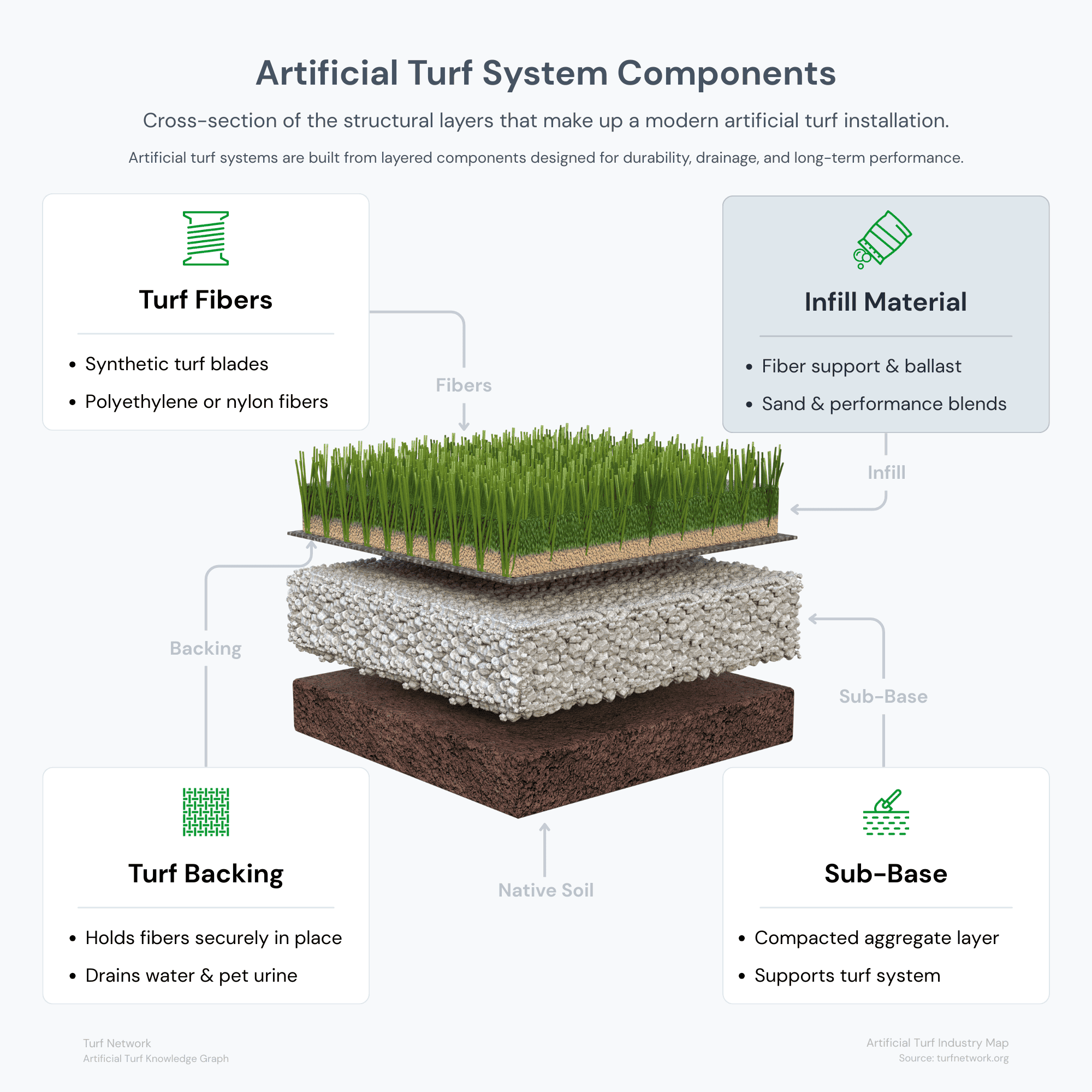
This diagram highlights infill material, the granular layer placed between artificial grass fibers to support the blades and stabilize the turf surface.
Turf Network — Artificial Turf System Components
Source: Turf Network – turfnetwork.org/artificial-grass/components/infill/
Infill Material
During the installation of artificial grass, a very small granular material called infill is spread over the turf.
Typically consisting of sand, this infill serves several important purposes that contribute to the overall performance and longevity of the grass.
Infill acts as ballast, keeping turf in place, protects the backing from UV damage, keeps fibers upright, and mimics the sensation of walking on natural grass.
Additionally, infill materials can contribute to efficient drainage and reduce odors, especially in pet-friendly environments.
Turf Backing
Artificial grass backing is vital for the stability, durability, and overall quality of synthetic turf.
The backing material of artificial grass typically consists of two layers – the primary and secondary backing.
Each layer serves a unique purpose in maintaining the integrity of the turf.
Investing in a superior backing not only enhances the performance of your synthetic turf but also ensures its long-term appeal and functionality.
Don’t compromise on quality – choose the backing that guarantees a vibrant, durable, and enduring artificial grass surface.
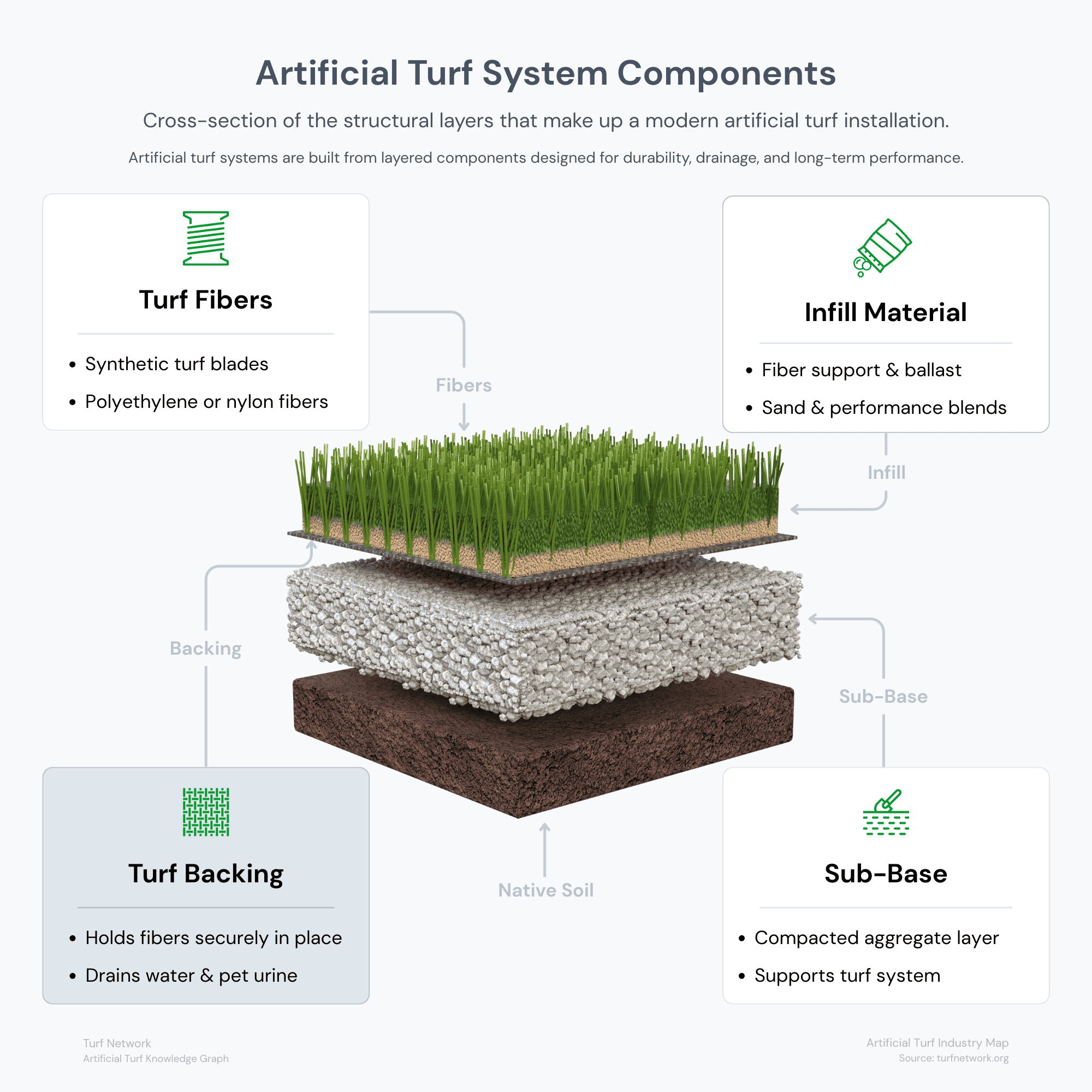
This diagram highlights turf backing, the structural layer that holds synthetic turf fibers in place and supports drainage through the turf system.
Turf Network — Artificial Turf System Components
Source: Turf Network – turfnetwork.org/artificial-grass/components/backing/
Sub-Base Materials
The “base” is what a company will install and compact underneath the artificial turf.
A durable, drainable base underneath the artificial turf is very important.
Decomposed granite and class II road base are the most commonly used base materials.
The best practice for the sub-base underneath a turf installation is to compact 3 – 4” of base material.
This helps to ensure a more durable area with better drainage.
However, the amount of base used is completely dependent on turf application and property attributes.

This diagram highlights the sub-base, the compacted aggregate layer that supports the turf system and promotes drainage beneath the surface.
Turf Network — Artificial Turf System Components
Source: Turf Network – turfnetwork.org/artificial-grass/components/sub-base/
Optional Accessories for Artificial Turf Systems

Shock Pads
A shock pad is a type of underlay that is often used as a base for artificial grass at schools and on playgrounds.
Made out of fused polyethylene pieces, the shock pad is a fall cushioning substrate.
It has a spongy but firm feel, which makes it perfect for use as an outdoor safety surface.
Used under and around play equipment in schools and daycares, shock pads are used to deliver what’s called a ‘critical fall height’.
A critical fall height is the greatest height of a headfirst fall, from which a child, landing on a surface, could be expected to avoid sustaining a critical head injury.
Shock pads are used to meet these critical fall heights – typically between 3 and 6 feet.
Drainage Tiles
Commonly used when installing turf on concrete or non-permeable surfaces, drainage tiles are a grid of interconnected tiles that elevate turf above the installation surface.
This allows air to circulate under the turf and water to easily drain without pooling on the surface.
Drainage tiles create a 1 inch 92% air void underneath your artificial turf.
They help to keep the surface temperature at lower levels due to its ability to allow a continuous movement of air.
